

Pinch me to wake me up. This feels like a dream, or perhaps I’ve stepped onto a movie set with scenes that are both haunting and poignant: lifeless bodies gently floating in the river, funeral pyres alight with the final journey of the departed, people bathing in and drawing from waters they consider divine, despite its visibly challenging condition. The potent smell, however, is a stark reminder that this is no illusion. It’s a poignant encounter with a culture profoundly different from our own. Our unfamiliarity contorts our expressions, a mix of contemplation and empathy. Our minds grapple with a wave of emotions. Yet, our eyes remain wide open, respectfully intrigued by the spectacle unfolding before us. Here we stand, in Varanasi, one of the world’s oldest inhabited cities and the holiest place for Hindus.

Varanasi graces the banks of the Ganges River in northern India, drawing over a million pilgrims annually. They come in search of prayers, to cleanse their sins in the sacred waters, and for some, even to meet their final moments on the riverbanks. For all, it is a profound journey. Shrines, temples, and palaces line the water’s edge, and nearly 100 ghats, formed by a series of stone steps, lead pilgrims to the river.
To absorb the surroundings, we opt for a rowboat to navigate the Ganges, our young oarsman providing brief insights into the significance of each ghat we pass. Our observations feel intimate, yet we strive to maintain a respectful distance. Families, Hindu pilgrims, Sadhus, buffalos, dogs, and goats all converge – bathing, purifying their bodies, and ritually cleansing themselves of a lifetime of sins in the sacred waters.


As I sit in the boat, hands tightly gripping the sides, I feel a gentle touch on my hand. Looking down, I see the lifeless body of a dog, eyes closed in peace, floating along the water. It’s a somber moment. I close my eyes, take a deep breath, and open them again to witness the broader scene. On one side, a man washes white hotel linens on the muddy shores. On the other, a woman sweeps away debris from one ghat into the river. Approaching the burning ghat, we witness a boat rowing towards the middle of the river. A father gently releases the wrapped bodies of a child and a baby into the water. It’s a deeply personal and culturally significant moment, where life and death intertwine.
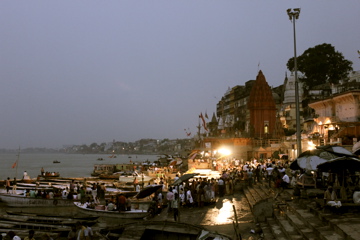


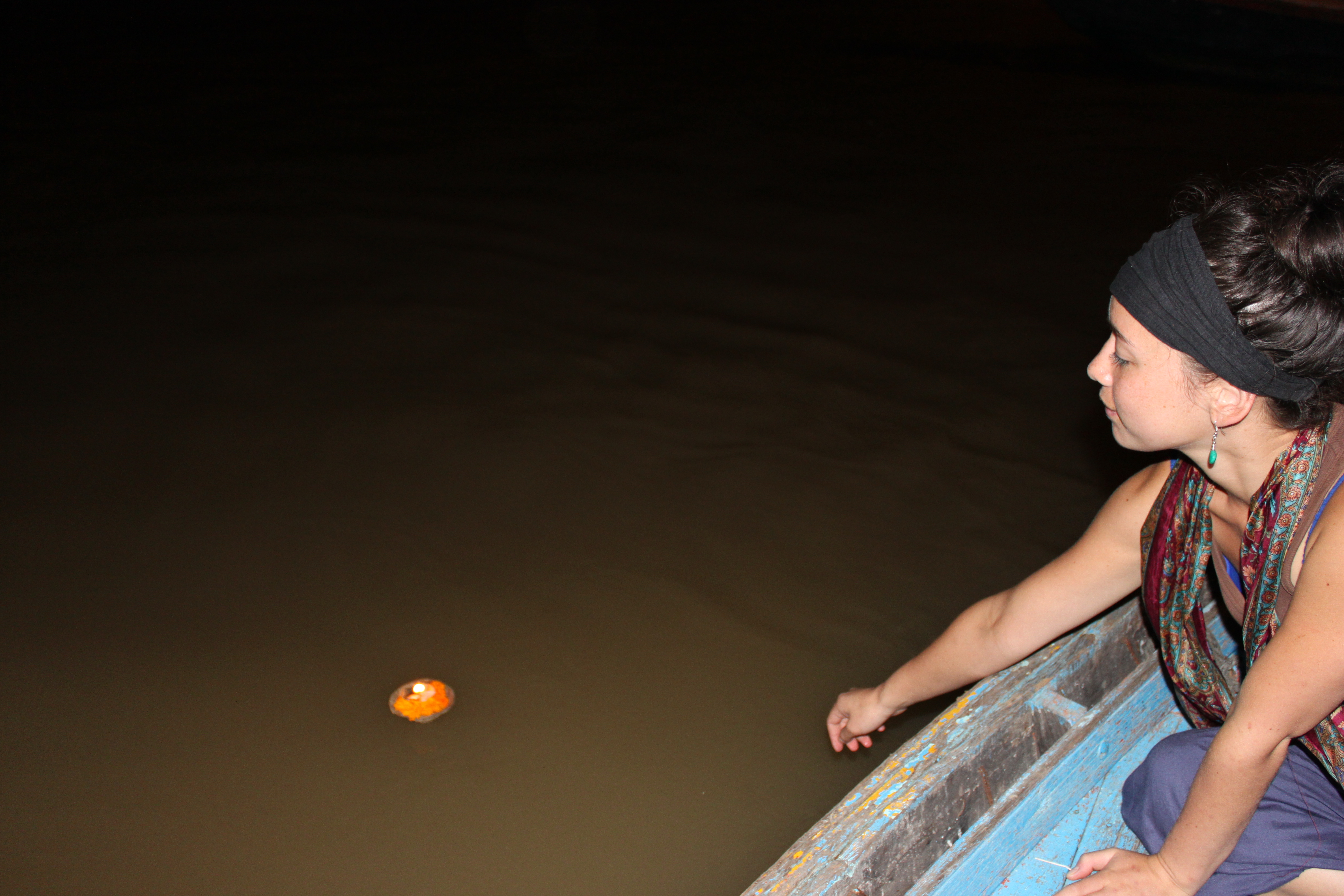
The moon, full and radiant, casts its glow on the scene. Drifting in the middle of the Ganges, I’m captivated by the presence of lifeless bodies, spirits, and energies. I light a candle, make a quiet wish, and release it onto the river. Alongside countless others, it finds its own destiny, disappearing into the moonlit waters. Children sing prayers and clap bells on the stairs of a ghat, while a Sadhu performs a ritual ablution towards the moon. The burning ghat offers an intimate spectacle of death, with a dozen bodies being cremated before our eyes. Strangely, there’s no fear; instead, I am embraced by a unique and profound moment. Pure serenity.
An experience that will be etched into the canvas of my memory with deep respect and understanding.
 Footloose Diary