23-Hour Layover in Beijing

Beijing

Being capital of the People’s Republic of China, Beijing is the nation’s political, economic, and cultural center. Located in north China, close to the port city of Tianjin and partially surrounded by Hebei Province, it also serves as the most important transportation hub and port of entry. It is now known as one of the most popular travel destinations in the world, with about 140 million Chinese tourists and 4.4 million international visitors in a year.

24-hour Visa-Free Transit

The 24-hour Visa-Free Transit in China, also called the 24-hour Transit Without Visa (24-hour TWOV for short), regulates that visa is not required for air, train, and ship passengers transiting in mainland China for a stay of no more than 24 hours before heading for a third country or region. It is also possible to get a 72 or 144-hour transit visa with similar terms and restrictions.

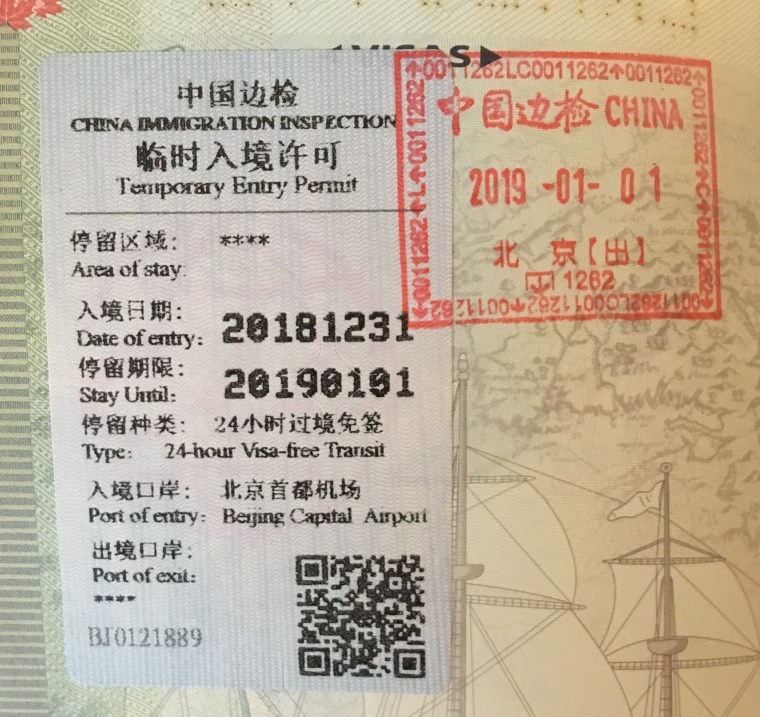
Since our flight from Canada landed in PEK at 4:25pm, and our connecting flight to our final destination in Japan departed at 3:45pm the next day, we had nearly 24 hours layover time. I had booked a hotel near Wangfujing, hired a chauffeur for the next day, and had all detailed information of our planned layover in Beijing in both English and Mandarin, putting all chances on our sides. We only carried a small backpack each and had our luggages sent directly to our final destination. After reading loads of forums about mixed situations that happened to Canadian travellers during this political dispute, we were quite surprised that the whole process went so effortlessly (at least it did for us). We got our transit visa approved in no time, and passed customs successfully. We exited the airport and walked to the taxis. I was glad to have our hotel printed in Mandarin –it made up for an efficient, timely and appreciated communication with the driver.
img_2512-1.jpg

Wangfujing Street

Wangfujing Street is the rich affluent shopping area of Beijing including many famous western brands and stores. After walking down the main street, we arrived to the snack street.

Wangfujing Food Street is Beijing’s local foodies paradise. Amongst locals and tourists, we meandered through the crowd, our eyes wandering with curiosity on all to see such as scorpions, snakes, bats, and tarantula on sticks. We weren’t brave enough to try much (after being sick in the Sahara Desert, I sadly tend to be more hesitant of what I eat when I know I’ll be away from restrooms for a longer period of time – however this is a personal experience and I encourage everyone to try street foods), but I couldn’t be on Wangfujing Snack Street without trying out a scorpion. So I did it! The feeling of the fried legs touching the roof of my mouth was scarier than the taste itself.  JF had 2 and I’m sure he would had have more. I was content with my one bite. It’s those little things on my bucket list that make me so happy to check off. 🙂

Food 

When I was traveling in Tibet back in 2010, the food was surprisingly challenging for me to appreciate. I consider myself an adventurous foodie, always willing to try whatever is presented before me. With this culinary curiosity, I’ve had the opportunity to savor some marvelous (and highly intriguing) flavors from around the world. However, my experience with Chinese cuisine in China, not the Americanized version, didn’t quite align with my palate. Perhaps one of the most challenging aspects was deciphering the menu, which was often solely in Mandarin. Even though photos were somewhat helpful, they didn’t always provide a clear picture of the specific meat or ingredients used in the dishes. I did notice a unique fragrance in the dishes we ordered. My partner opted for three meat dishes, while I went with three vegetarian plates. I found my veggie options quite tasty, but I could only manage a small taste of his dishes (plus, I’m not a big meat eater). Despite the initial challenges, I would absolutely love to return to China and further explore its diverse culinary world.

IMG_1441

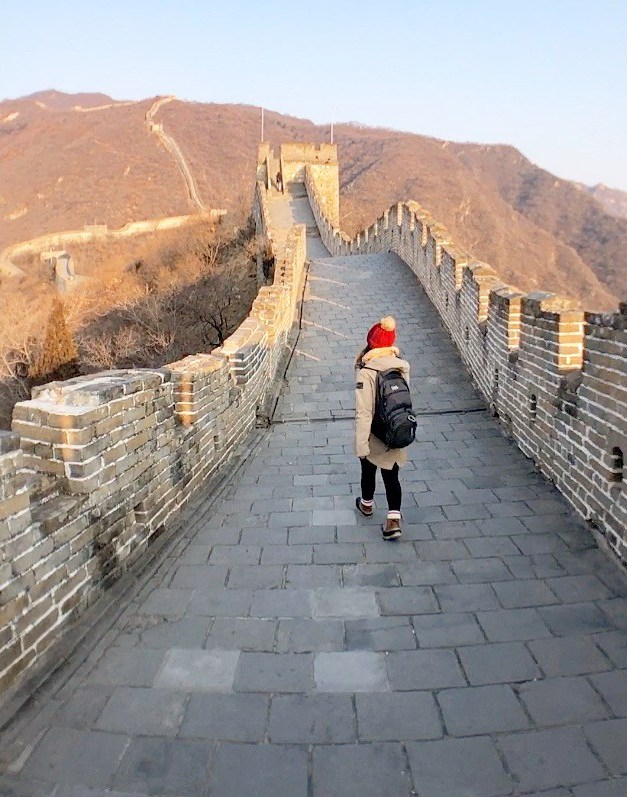
Great Wall of China

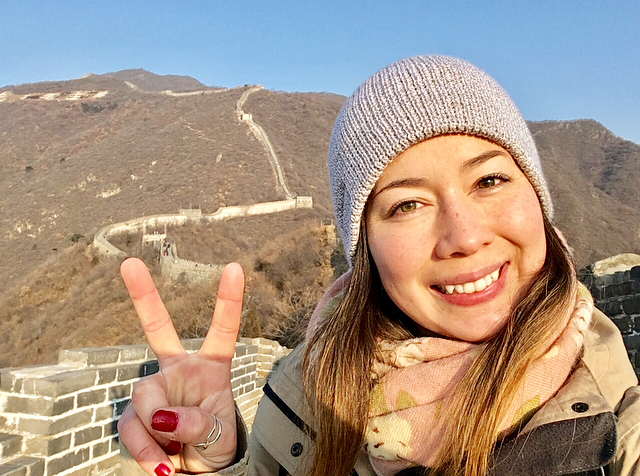
Previously, back in Canada, I hired John Yellowcar whom I found on TripAdvisor. John is a Beijing, English speaking native who’s been chauffeuring visitors around the city for nearly 20 years. My correspondence with John the weeks prior to our trip reassured me. He gave us valuable information on taxis, airport customs, translation, etc. John picked us up at our hotel the morning of January 1st at 6:45am in his clean and spacious vehicle. At our great astonishment, the roads were empty due to New Year’s Day (January 1st). It took us around 1 hour to reach the Mutianyu entrance of the Great Wall. John helped us get tickets and directed us to the entrance where we had the liberty to venture on our own. By 8am we were in the gondola heading up to the stoned path. 

John picked us up at 11:30am where he had dropped us off. We headed back to the airport in no time. By 1pm we were back in PEK going through customs. Hiring John allowed us to see a great wonder of the world with a peace of mind. I would highly recommend him, or any great driver, if you have a layover in Beijing.

PEK Airport

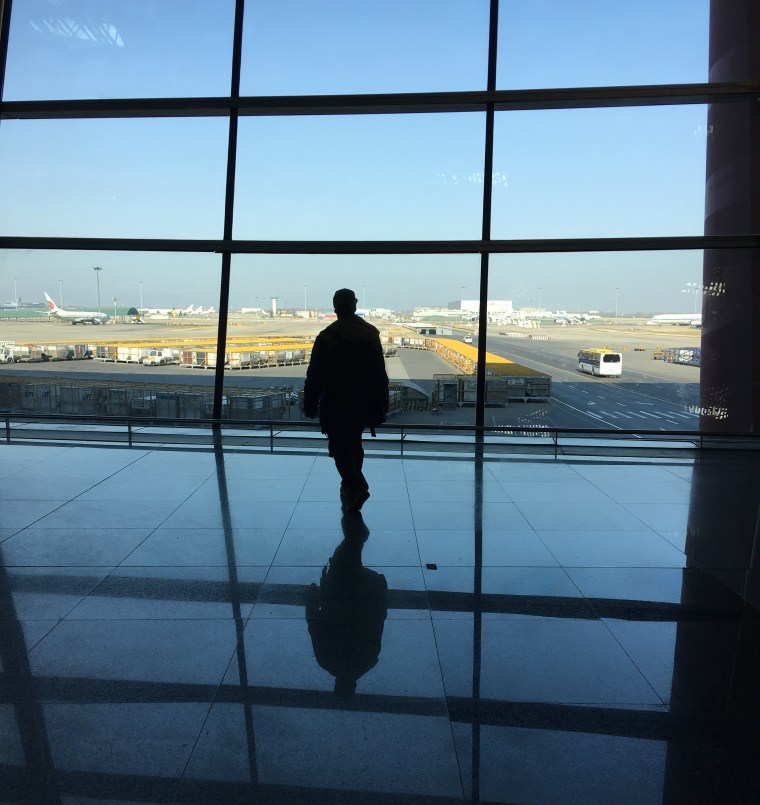
PEK Airport doesn’t stand in my top favourite airports. But it’s not bad. Bathrooms are decent, offering both western and squat toilets. Although not very big, PEK offers a few shops and restaurants. Wifi is free, but remember that Internet censorship in China is among the most extensive censorships in the world due to a wide variety of legal and administrative regulations (social medias, YouTube and Safari didn’t work, although we managed to play Words with Friends). If you have a long layover, I strongly encourage you to look at ways to get a Visa-Free Transit to explore some parts of Beijing rather than spend it at the airport. 
IMG_1538

Safety in Beijing

It’s challenging to form a comprehensive opinion of a place after just a day. However, my general impression is that the streets felt much safer than I had expected. Throughout this layover, I never felt threatened or harassed. I’m not sure if the increased police presence near Wangfujing was related to the Western New Year, but the crowds were cheerful, the merchants were helpful and friendly, and the streets were relatively clean. Even though I was accompanied by my boyfriend, I felt that it would have been safe for me to travel solo. Once again, I chose to get around by taxi and hired an English-speaking private chauffeur to streamline things and save time. Like in any other major city worldwide, it’s always wise to exercise normal caution.

zhang-kaiyv-693126-unsplash

Conclusion

The cleanliness of the streets, the kindness of the people, and the safety of the neighborhoods certainly enhanced my perception of China. If you ever have the opportunity for a long layover in Beijing, seize the chance to explore the city’s rich historical treasures. I know I will return, hopefully for a longer stay than just a layover.
IMG_1567

Top 10 Things To Do in Hakuba for the Most Epic Winter Trip

Maybe you are the proud owner of an Epic Pass, or Hakuba has just been on your list for a while now. Either way, you’re excited to meet face to face with the breathtakingly beautiful Northern Japanese Alps and eat Japow for breakfast and traditional foods at night. 

Surely, Hakuba stands out as one of Japan’s top winter resort areas, offering some of the best winter sports action in Japan. The host of the 1998 Nagano Winter Olympics consists of 9 ski resorts stretched across a broad valley, and provides more terrain, vertical rise and advanced ski and snowboard slopes than anywhere in the country. Abundant snow falls and excellent powder conditions make Hakuba a continuous top choice of skiers and snowboarders from around the world.

I recently got back from an amazing snowboarding trip to the Japanese Alps, and wanted to share with you my top things to do in Hakuba for the most epic winter trip. 

1. Book a Ryokan 

Ryokan are Japanese style inns found throughout the country, especially in hot spring resorts. Renting a ryokan is an amazing opportunity to experience the traditional Japanese lifestyle and hospitality. A typical ryokan has a relatively large entrance hall, with couches and chairs where guests can sit and talk. Shoes are removed at the entrance, and if slippers are provided, they must be taken off on tatami floors. The rooms offer elements such as tatami floors, sliding paper doors and windows, futon beds, Japanese style baths, a low table and floor chairs, sliding doors and some supplies for making tea.

Most ryokans feature common bathing area, usually segregated by gender, using the water from an onsen (hot spring) if any are nearby. High-end ryokan may provide private bathing facilities as well.

Renting a ryokan is a special and relaxing experience that everyone should take the opportunity to try.

806b10b3-c9e3-47c9-b552-9d709742fc70
Our lovely host, Mayumi, at Pension Funny Inn


2. Soak in an Onsen (Japanese Hot Springs)

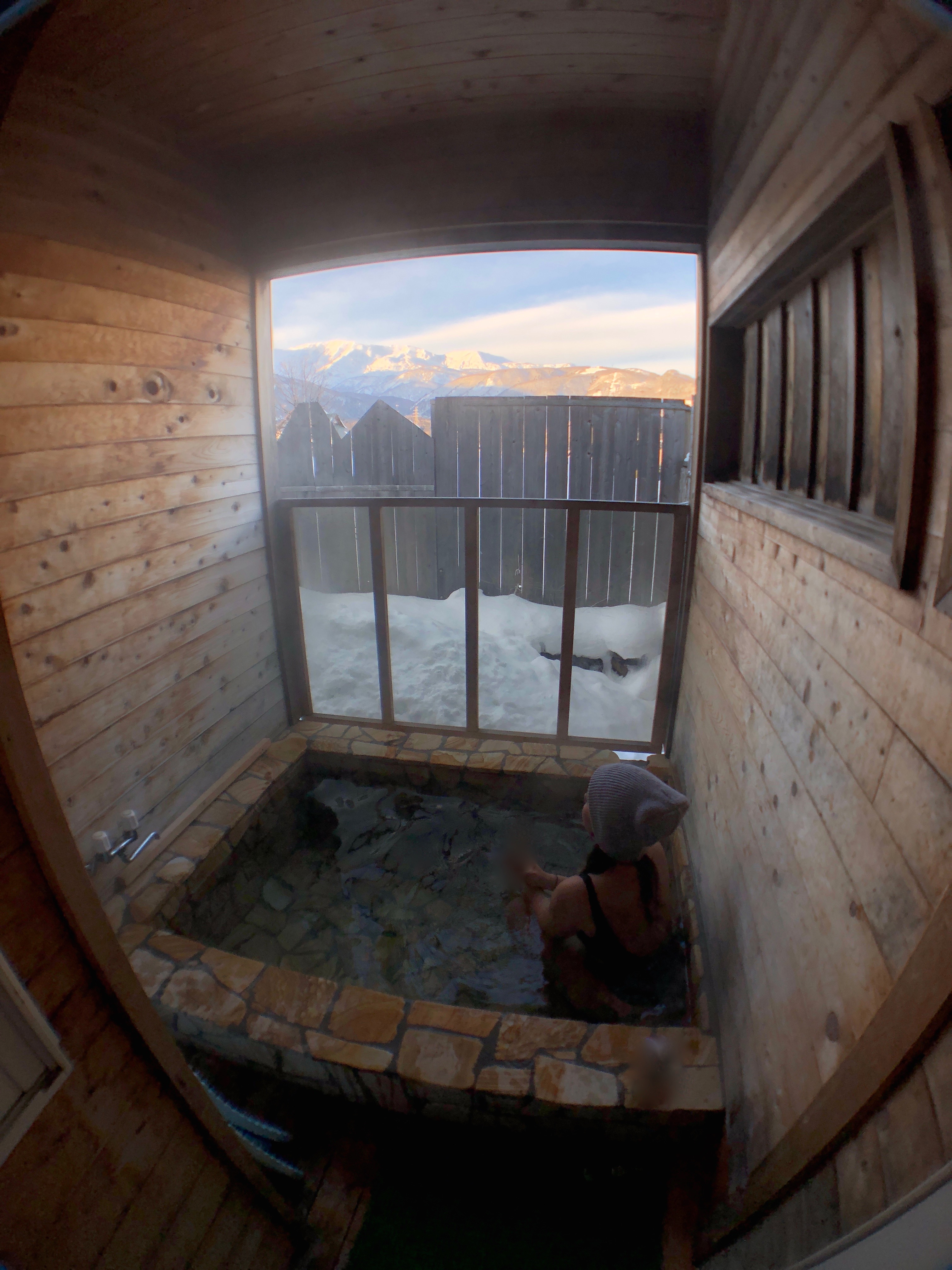
The hot springs of Nagano are treasured throughout Japan as some of the best. Among the most famous, the Hakuba Valley’s hot springs are renowned for their strong alkaline waters which leave the skin soft and smooth. The mineral water of the onsens is also famous for its healing properties, perfect for soothing sore muscles after a day in the mountains. Onsens in Japan have been used as a cure for physical ailments, as well for their beautifying properties. Soaking in an open-air bath under the backdrop of the Northern Alps after a day on the slopes is one of the highlights of a Hakuba winter vacation.

img_0996
Our private onsen at Pension Funny Inn

If your accommodation doesn’t have an onsen, click here for a list of local hot springs. And don’t forget to bathe your tootsies in Tsugaike Kogen in the foot onsen after a big day on the slopes (located near the base of the gondola).

3. Pack Up at the Convenience Store

While we enjoyed eating on lunch on the mountain and going out for dinner, we decided to pack up at the store for quick-to-eat, cheap and yummy breakfast goodies.

Onigiri is the staple of comfort food in Japan, and a very popular dish for breakfast. These rice balls have so many flavours like salmon, umeboshi, Japanese pickled plum, bonito flakes, different kinds of fish roes and so on. One onigiri in the morning and a cup of green tea kept me full for a whole morning on the slopes. Quick, healthy and delicious!

Also, nothing is greater than to start the day with a nice and warm cup of soup (your accommodation will most likely have hot water available at all time).

We loaded our bags with Ramen noodles, onigiris, egg salad sandwiches (incredibly yummy) and fruits (try the Nagano apples they are sublime). And of course sake, local beers and plum wine.

19ec3939-fd05-44cd-b9e1-5ba7d3851035
Snacks for day 1 in Hakuba


4. Ride the TsugaPow DBD Trees

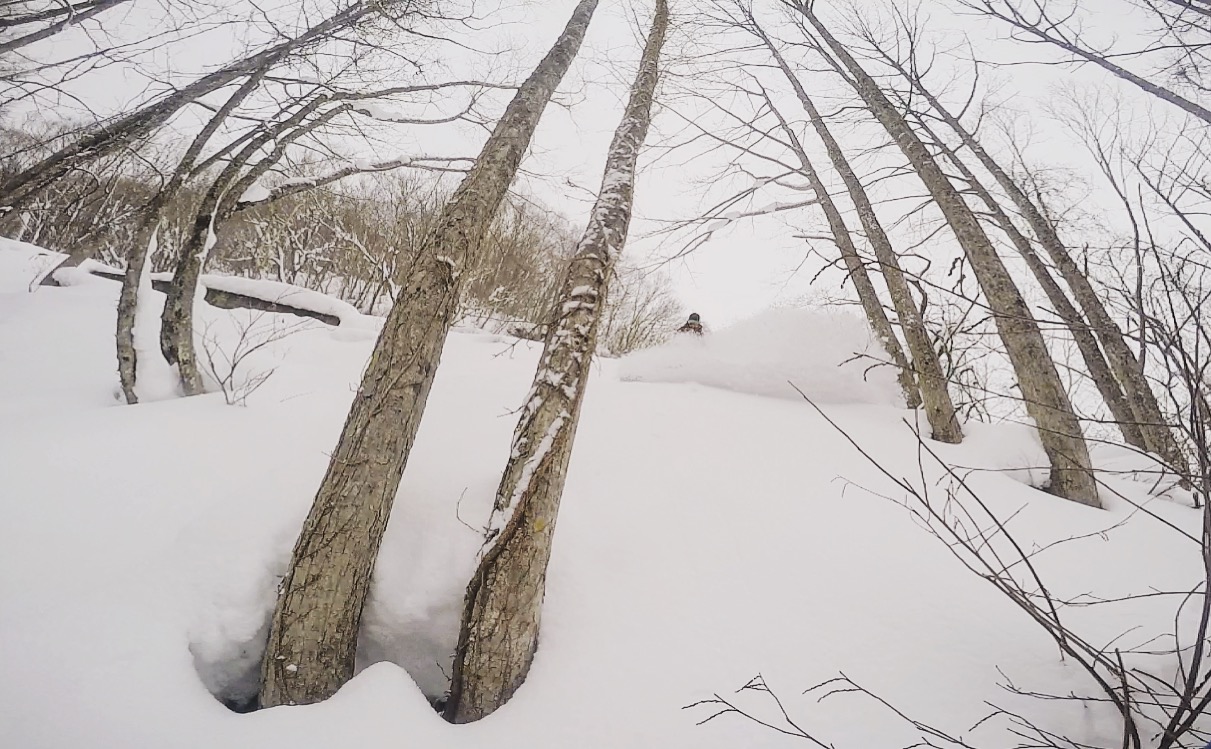
Located north end of Hakuba Valley, the resort of Tsugaike Kogan offers one of the best powder ski areas in Hakuba. For intermediate and advanced powder and trees seekers, the TsugaPow DBD (Double Black Diamond) area offers some of the best lift accessible powder runs in the valley. A 15-min safety course highlighting dangers, risks, avalanches, wildlife and rules is required to pass the gates.

96abf62c-fcff-4d0c-8022-8957f3ae1008
Riding the Tsugapow DBS trees


5. Hire a Backcountry Guide

The Japanese Alps receive an average of 12+ meters of beautiful powder snow each year, and no other mountain range in Japan has comparable terrain with amazing powder. If you wish to get off-piste, access epic terrain and ride the fantastic backcountry Hakuba has to offer, there are many companies in the valley that offer group tours of all levels, as well as tailored tours.


6. Eat and Drink in Echoland 

Rather than a single hub, Hakuba is a vast area with multiple villages. Known as the heart of Hakuba, centrally located between Hakuba 47 and Happo ski areas and surrounded on all sides by the Misorano area of smaller hotels, pensions, residences and holiday homes, Echoland has the highest concentration in town of bars, restaurants and shops in one small area, mostly all located on one street. There are some great little Japanese eateries and izakayas where no or barely any English is spoken, and you really feel like you’re in Japan.

Note that most restaurants on Echoland are extremely busy. It is extremely recommended to make booking wherever possible. Some restaurants won’t accept reservation, so arriving before 6pm help.


7. Experience a Japanese Izakaya

An izakaya is a typical Japanese gastropub where people enjoy coming for a drink and a bite to eat. Known for their bustling atmosphere, tapas and local sake to enjoy in a comfortable, relaxing environment, going to an izakaya with colleagues after work is a cultural habit in Japan. While the Japanese are generally very reserved, in an izakaya the atmosphere is very lively (literally a gathering to drink). It is a popular place for employees to meet after the day’s work to relieve stress and have a good time together.

da02ab55-0103-41f9-be81-3610e7cbd4db
Izakaya Hie is one of the best and most atmospheric izakaya venues in Hakuba. The restaurant is housed in a quaint hut and needless to say, the food is beyond yummy. The place gets very busy, so booking ahead is advised.


8. Follow Hakuba on Social Media to Stay in Loop of What’s Happening in the Valley

After a fantastic day on the slopes, be sure to check out Hakuba’s diverse nightlife, which offers something for everyone. Whether you are in the mood for a quiet pub, live music performance or high-energy dance club, Hakuba’s après ski scene has it all. To stay in the loop of what’s happening in the valley, follow the official account Hakuba on social media.


9. Do visit the Snow Monkeys Park

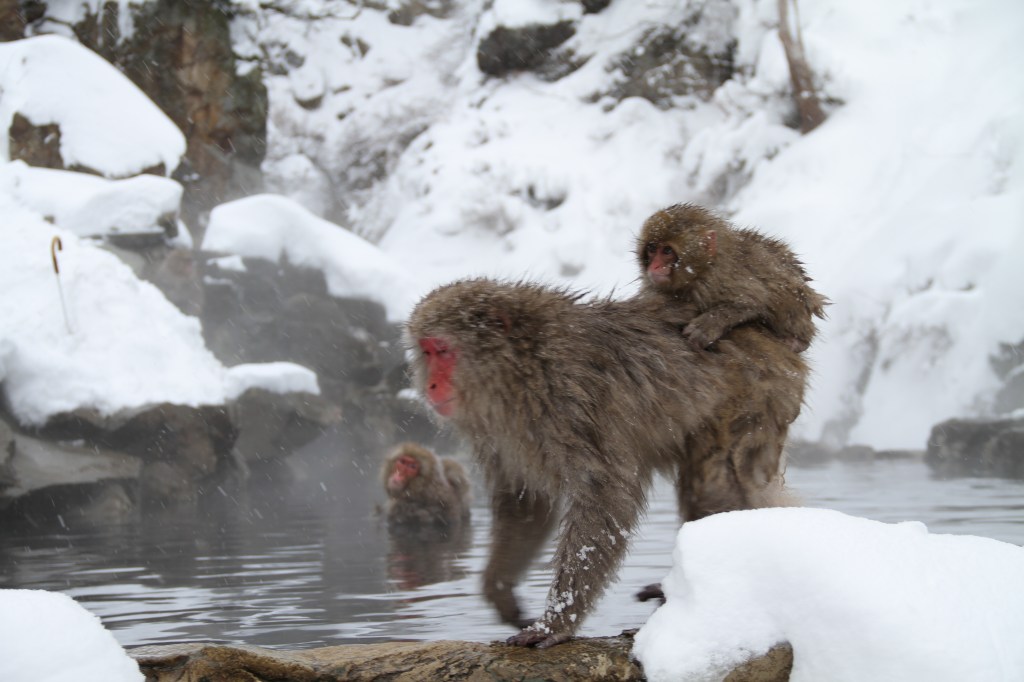
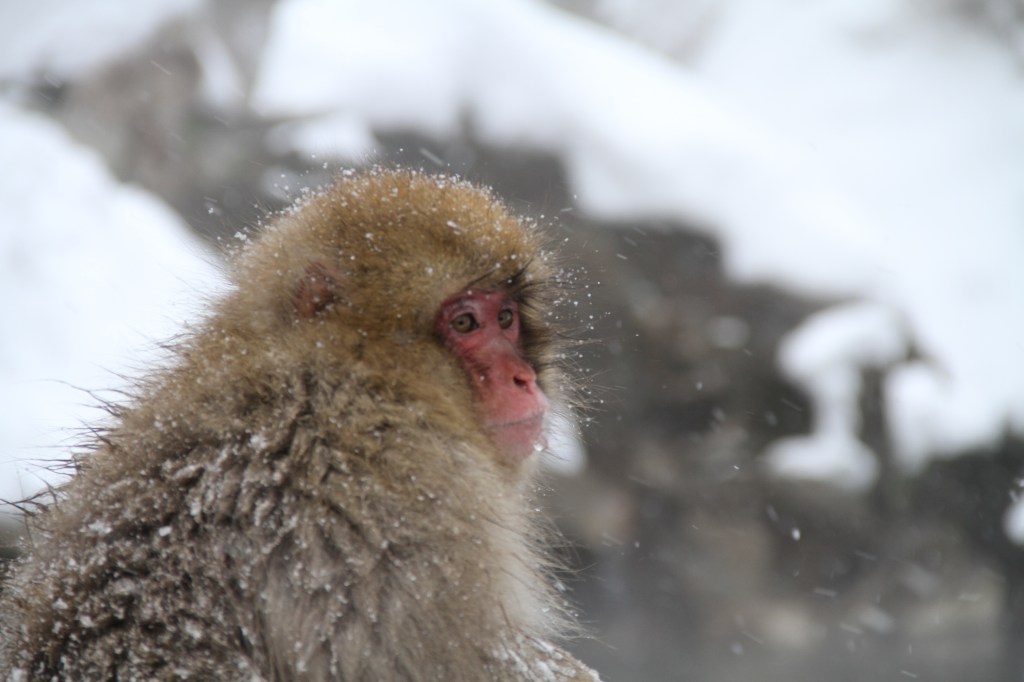
It wouldn’t be a total epic winter vacation in Hakuba without a visit to see the monkeys of Jigokudani. Located near the base of the Joshinestu Kogen National Park, the Jigokudani Yaen Koen (otherwise known as the Snow Monkey Park) is home to a very special troop of monkeys. Those are the only wild monkeys in the world known to bathe in hot springs, making them truly unique. Whether you rent a car or go as part of a tour, the snow monkeys definitely need to be added to your list!

10. Have the Best Time

We don’t always fully grasp how happy and carefree we are until those moments slip away. It’s essential to recognize these instances and cherish them. Capture memories through pictures and videos, share them with friends online, but also remember to disconnect from your devices once in a while. Immerse yourself in the experience, explore local culture, savour traditional foods, engage in conversations with locals, and embrace their customs and traditions.

For some of you, these travels may kindle a desire to return, while others will feel an unrelenting urge to keep exploring new and exciting places. Regardless of your choice, treasure every moment and make the most of it. Someday, you might look back on this journey and realize how fortunate you were to have fully embraced it.

c3f9d544-5882-4e85-864b-3523c3ebe6d4
Arigato gozaimasu Japan!

Finding Ground Above Clouds in Nepal

“Drink chhaang, nectar of the Gods. Then eat shutki”.

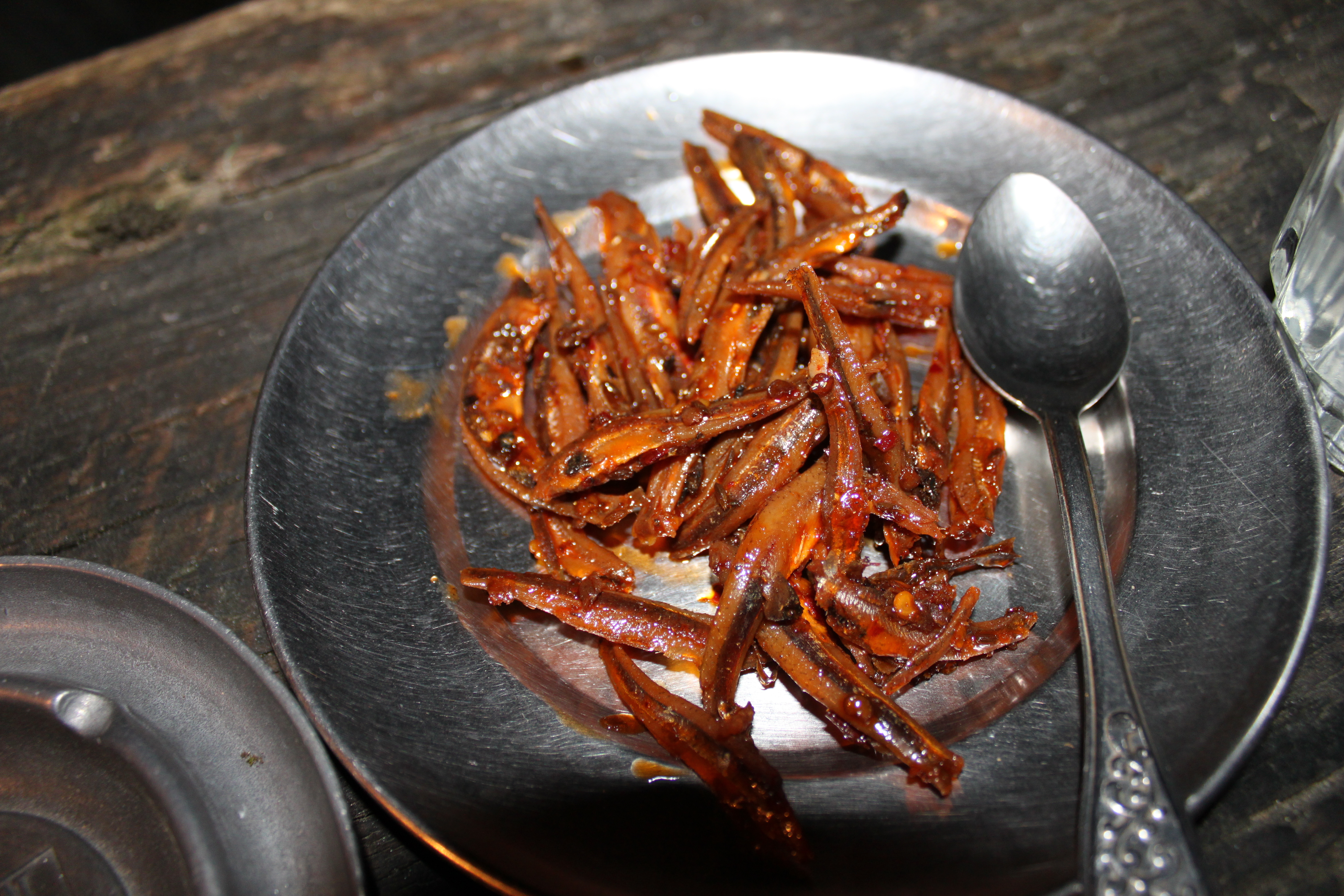
I couldn’t decide which aspect made me more hesitant: the pungent aroma of the fermented millet drink wafting into my nostrils or the sun-dried little fishes, their round eyes fixed on me eerily. As I directed their heads toward my mouth, my face contorted in anticipation of the impending circus about to unfold on my taste buds—my expression unmistakable. With each sip of the glass, I chased it down with a fish, battling the unique combination. Upon triumphantly finishing my glass, Manik promptly refilled it.

“Oh no, thanks, Manik,” I implored, grappling with a piece of fish scale lodged between my teeth.

“It’s a mountain tradition! The glass is always full. Drink!” he insisted, his chubby cheeks flushed from the consumption of the homemade brew as he passed around the shutki.

Manik, a 5-foot tall Nepali, didn’t fit the typical stature of a Himalayan guide. However, his weathered skin, yellowed eyes, and chapped lips attested to prolonged exposure to the sun and cold, characteristic of a life in the mountains.

Two days prior, we had booked a three-day trek around Kathmandu, the capital and gateway to tourism in Nepal. Nestled at the foothills of the Himalayas, Nepal had been a sought-after destination for trekkers and climbers since the 1950s and had long been on my travel wish list. This trek was the perfect start to our two-month backpacking adventure through South Asia.

“I’ll set you up with our best guide,” the tour agent affirmed while finalizing our booking. “He’s a very experienced trekker and has great knowledge of the area. You’ll undoubtedly like him.”

Day 1: 16km to Chisapani (2340m)

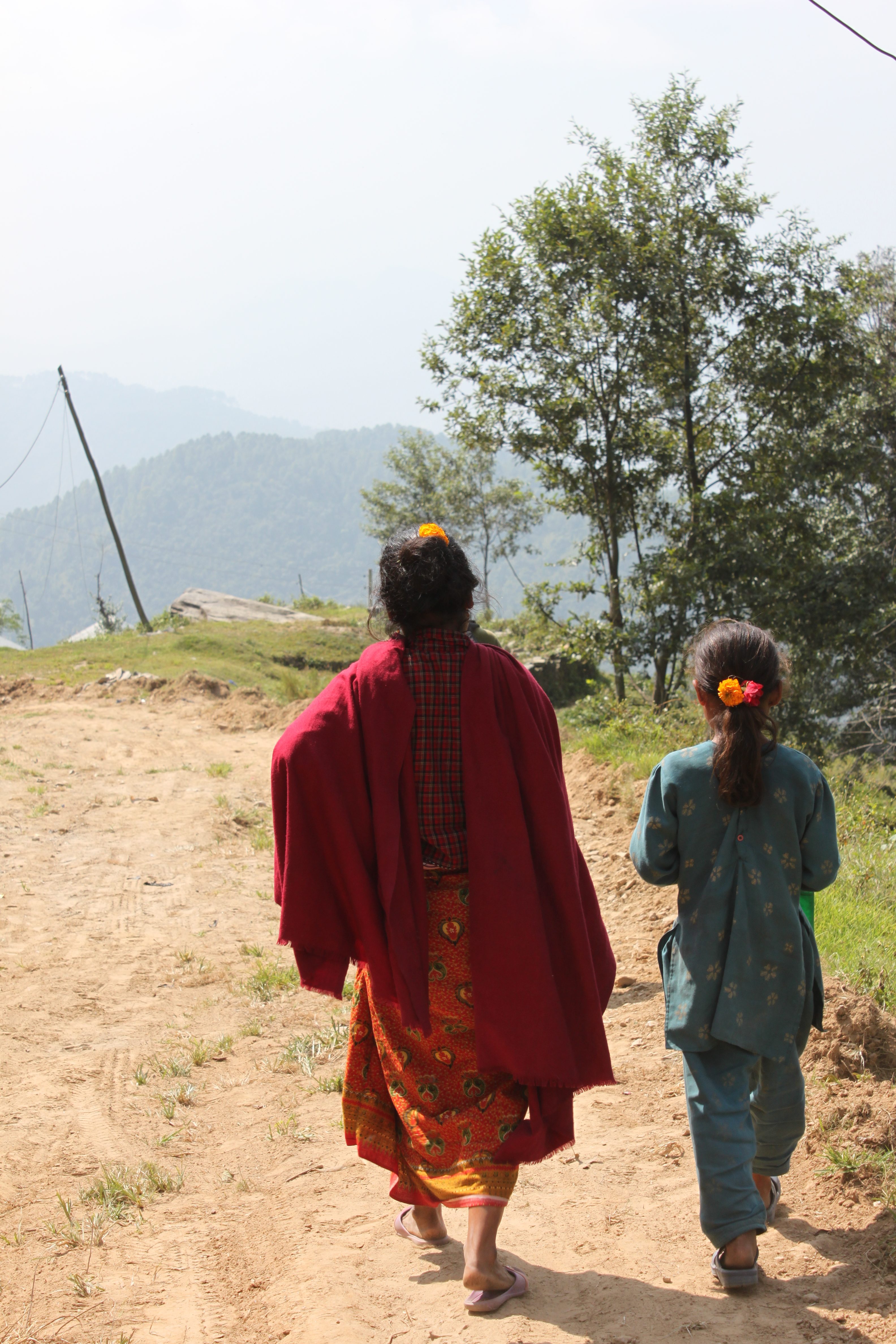
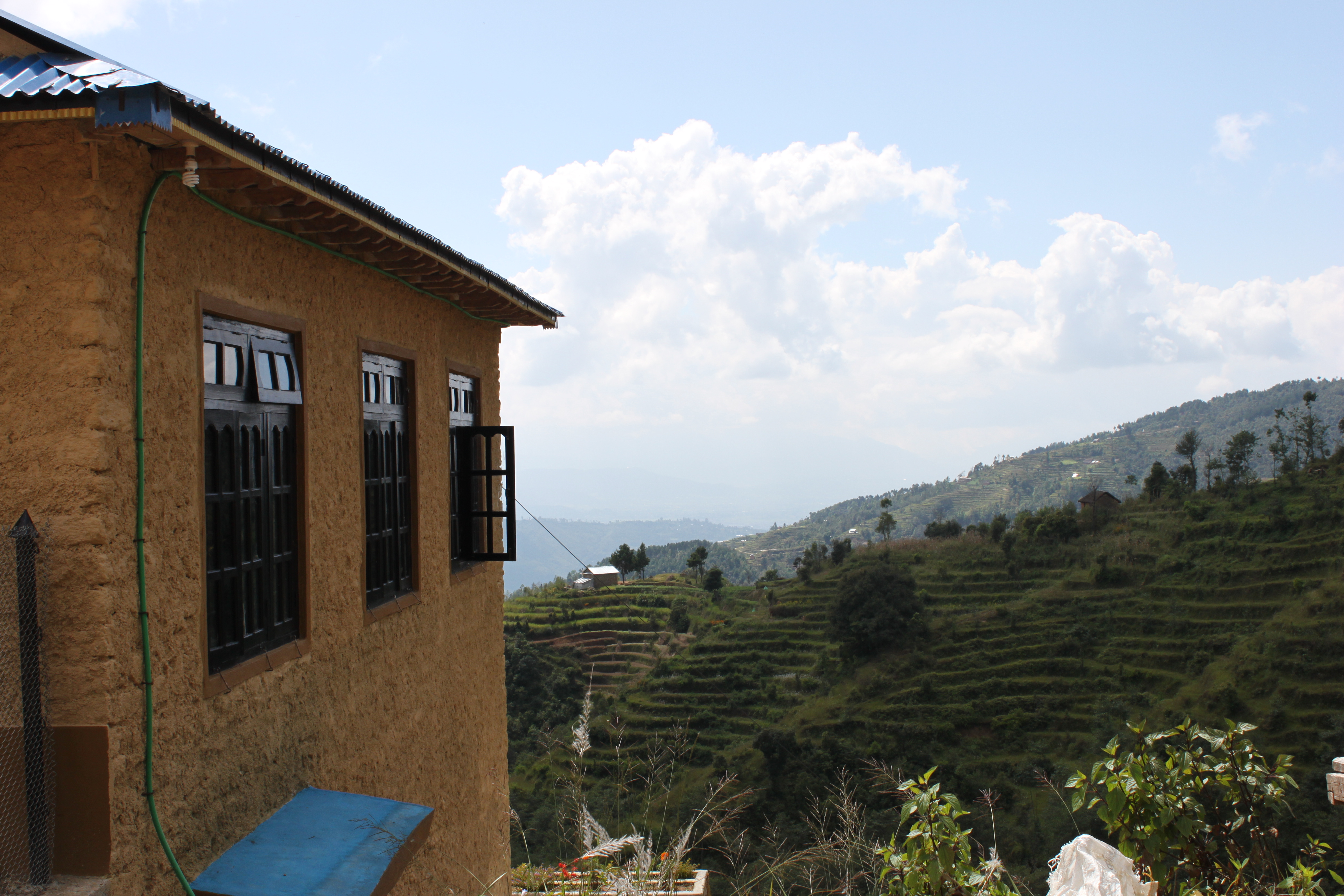
In the early morning of November, Manik collected us from my hostel. The taxi delivered us to the entrance of the Shivapuri National Park, situated on the northern edge of the Kathmandu Valley in Sundarijal. Chickens roamed freely near a set of steep stone steps carved into the mountain, while goats accompanied our ascent, intermittently grazing on woody plants lining the trail. We ventured through expansive forests of pines, oaks, wild cherry, and rhododendrons. As the forest gradually receded, we entered rural villages, catching glimpses of villagers engaged in their daily routines.

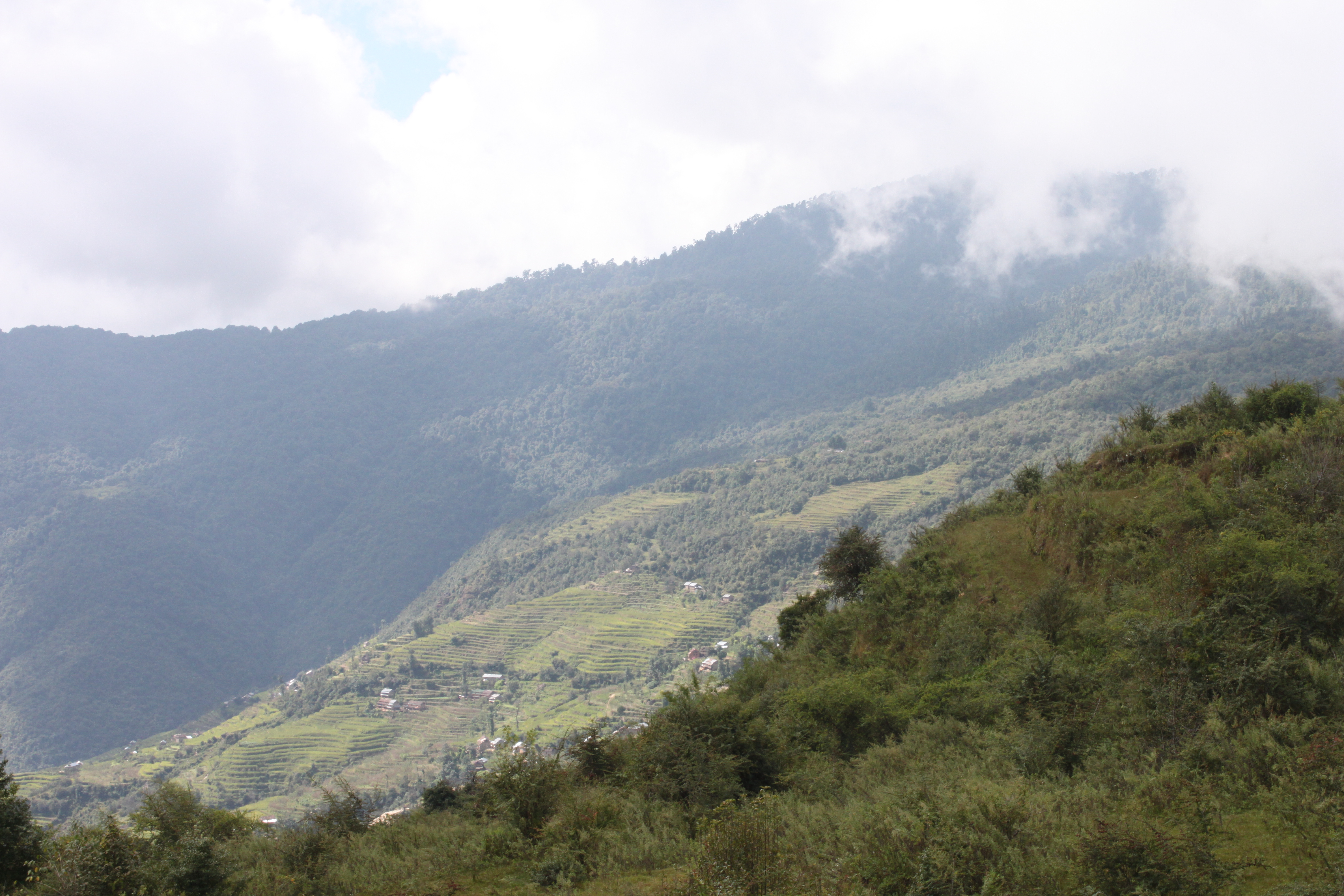
The scenery became more enchanting with every step we took. We journeyed through alpine meadows, traversed yak pastures, and crossed glacial moraines. Gradually, we ascended to the clouds, piercing through thick fog and inhaling the crisp mountain air. In the jungle, where the trail narrowed, we noticed prayer flags hanging from the trees, gracefully floating through the mountain mist. As we continued to gain elevation and hiked along the mountainside footpath, we were treated to breathtaking views unveiling a dramatic landscape of maize fields and rice terraces below.

Upon reaching Chisapani, we stepped into a candlelit teahouse where a gathering of guides and porters engaged in lively conversation around a table.

Manik extended a warm invitation to the rooftop terrace, where he joyfully served us hot tea from a gleaming silver tray.

The night embraced a chilly atmosphere as winds swirled through the crevices of the stone walls. With no electricity in the teahouse, darkness enveloped the space, rendering it cold and immersed in quietude. I curled into a ball, enveloped by wool blankets, memories filling the emptiness as I gradually drifted into a serene slumber.

Day 2: 15km to Nagarkot (2195m)

At 5 am, we awoke to a profound silence, as if transported to a different world immersed in a tranquil haze. The heavy fog slowly crept in through the windows, resembling a ghostly mountain presence.

Embarking on our daily trek, well-rested and nourished, I couldn’t shake off the feeling of my own lack of fitness as we tackled the slanted trail. My legs struggled with each step.

Manik, with his round-shaped head, suggested, “I can carry the bag,” nodding persuasively with a warm smile.

“Oh, no, but thanks,” I declined with a slightly frazzled smile.

He insisted, “I’ve been a porter before, carrying big bags for weeks—bigger than you, bigger than me.” He gestured, exaggerating the size of a tourist’s bag with his lean body. His goofiness amused me, but I resisted his offer, contemplating my decision with each sweaty step.

“How was it to be a porter?” I asked while navigating across a river.
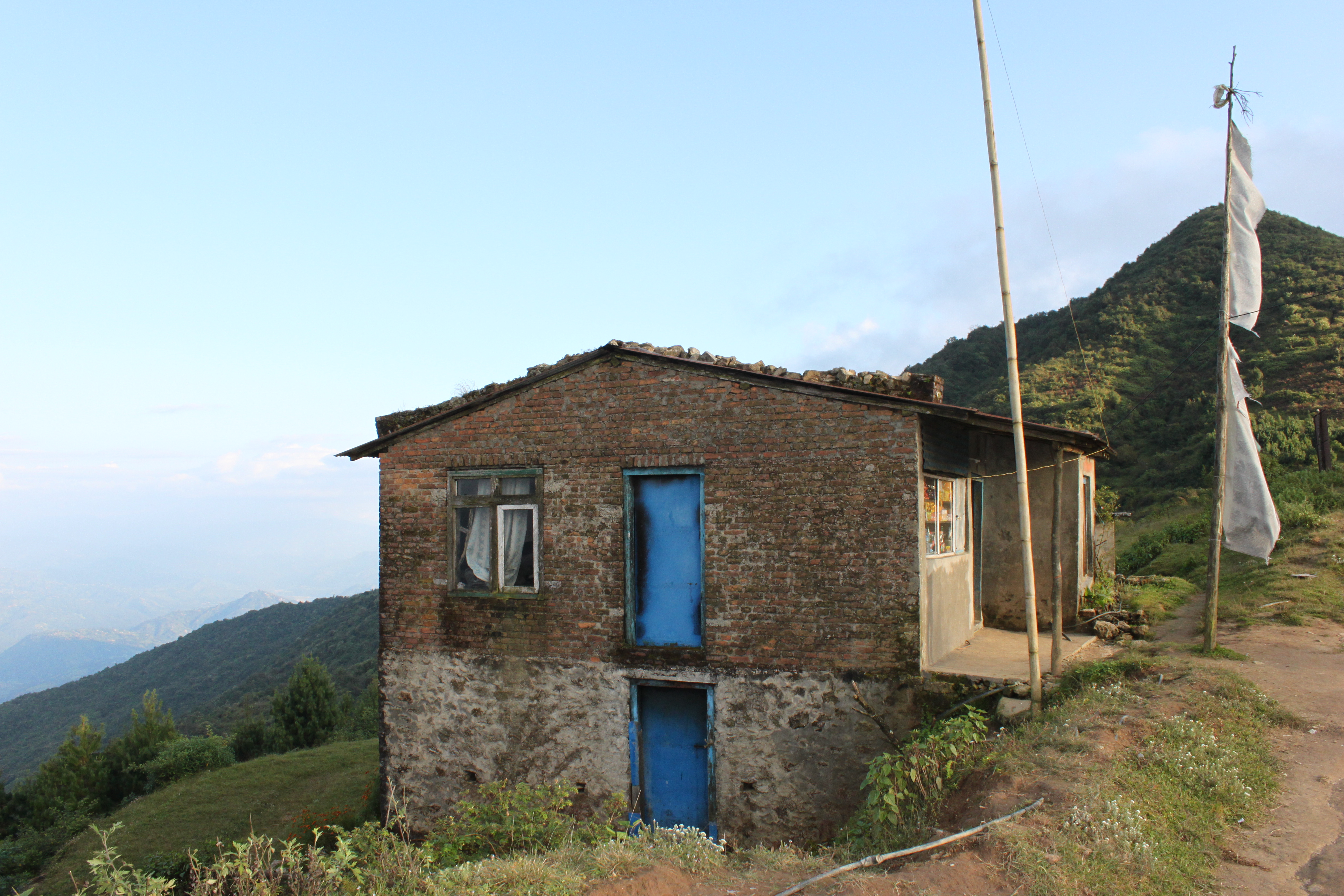
“Very hard. My family was poor. Before being a porter, I worked in corn fields. Mountain life is very challenging.”

Manik shared his past life in the city, working as a rickshaw driver. Unfortunately, he almost lost a leg in a traffic accident. He returned to the mountains to recover and eventually became a porter.
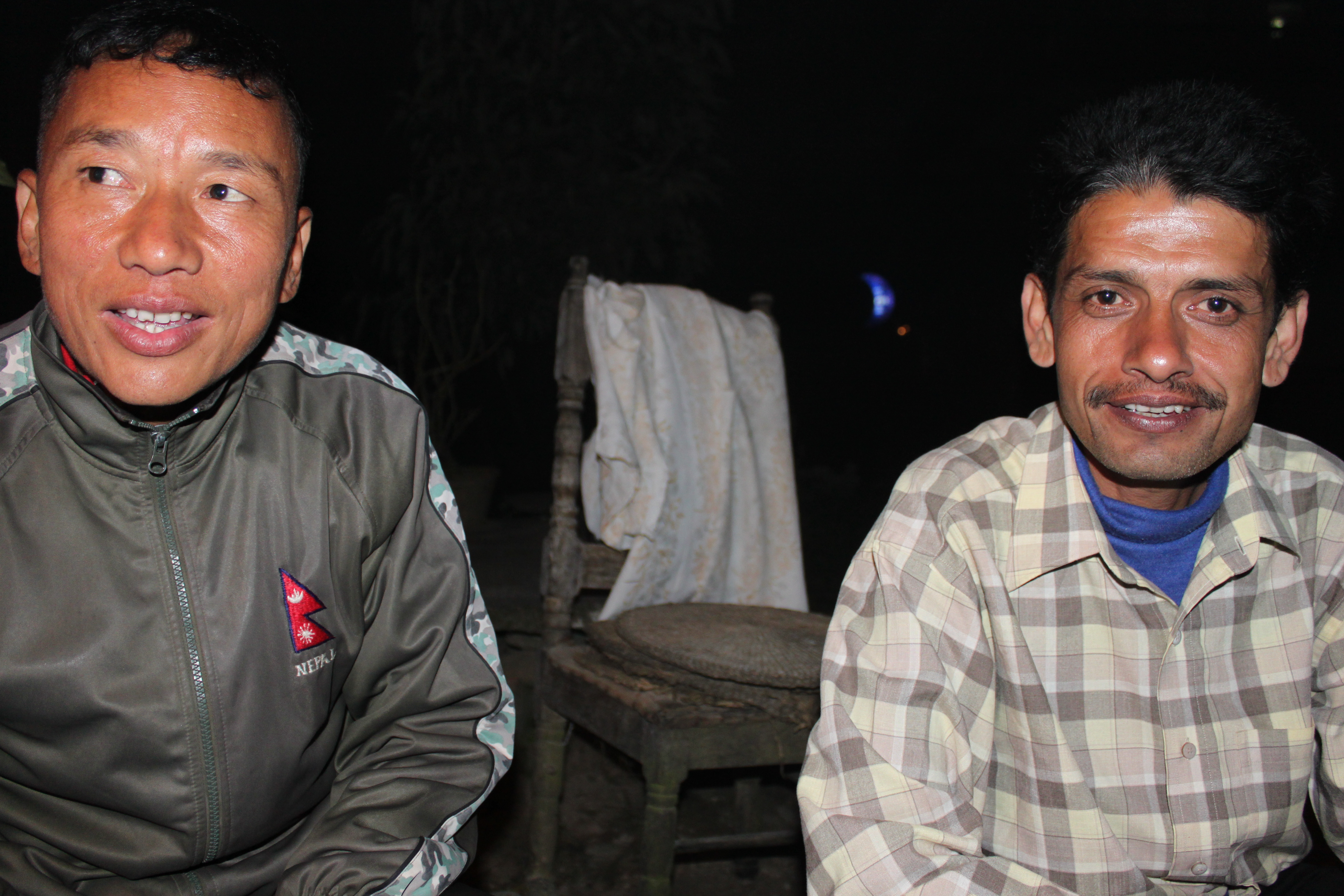
“No English,” he continued, wind tousling his raven-black hair. “Carrying tourist bags for days, weeks, months in the mountains. Hard work. People can be mean. No shoes. I may not look strong, but I am very strong.” He flexed his biceps with a giggle, feet sliding into his oversized, well-worn sneakers.
“Porter for 15 years,” he continued. “Hard work. Learned English by talking to tourists like you. Now I’m a guide. Hoping to trek Everest. Good money on Everest,” he explained, pointing to the horizon.

“Do you have a family?”

“Yes, ma’am,” he affirmed, pride sparkling in his chocolate-brown eyes. “Three boys. I guide now. Can afford education. Hoping for the best future for my boys.”

As I delved into Manik’s life stories, the trek became more effortless. How could he exude such contentment, being healthy inside and out, living a life so distant from my own? I empathized, inspired by his optimism and heartened by his genuine care.

Eight hours and a dozen swollen bug bites later, we reached the second summit of our trek, Nagarkot. My legs were inflamed, my face beet-red, and sweat dripped endlessly from my forehead.

“How I’d love a glass of wine right now!” I exclaimed between breaths.

“I’ll find wine for you!”

I watched as Manik trotted down the dirt hill, fading with the dusk.

As the moon ascended and settled in the sky, we gathered around a low table, perched on wooden drums outside a vendor’s hut. With the company of a fellow guide, Manik uncapped a reused water bottle and poured the chhaang into four glasses. Then came the shutki. The family residing in the hut observed us with curiosity from within.

He inquired about our journey, and I asked about his dreams. We engaged in a conversation about life, all while the moon traversed the starry sky.

Day 3: 15km to Thamel

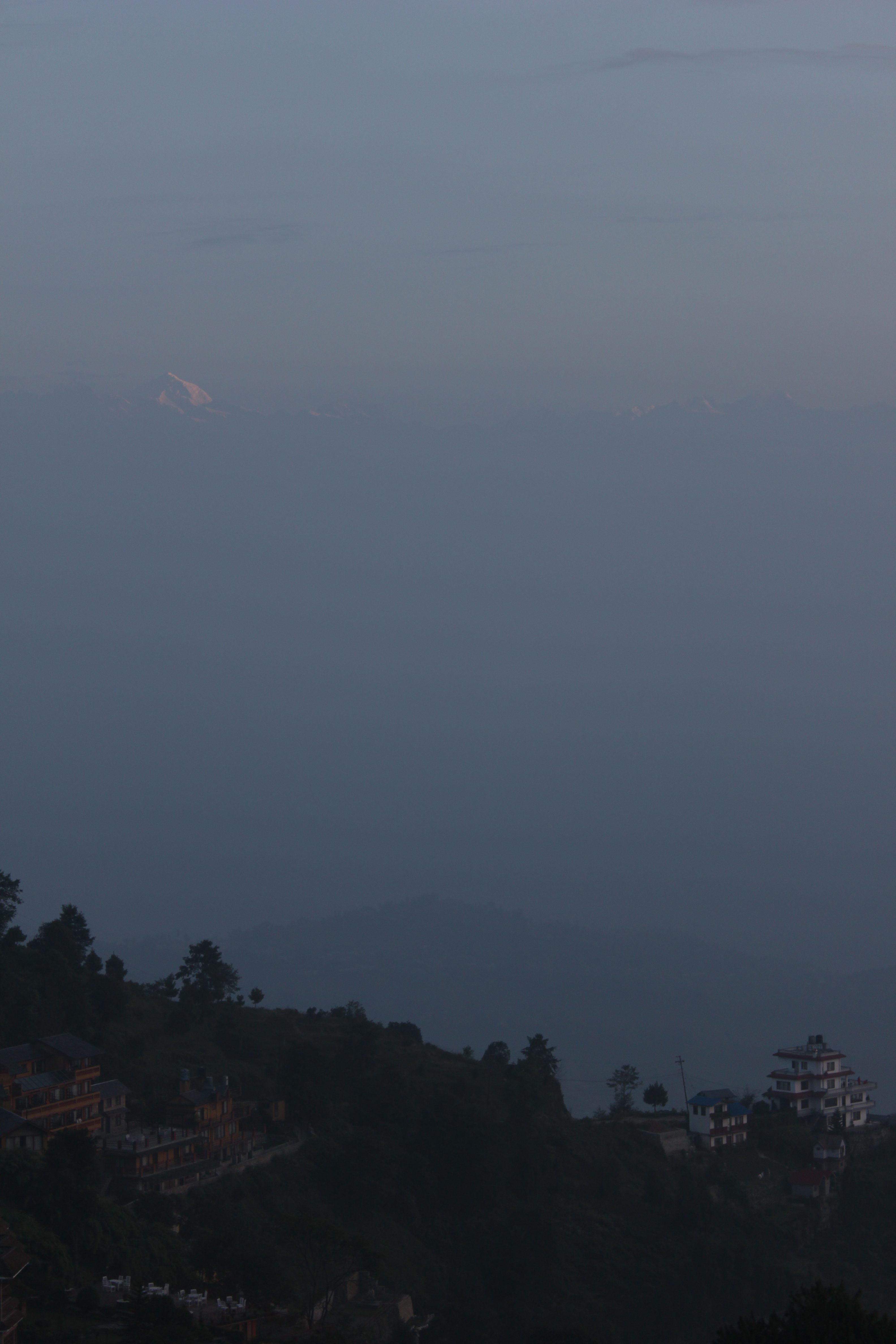
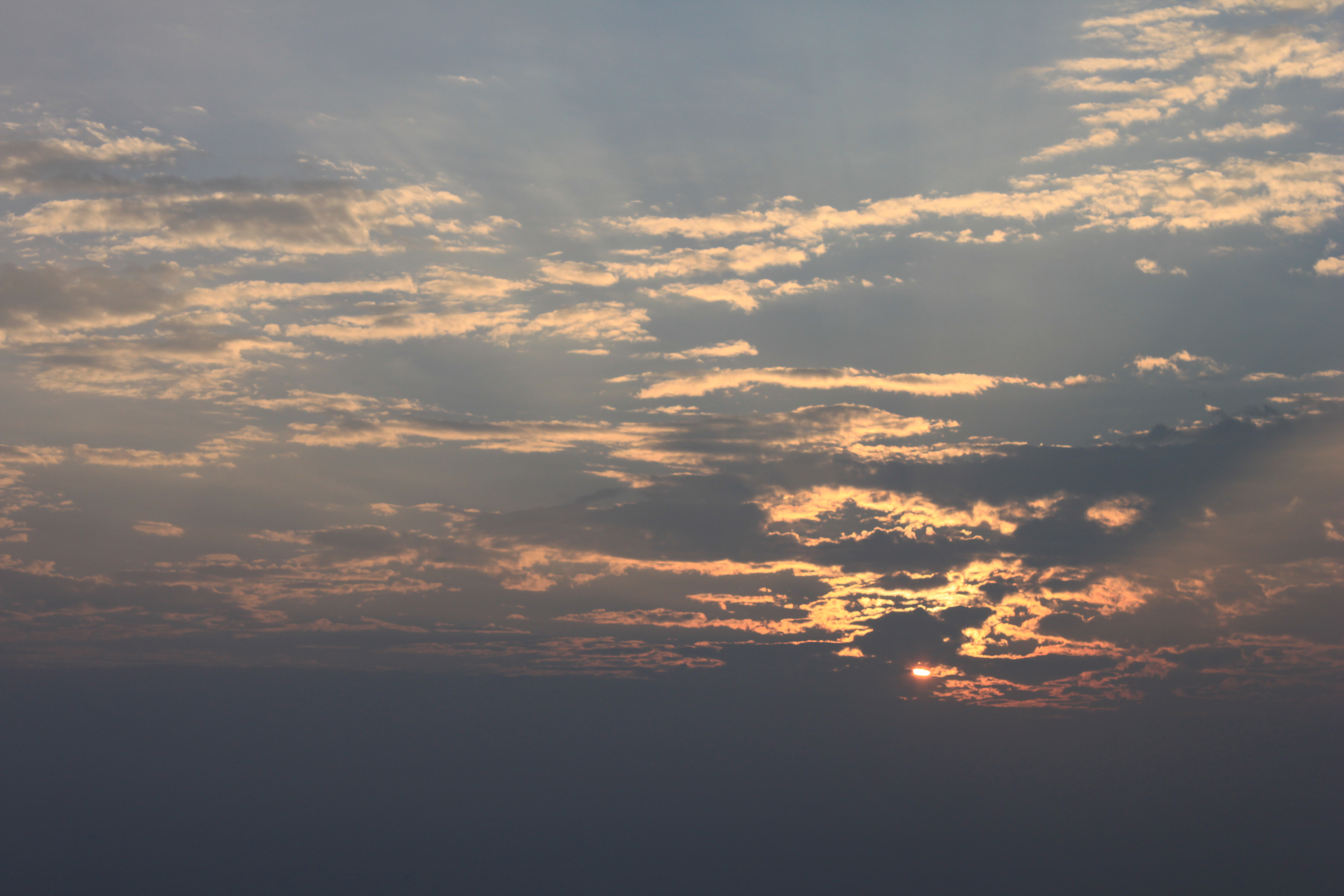
We witnessed the sunrise over the Himalayas, observing the snow-capped Mount Everest gradually piercing through the blushed clouds. As I reflected on the hues of the sky, my thoughts turned to Manik and how he guided me to see things in a new light. Much like my taste buds, he heightened my awareness of things I had previously failed to appreciate. While tourists busily snapped photographs of the morning spectacle, I found myself lost in contemplation, pondering the why and the how, gazing upon a life woven with both beauty and hardship.

We returned to the bustling backpacking town of Thamel, where the narrow alleys were congested with both tourists and locals. Soon, I found myself yearning for the tranquility of the mountains, where my thoughts could wander freely amidst the expansive open space.

I gifted Manik my brand new trekking shoes, a perfect fit for his feet. In return, he draped a white silk scarf around my neck—a khata, symbolizing compassion and purity.

Our paths diverged, leading us in different directions. As I stood amidst the bustling crowd, I closed my eyes, transported back to the mountains, navigating rugged trails through the Himalayan mist alongside Manik.

“You want chhaang?” he’d inquire.

I’d smile, savouring the memories and the lessons I had gained. “Absolutely, I’d love some chhaang.”

A Sri Lankan Holiday

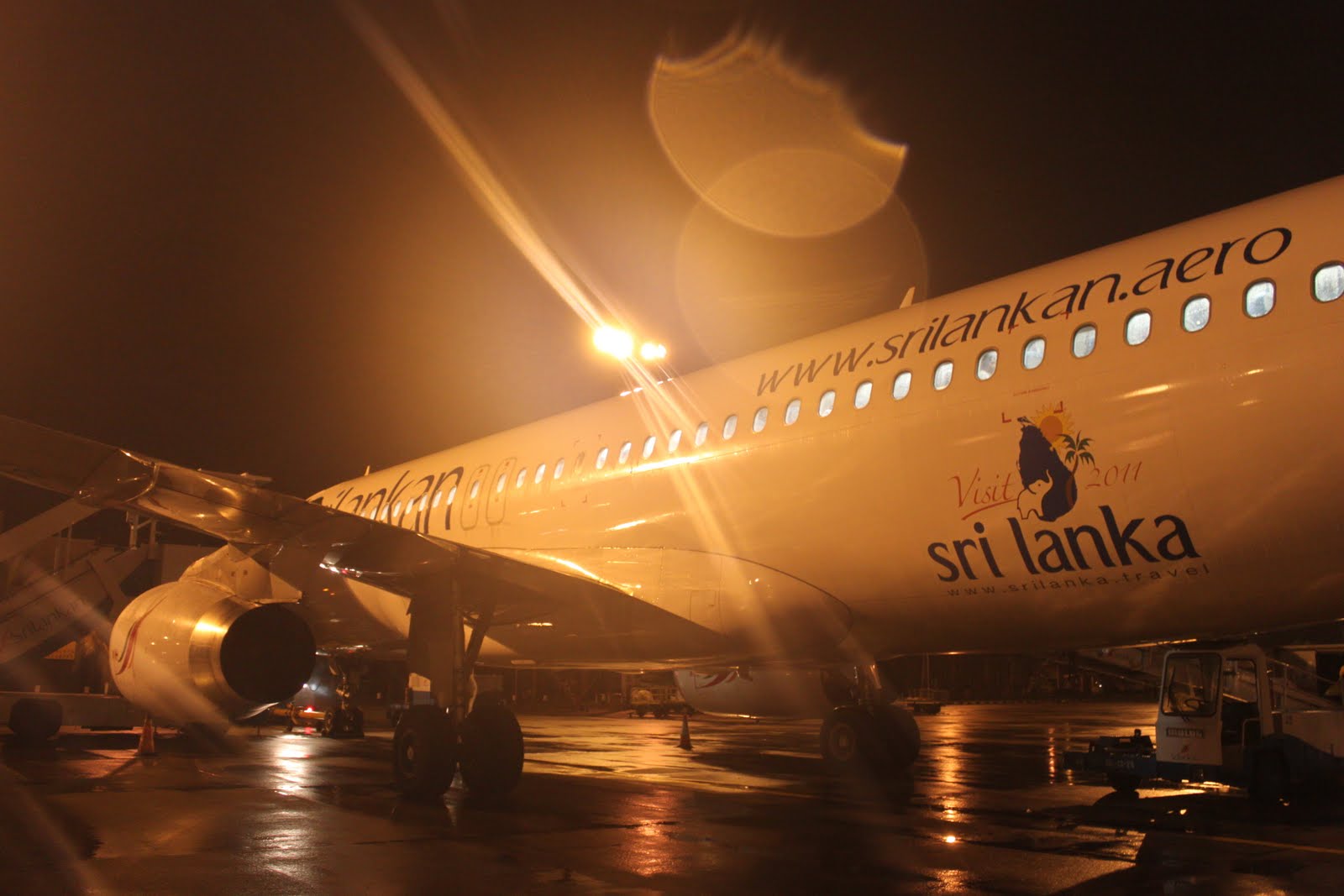
Our journey into Sri Lanka began with a 45-minute plane ride filled with unlimited Carlsberg, setting the stage for our final destination. Welcomed with warm smiles by the immigration agent, our passports were stamped with a free visa, and we were wished a great stay in this captivating country.

Colombo, the bustling capital, greeted us with an unexpected challenge—a recent flood of 400mm of rain, an anomaly for this time of year. However, the resilient sun quickly reappeared, drying the city’s remnants. Stepping out onto warm, dry ground, we were ready to immerse ourselves in the fourth and last country of our itinerary.

Complications with our Indian Visa necessitated a day’s stay in Colombo. A trip to the Indian Embassy, reminiscent of a bureaucratic maze, proved both frustrating and confusing. Memories of a similar ordeal in Nepal lingered, raising the question of necessity. After navigating through the complexities and obtaining a somewhat ambiguous approval, we sighed in relief and retired to a hotel.

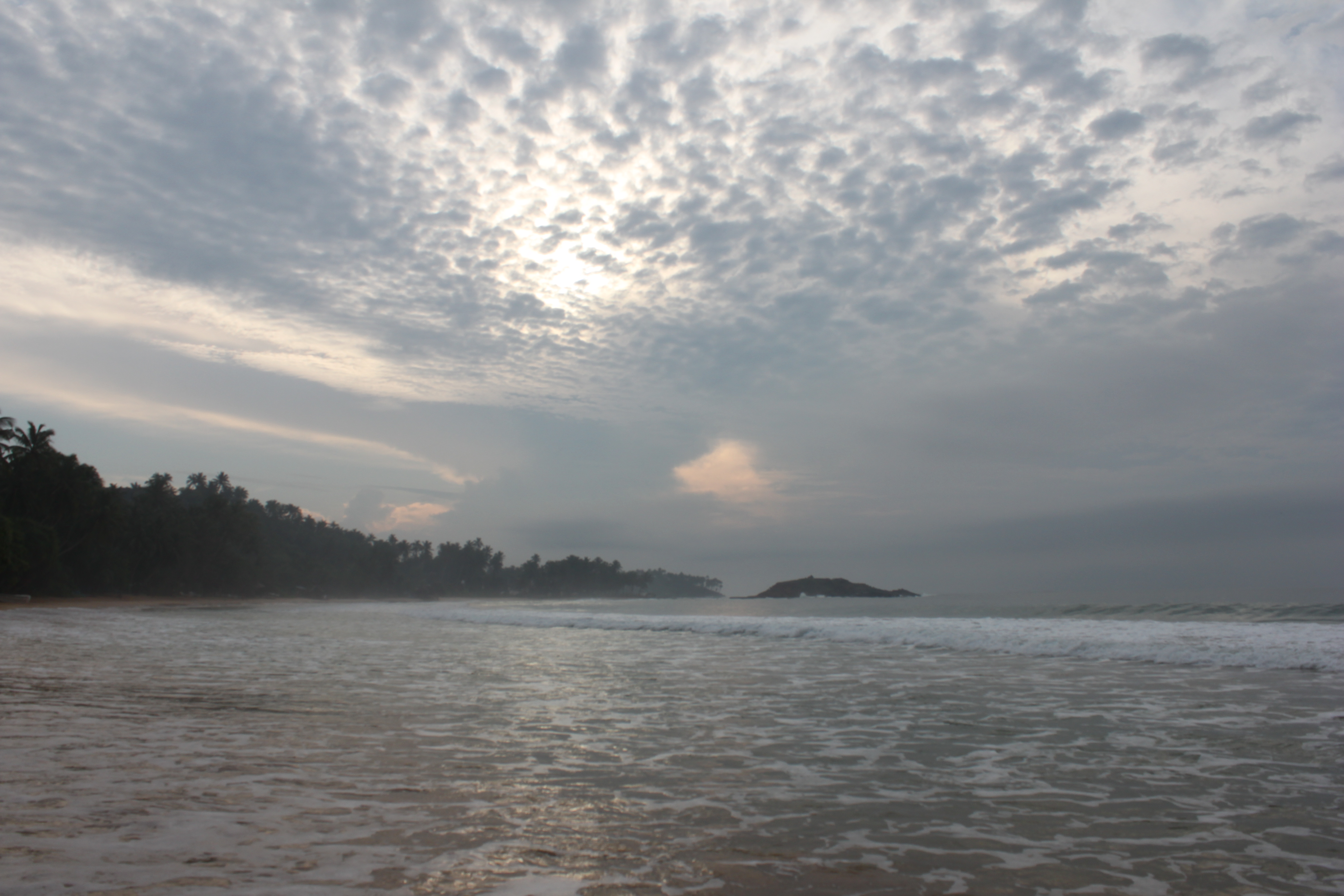
Our journey to Mirissa, booked for its budget-friendly Paradise Beach Club, involved a local bus adventure adorned with Hindu God figurines and pulsating Sri Lankan music. Despite a fare dispute and discomfort, the crescent beach of Mirissa welcomed us with its turquoise waters and tranquility, offering the relaxation we sought.

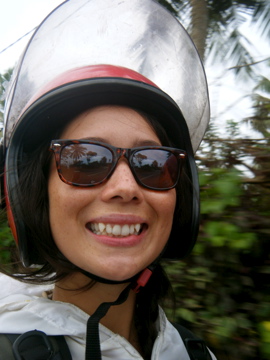
To add excitement to our lazy days, we rented a motorbike, exploring coastal roads and neighboring towns. From scuba diving in Hikkaduwa to capturing stilt fishermen in Polehna, our days were a blend of relaxation and adventure. A failed motorbike lesson added a touch of humor to our escapades.

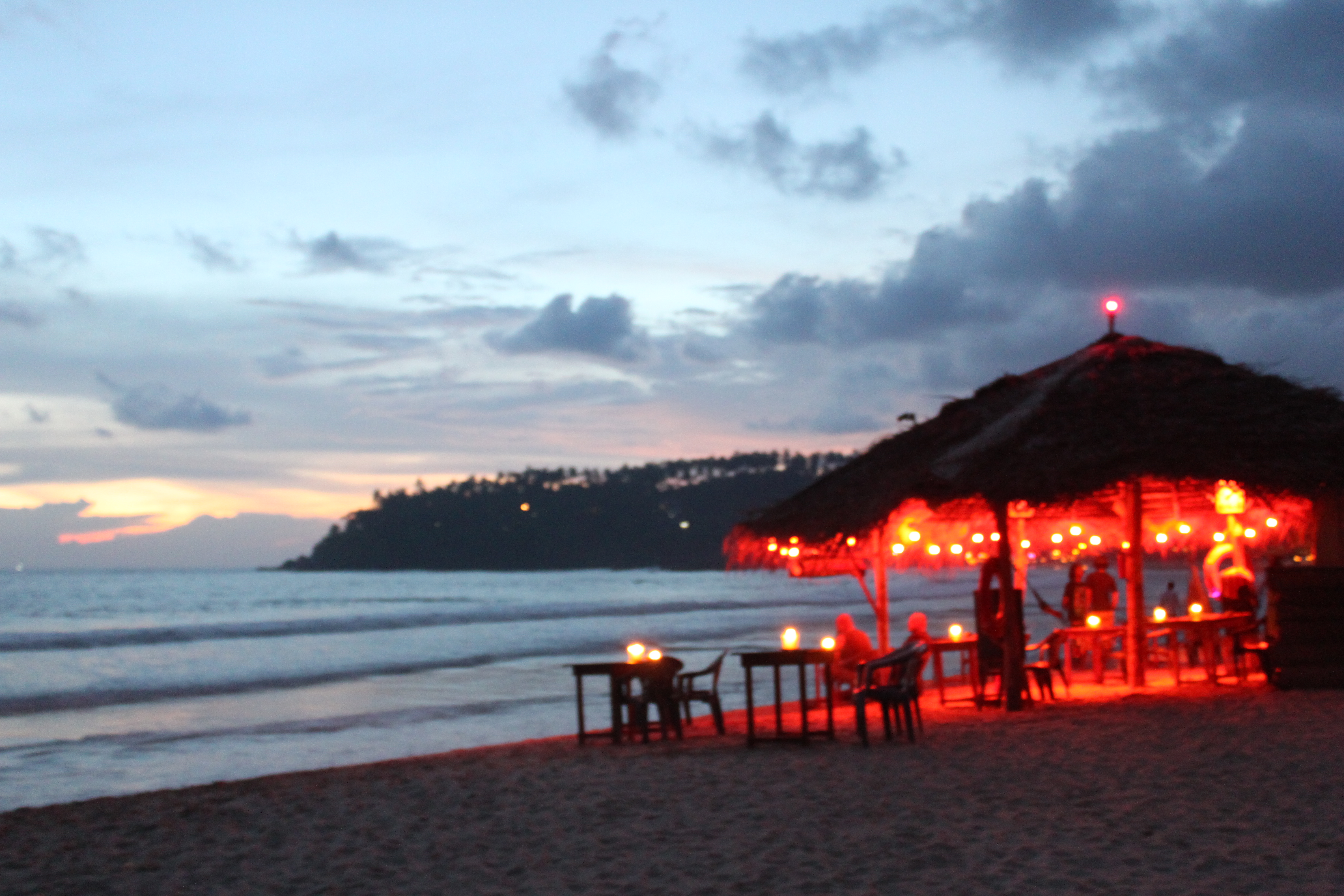
As thundershowers painted the sky in black and grey, we found solace in the fresh rain. A mesmerizing lightning show and a power outage turned dinner into a candlelit affair, creating an unexpectedly charming atmosphere. Amid the storm, I took the opportunity to reflect, read, and enjoy a glass (or a few) of wine.

Two months of traversing the Indian Subcontinent, trekking Nepal, exploring Tibet, and now unwinding in Sri Lanka have been filled with discoveries and encounters. Witnessing the real colors of each country and learning profound lessons about life, I feel closer to whatever it is I’ve been seeking. With itchy feet and anticipation, I look forward to hitting the road again, already planning my next adventure.

Kanyakumari: The End of the Road

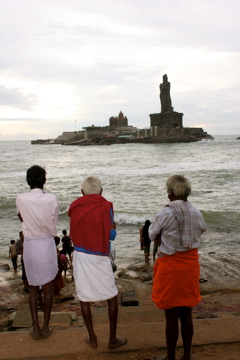
There I stood, with my feet soaking in the confluence of three seas, at the land’s end of the country, at the tip of my Indian journey.

Kanyakumari, a quaint and unassuming village, graces the southern extremity of the Indian subcontinent. Nestled at the confluence of the Indian Ocean, Bay of Bengal, and the Arabian Sea, it is often said that reaching this geographical nexus signifies the conclusion of a profound journey of self-discovery—a moment steeped in accomplishment.

Our expedition spanned the length of the subcontinent, tracing a route from the northern border to the absolute southern tip. We traversed vast distances on the labyrinthine roads of India, delving into the lives of its people, absorbing the nuances of their diverse culture. From the colonial imprints on cities and their denizens to stark disparities in wealth and caste, our expedition unfolded a tapestry of experiences. We bore witness to the harsh realities of poverty, glimpsed the stark juxtaposition of opulence, and comprehended the disheartening absence of hope for many. Our gaze met the faces of countless homeless individuals, orphaned children, beggars, and disabled souls, including a man ravaged by leprosy, his skeletal limbs protruding. Amidst the chaos, overcrowding, disorder, and injustice, we beheld a nation yearning for salvation.

Yet, amidst the shadows cast upon India, rays of goodness pierced through. Pristine beaches adorned with swaying palm trees graced both coasts. Architectural marvels, spanning the epochs from history to contemporary times, stood as testaments to India’s rich heritage. The tapestry of diverse religions woven into the fabric of daily life. The aroma of delectable dishes, crafted from the freshest ingredients. The unwavering pride of the citizens in their national sport, cricket. The shy smiles adorning each face.

And so, at this juncture, on the brink of the nation, facing the convergence of three seas, I find myself at the culmination of a journey marked by introspection, comprehension, admiration, and compassion. India, I extend my gratitude for rendering this expedition the most indelible of all.

As the curtain falls on this chapter, the time for vacation beckons. Join me on the forthcoming leg of my adventure in Sri Lanka, chronicled in my next blog.

Under a Keralan Sun

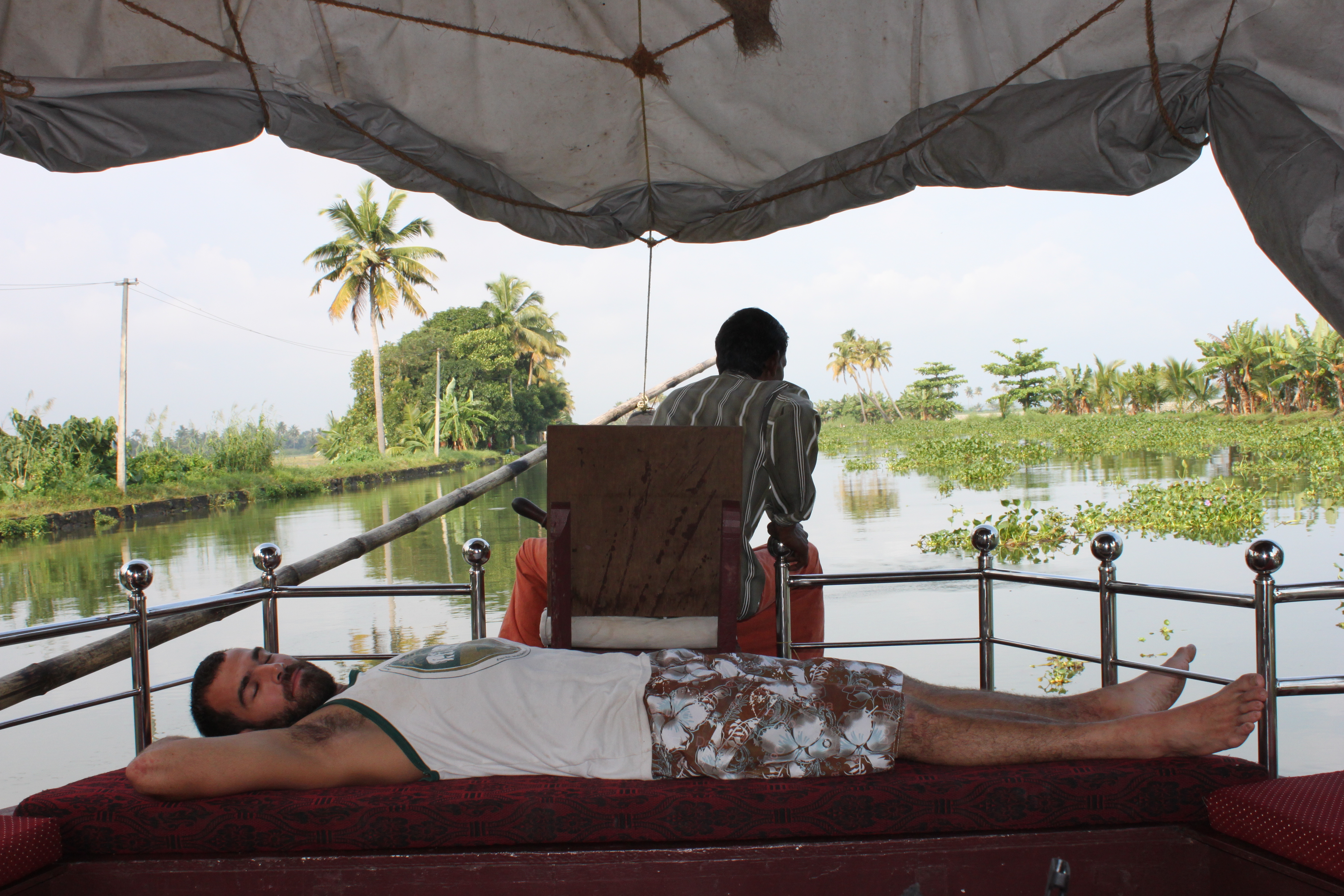
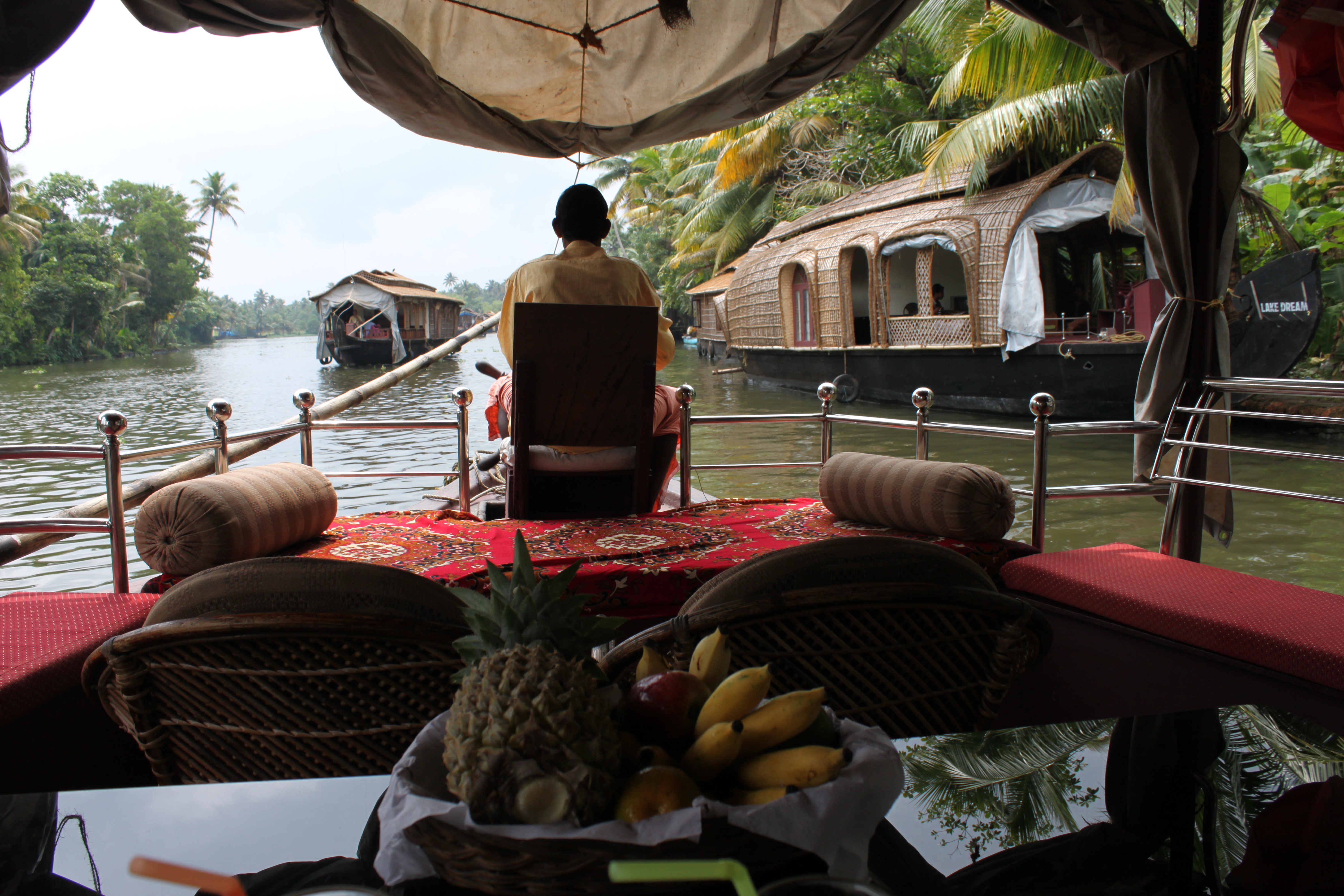
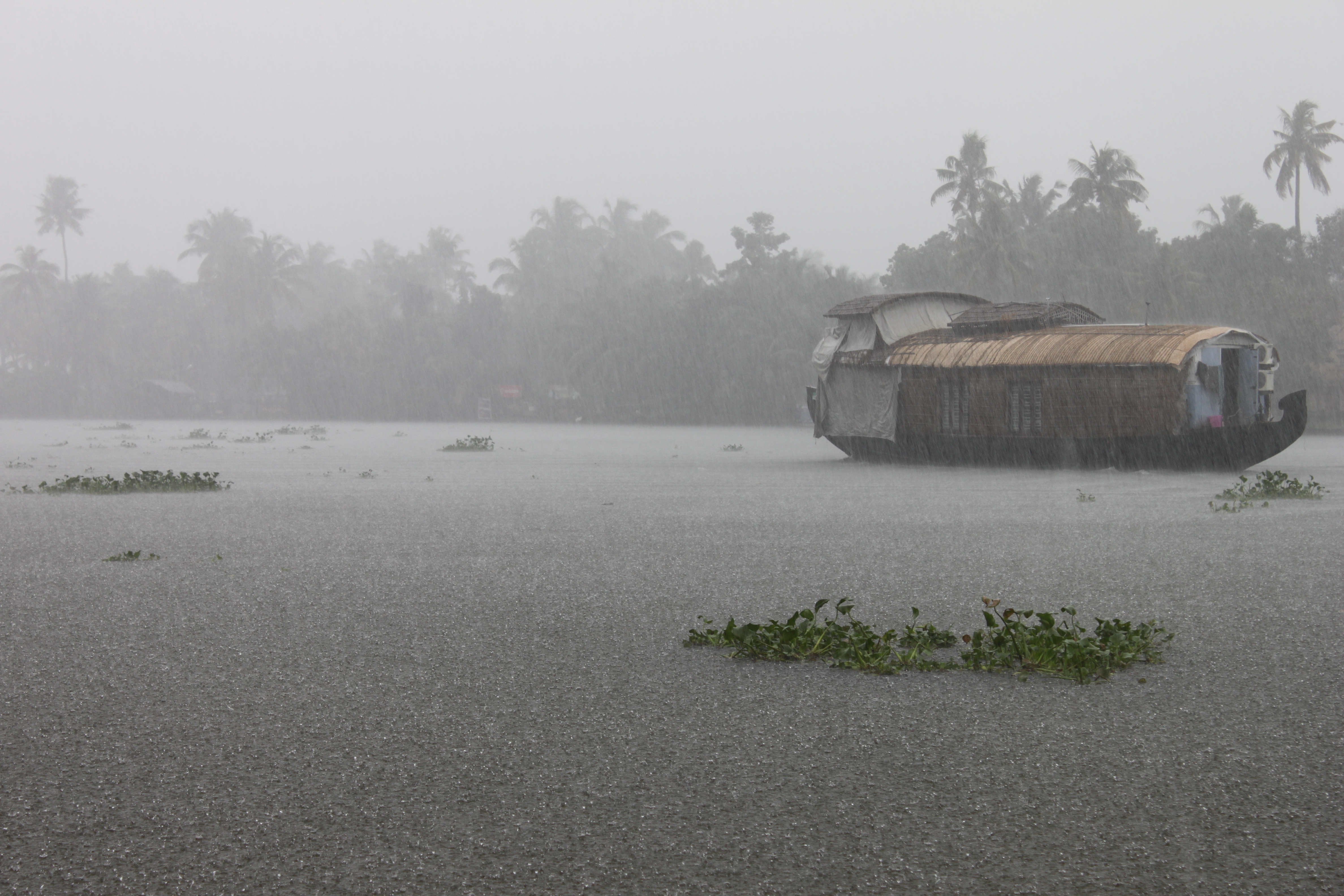
Cruising through the backwaters of Kerala is like a gentle treat you absolutely deserve while exploring India. Jumping aboard a traditional houseboat designed like a rice barge, we dive into these tender moments of pure serenity and quietness.

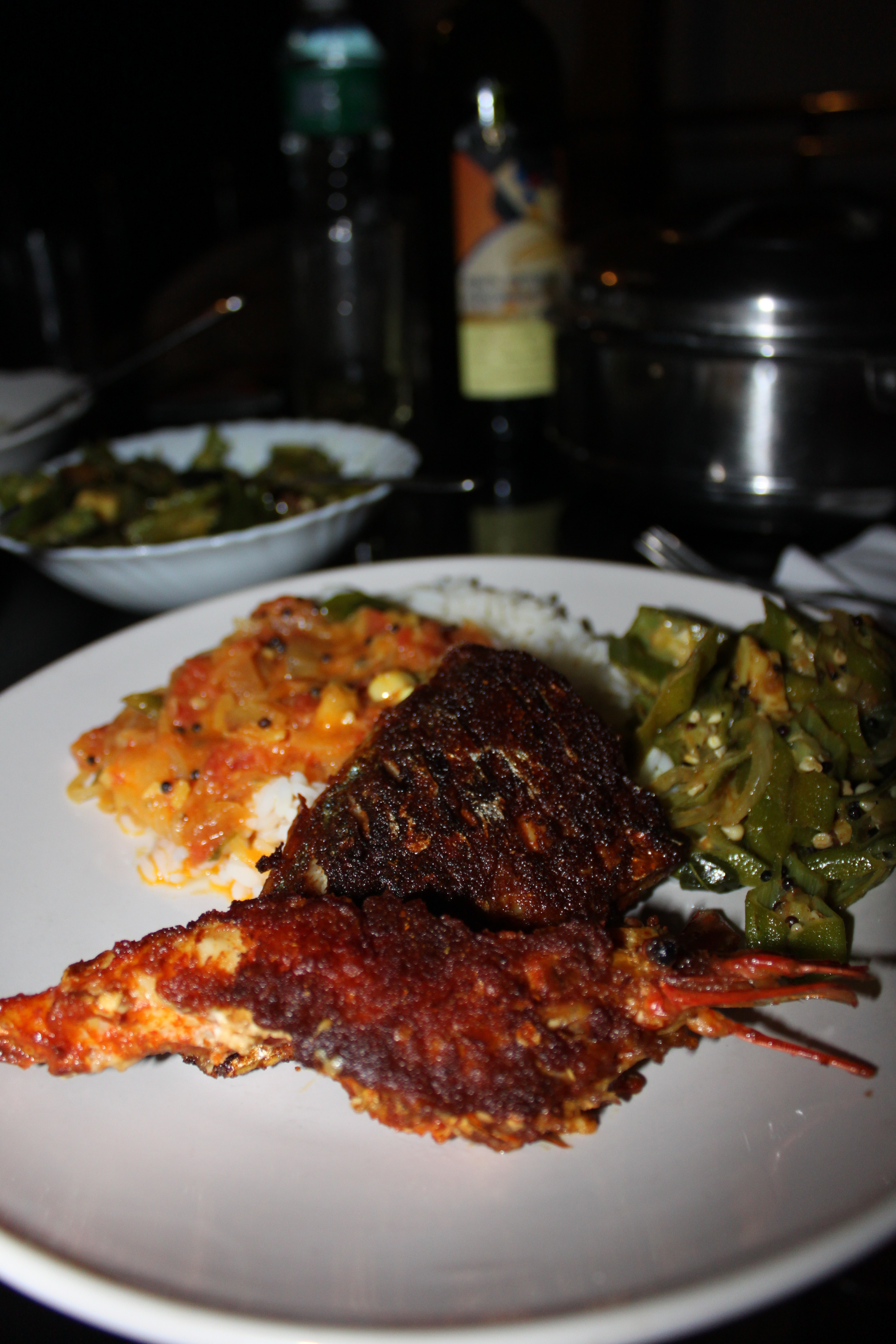
With a network of waterways snaking from the coast to the inland, the state has embraced this unique way of traveling the canals using houseboats. The trip consists of a leisurely cruise through tranquil canals with delicious authentic Keralan food prepared by the captain, along with a night or two aboard, sleeping on the water.

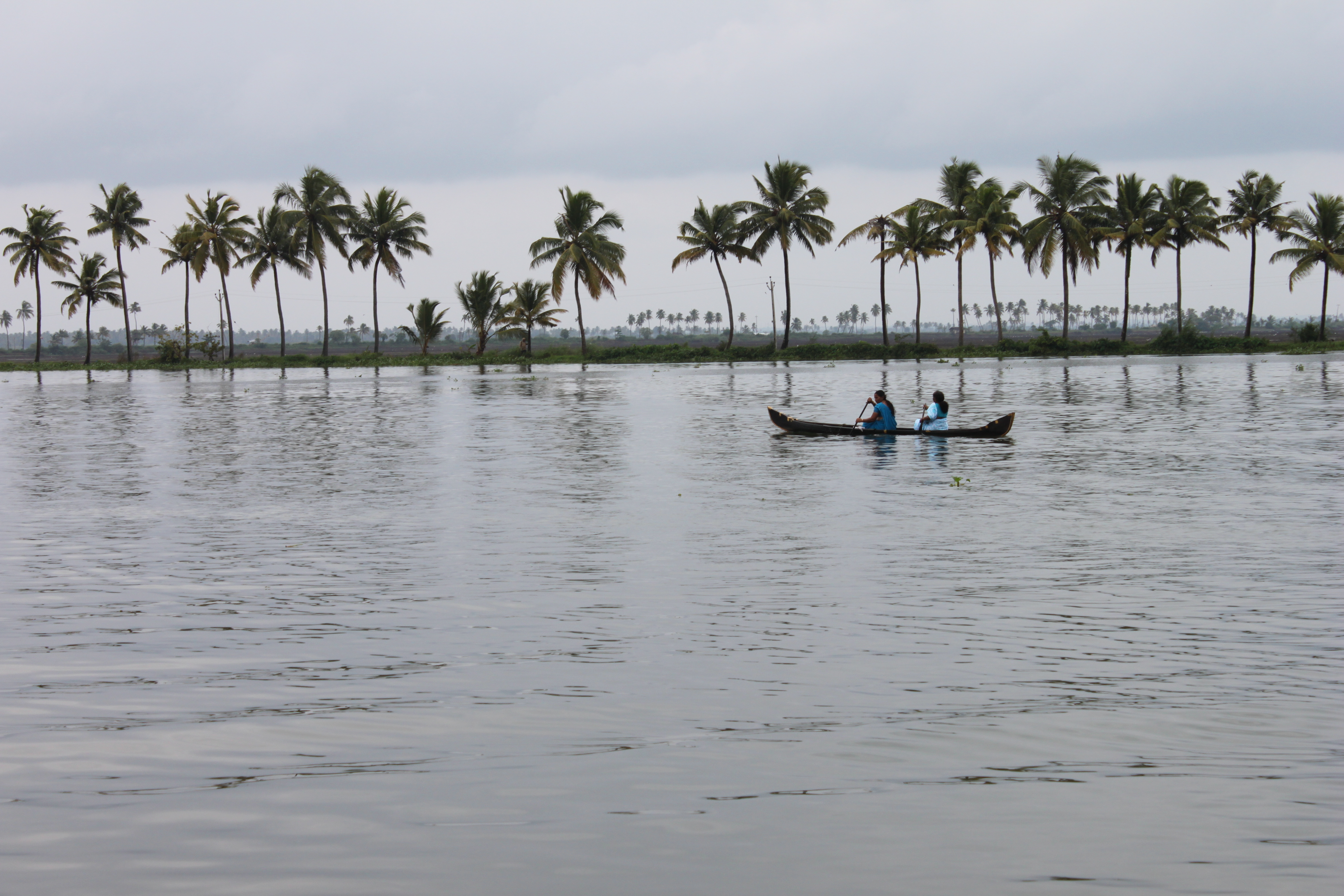
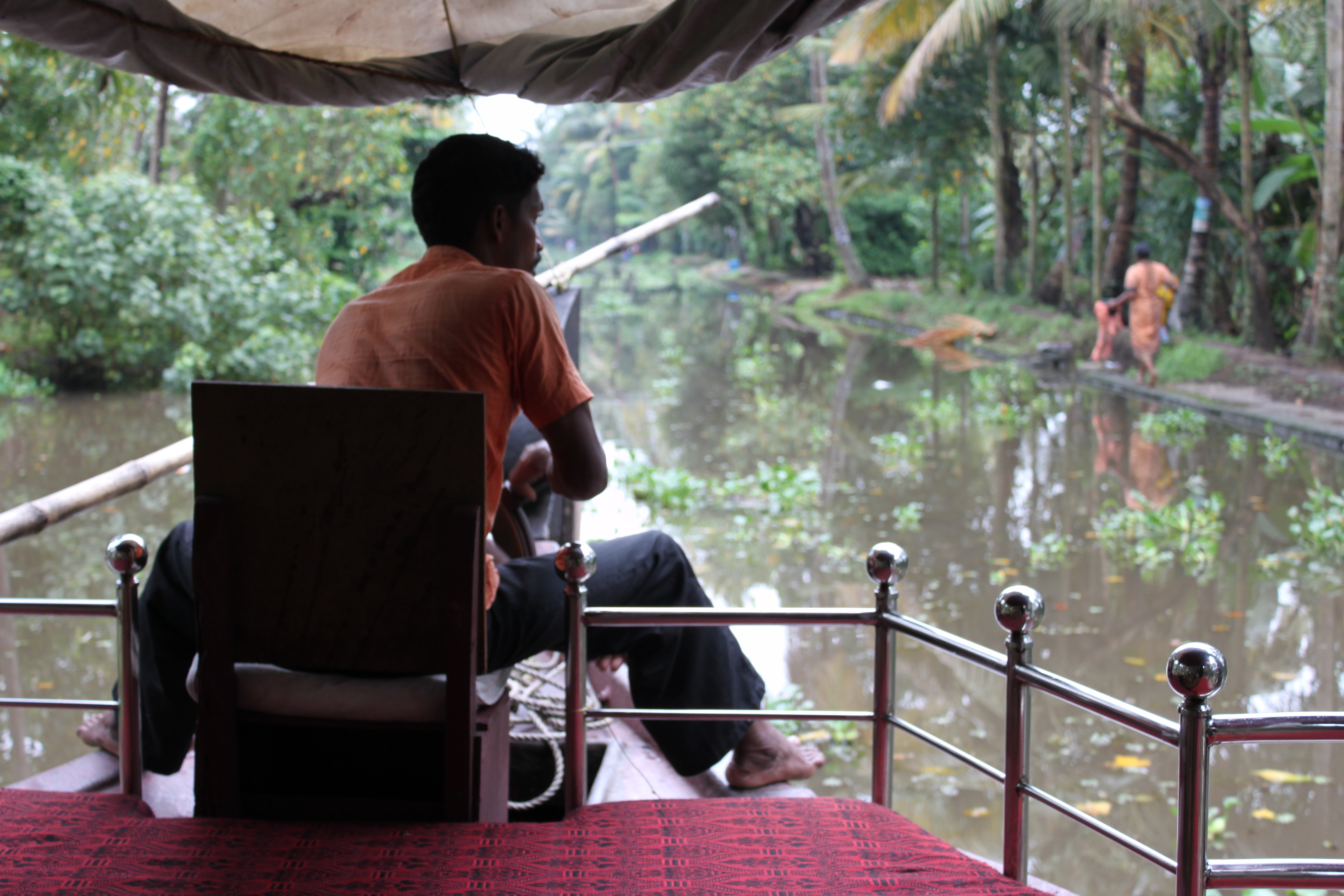
As we slowly cruise along rows of palm trees, rice fields, and villages, we catch glimpses of everyday life – a man shaving his beard, a lady washing a load of clothes, children splashing each other, and a man washing his cow. The canals serve as a shared space for personal hygiene, fun, and care. The small houses and their villagers, once happily isolated, are now exposed by our voyeurism.

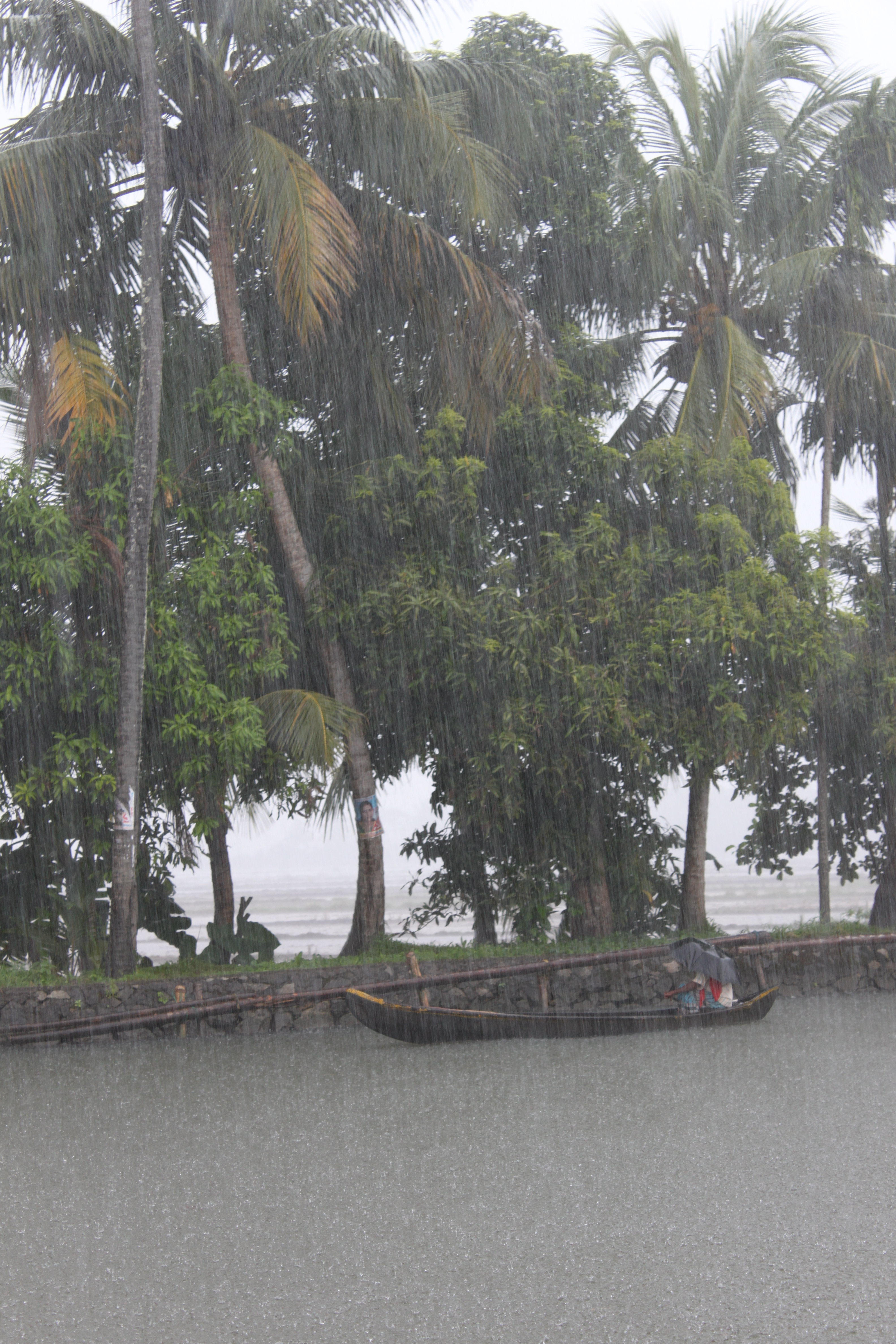
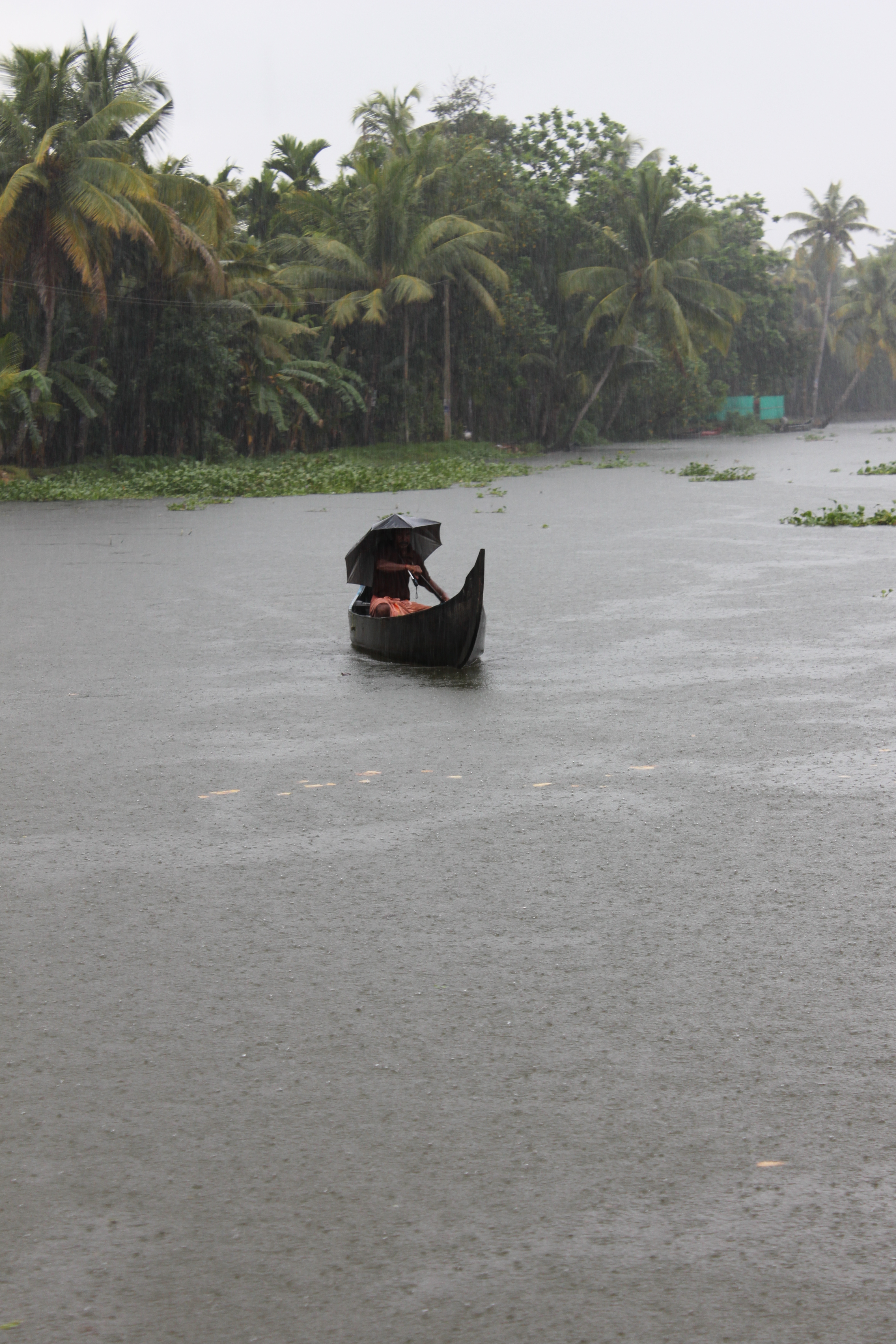
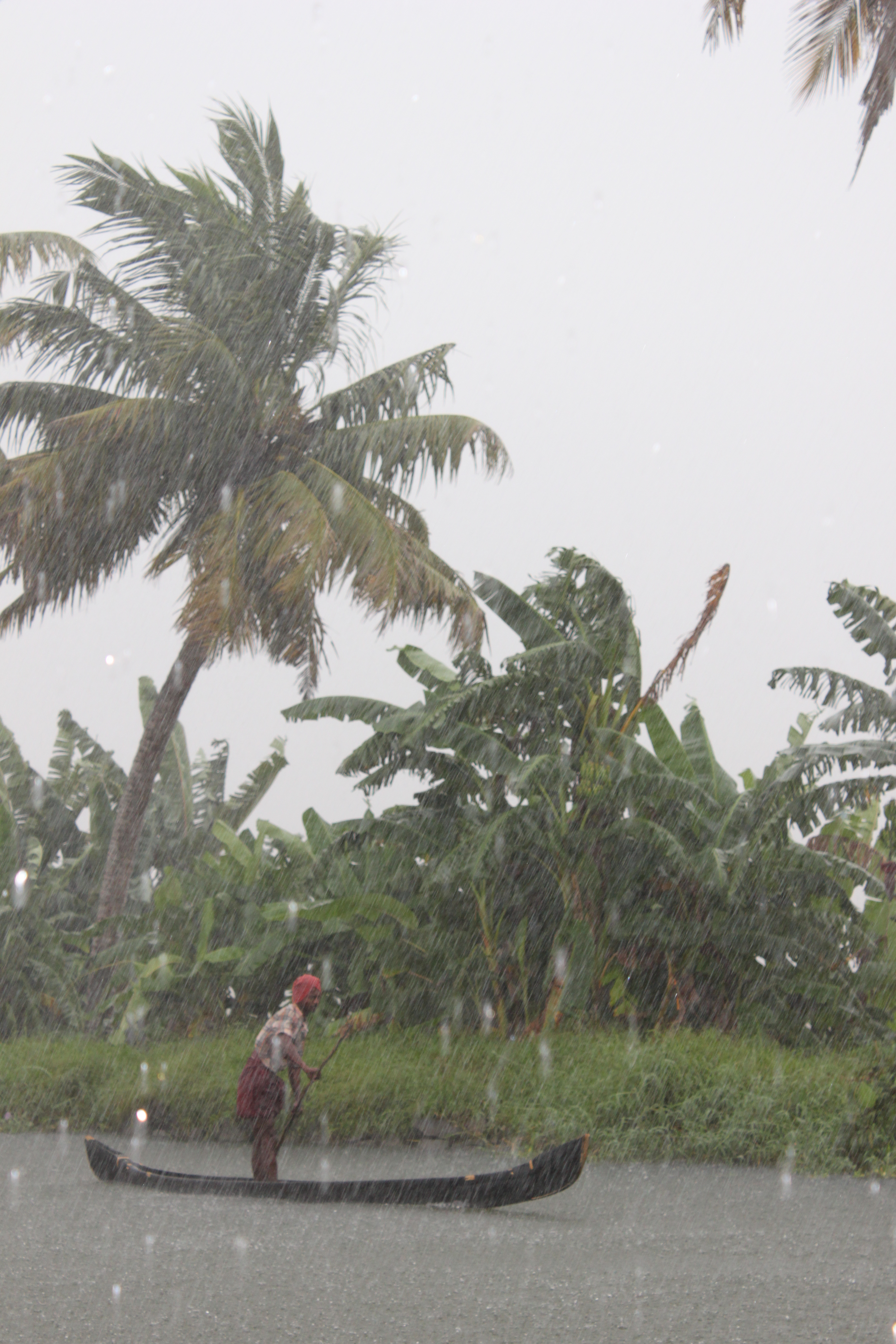
The clouds blanket the skies, releasing multiple tiny molecules of H2O. Heavy rain cleanses the air and refreshes the atmosphere, the drops falling vigorously, resembling a thunderous anger. The sound of the falling rain fills my ears, the freshness of the air cleans my lungs, and caresses my nostrils. There’s nowhere else I want to be…

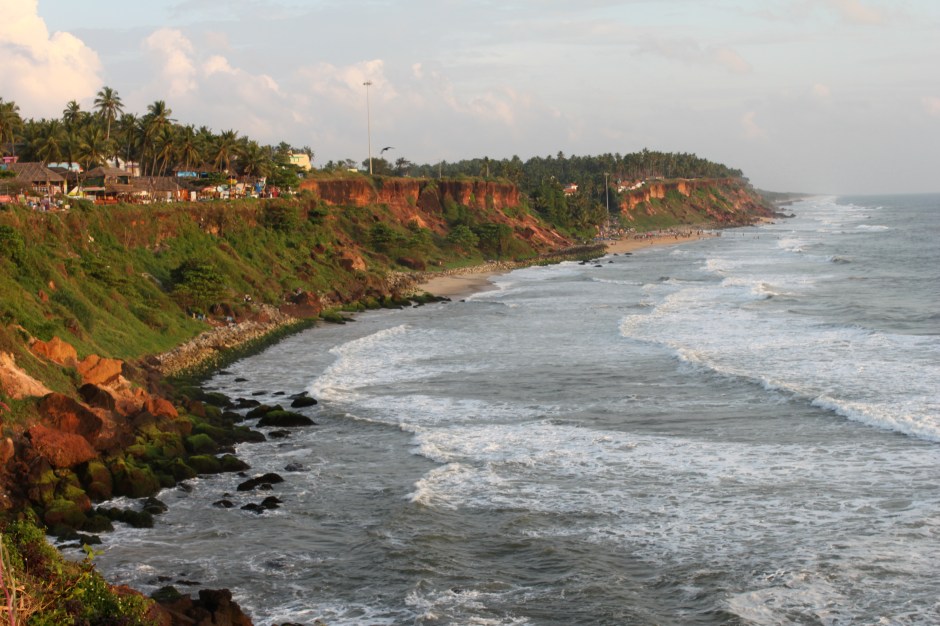
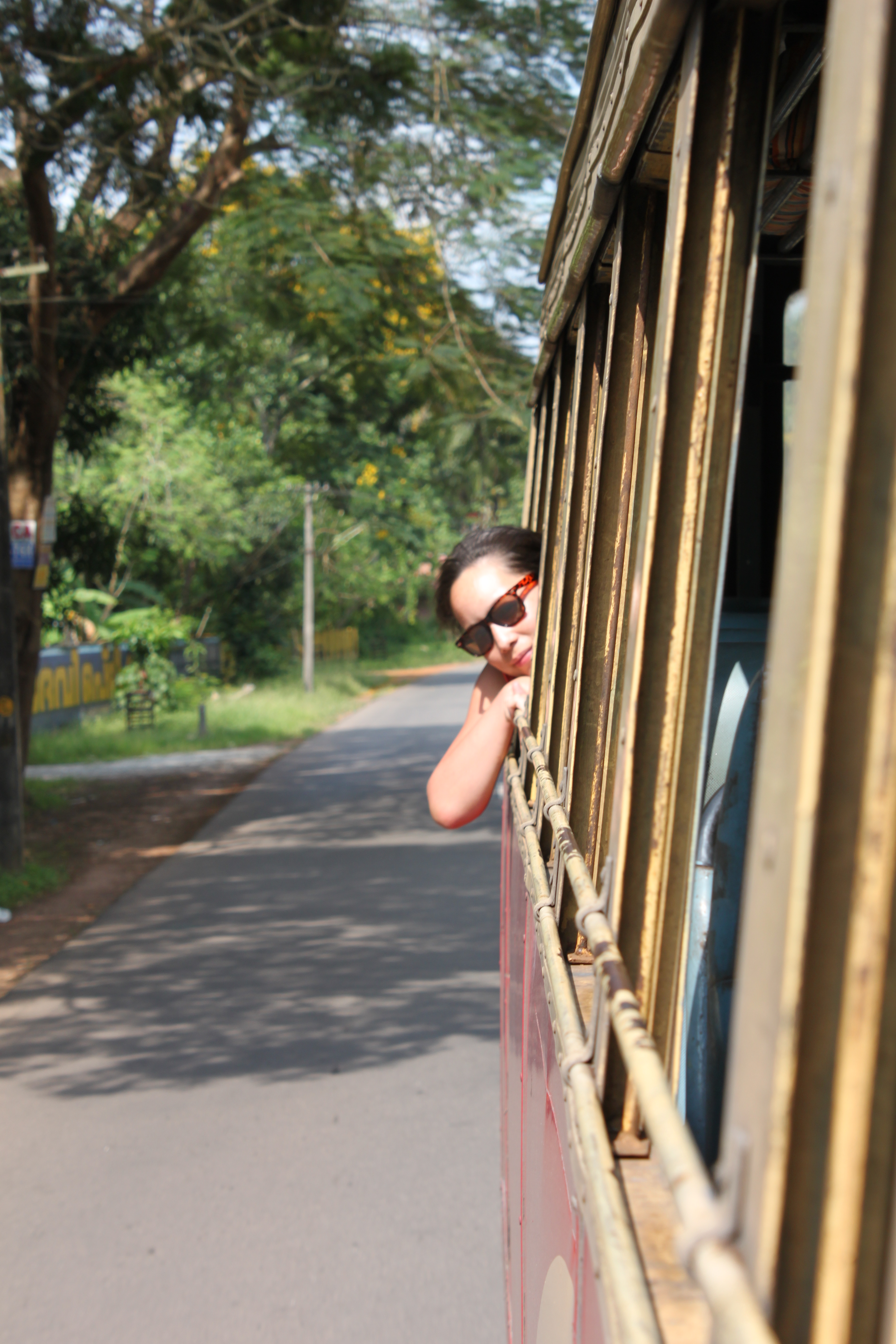
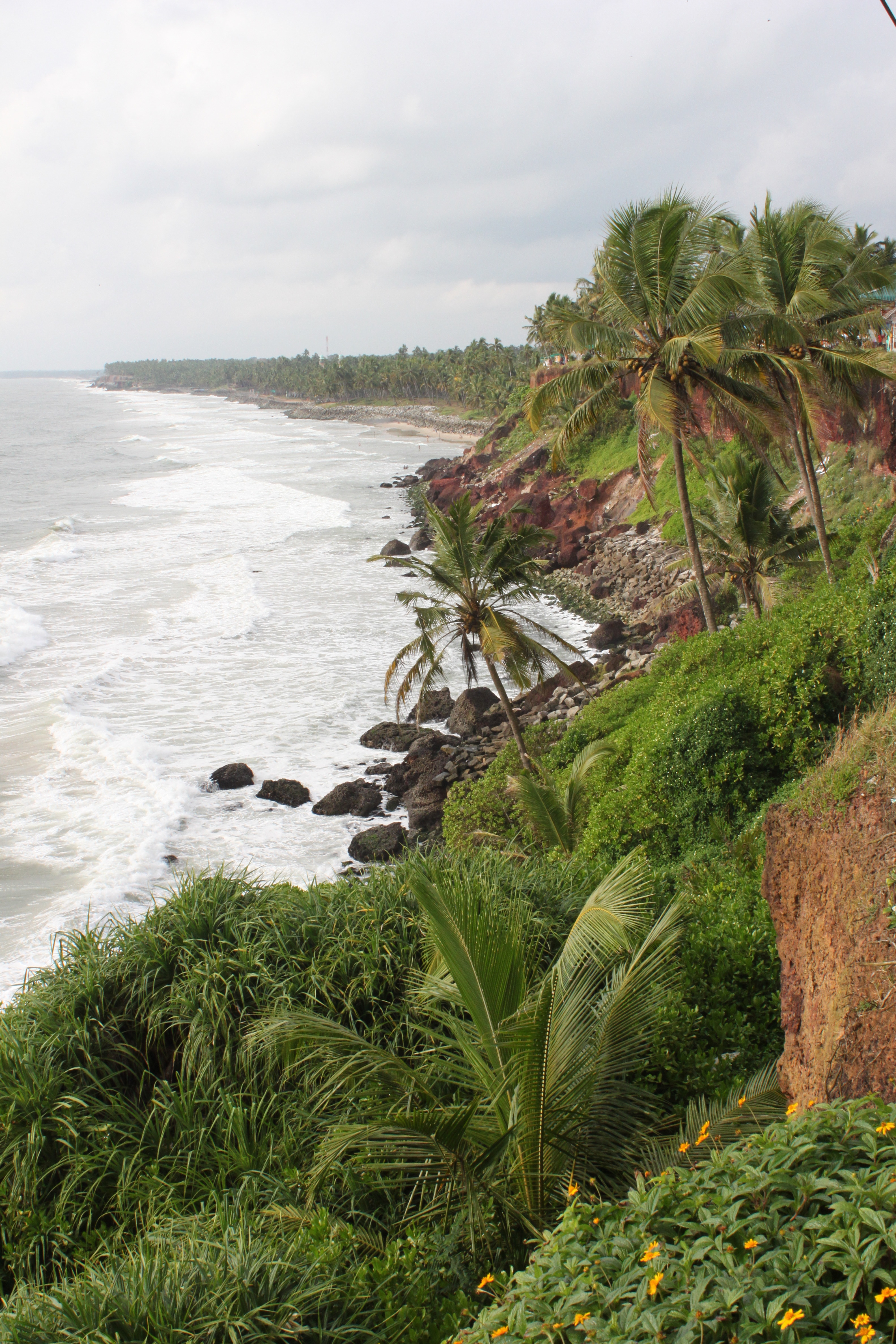
After the houseboat experience, we board a local bus and travel south for about four hours. High cliffs surround the sea, the waves are strong and aggressive, and the sand is black. Welcome to Black Sand Beach in Varkala, a quieter alternative to the bustling main beach. Hotels and restaurants line up along the cliffs, offering breathtaking views and a wide selection of fresh fish. Although the wine is a bit pricey, fresh cocktails are a good alternative, and a mojito always pairs well with fish.

Keralan people are incredibly kind – very friendly, smiley, and welcoming. Born and raised in the most socially advanced state in India, most of them went to school and learned to speak English. Marriage is by choice and is proven with the love found in the air: couples cover themselves with tender kisses and soft words. Their generosity is as contagious as their head-wobble – that strange habit of moving their head like a bobblehead. Yes, No, Maybe… who knows what they really mean?

Kerala’s communism, symbolized by the hammer and sickle, brought about a more equitable distribution of land and income. A focus on infrastructure, health, and education brings a promising future for this successful and beautiful state.

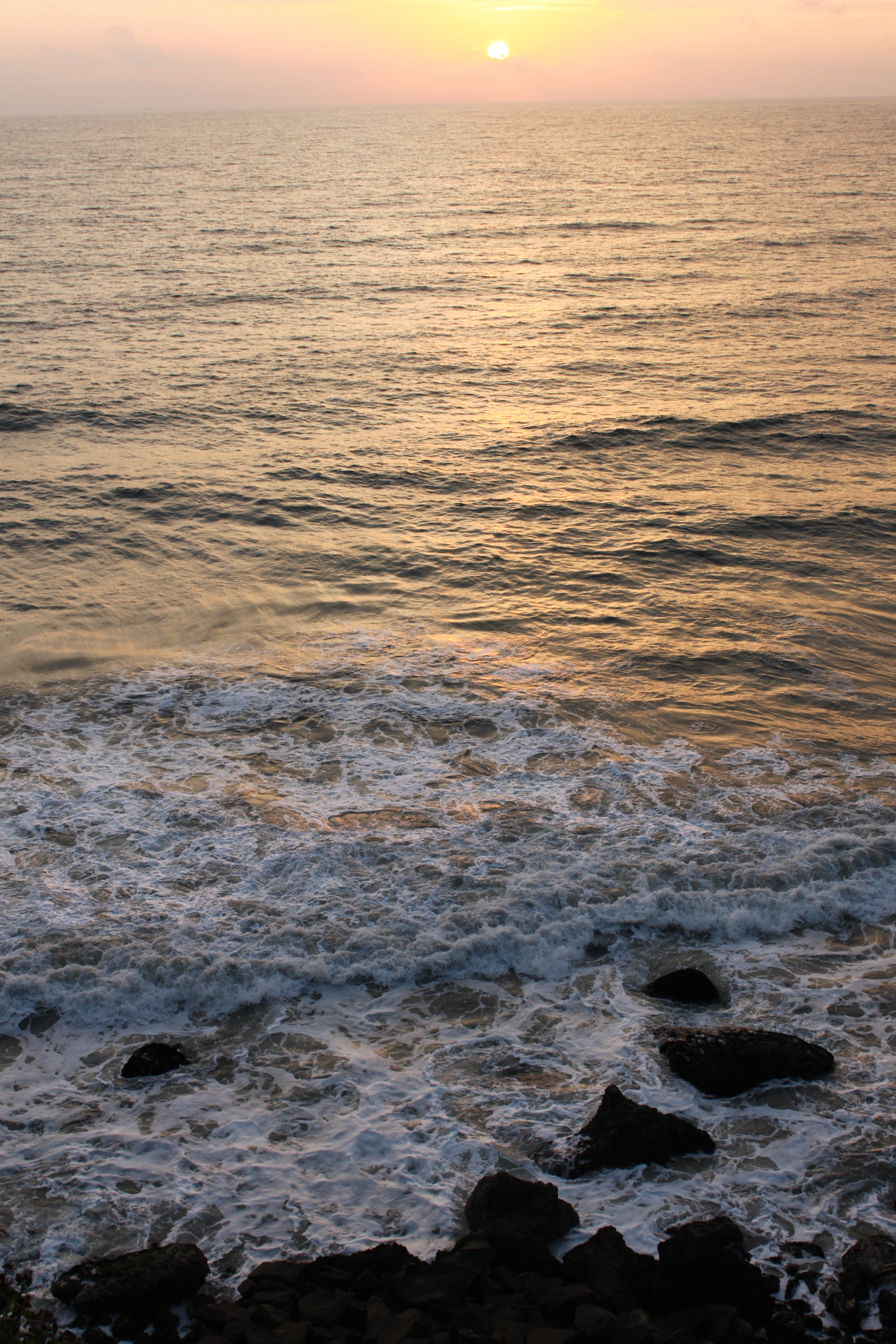
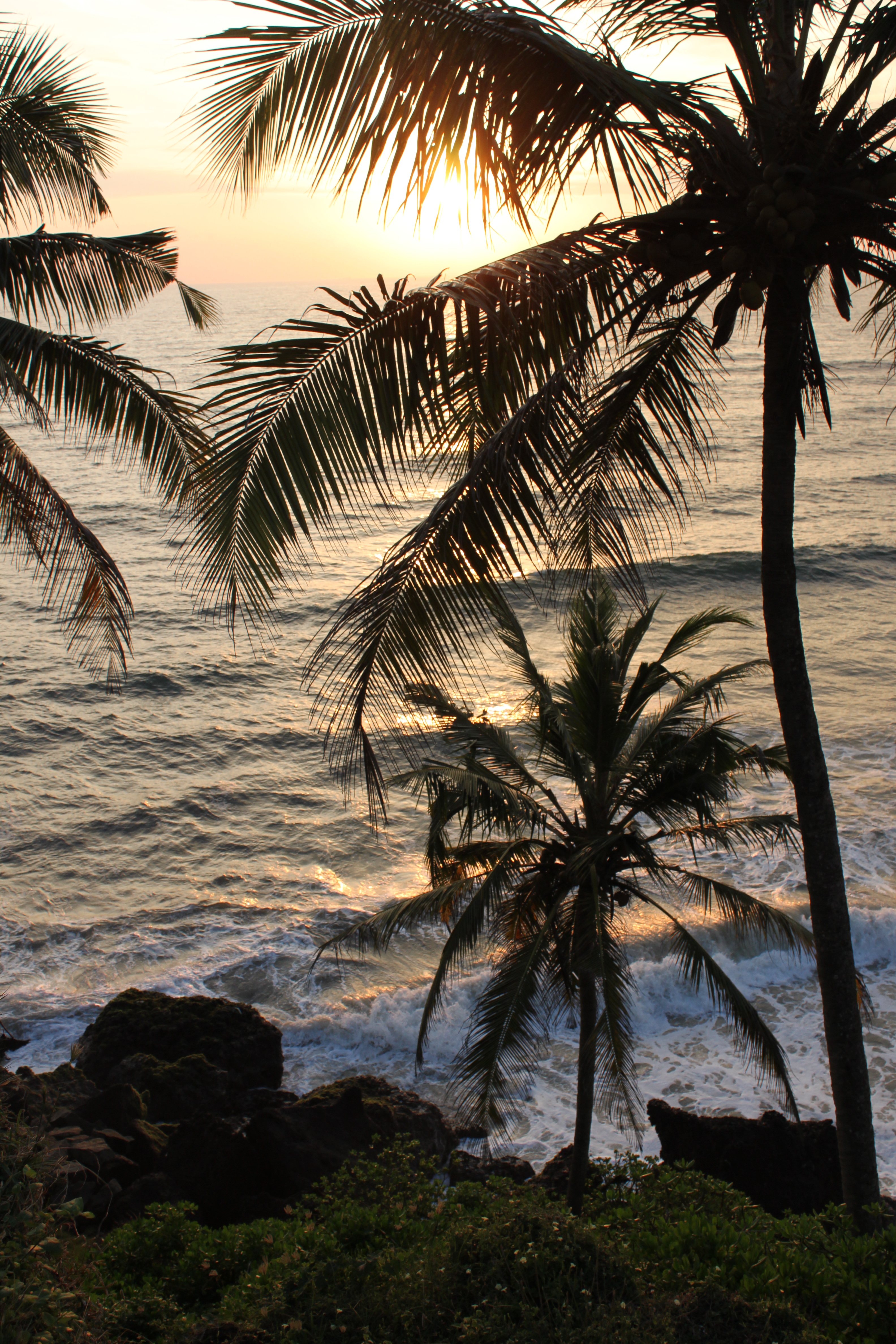
After a final seafood dinner watching the sun go down in Kerala, we prepare for another departure. This time, we will be traveling south to the tip of the Indian subcontinent: Kanyakumari, where the three seas meet.