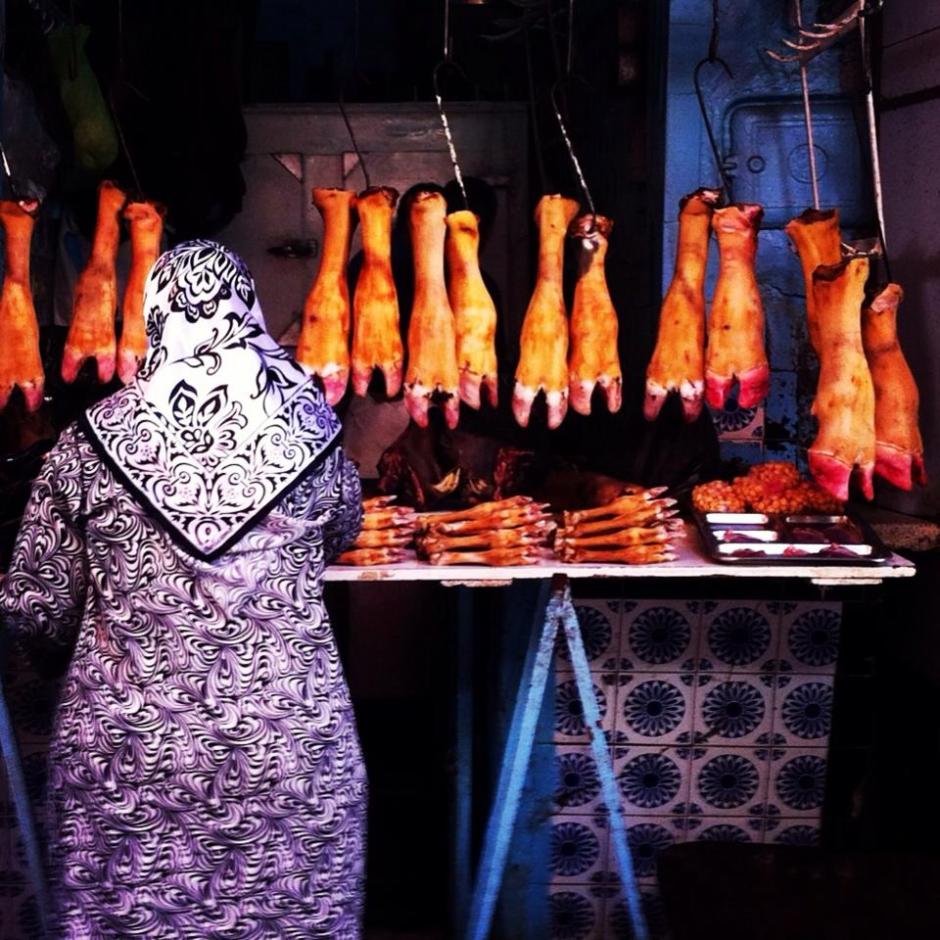
Wandering through Rabat’s markets feels like entering a lively world of colours, sounds, and smells. The medina is like a maze full of Moroccan treasures, with stalls selling everything from vibrant spices to beautiful ceramics and handmade textiles. Among the hustle and bustle, the food stalls are a highlight, offering a taste adventure. You can hear the sizzle of tagines and catch the whiff of freshly baked pastries. Each stall tells a tasty story, making the market more than just a shopping spot – it’s a snapshot of everyday life. Haggling with friendly vendors, trying local street food like harira soup, or treating yourself to sweet goodies makes the market visit come alive. Rabat’s markets aren’t just places to buy things; they’re lively hubs pulsing with the city’s traditions and daily vibes.
My immersion into Rabat’s culinary traditions unfolded during my stay with a local family in Morocco’s capital city. Around their dining table, I discovered the intimate practice of eating with hands, a time-honoured tradition that added a personal touch to every culinary experience. Communal moments were shared not just over a tagine, but also in the simple act of tearing into warm, freshly baked bread to savor the aromatic flavours. This seemingly unpretentious gesture heightened my connection with the food, accentuating its cultural significance. Passing around a couple glasses of water further emphasized the togetherness ingrained in every meal, transforming it into a palpable celebration of tradition that transcended language and culture. In Rabat, the culinary journey isn’t merely about flavours; it’s a shared and tactile adventure, where the act of eating with hands becomes a poignant thread weaving bonds that go beyond borders.
Some traditional foods and dishes commonly enjoyed in Rabat:
Mechoui: Slow-roasted lamb, seasoned with a mix of aromatic spices, providing tender and flavourful meat.
Pastilla: A sweet and savory pastry filled with pigeon or chicken, almonds, and a blend of spices, typically topped with powdered sugar.
Harira Soup: A hearty and nourishing soup, especially enjoyed during Ramadan, made with tomatoes, lentils, chickpeas, and a mix of spices.
Couscous: A staple in Moroccan cuisine, couscous is often served with a variety of accompaniments, such as vegetables, meats, or fish.
Zaalouk: An eggplant and tomato salad seasoned with garlic, cumin, and coriander, serving as a flavourful side dish.
Tagine: Slow-cooked stews of meat, vegetables, and aromatic spices, a quintessential Moroccan dish.
Rfissa: A dish made with lentils, fenugreek, and shredded msemen (Moroccan pancakes), sometimes topped with chicken.
Briouat: Triangular pastries filled with a mixture of meats, vegetables, or nuts, commonly served as appetizers.
Khobz: Traditional Moroccan bread, usually round and flat, served with various meals.
Makroud: A sweet pastry filled with dates and nuts, fried until golden, and sometimes coated in honey.
These traditional foods contribute to Rabat’s culinary landscape, reflecting the country’s rich gastronomic heritage and offering a delicious exploration of Moroccan flavours and traditions.
Being capital of the People’s Republic of China, Beijing is the nation’s political, economic, and cultural center. Located in north China, close to the port city of Tianjin and partially surrounded by Hebei Province, it also serves as the most important transportation hub and port of entry. It is now known as one of the most popular travel destinations in the world, with about 140 million Chinese tourists and 4.4 million international visitors in a year.
24-hour Visa-Free Transit
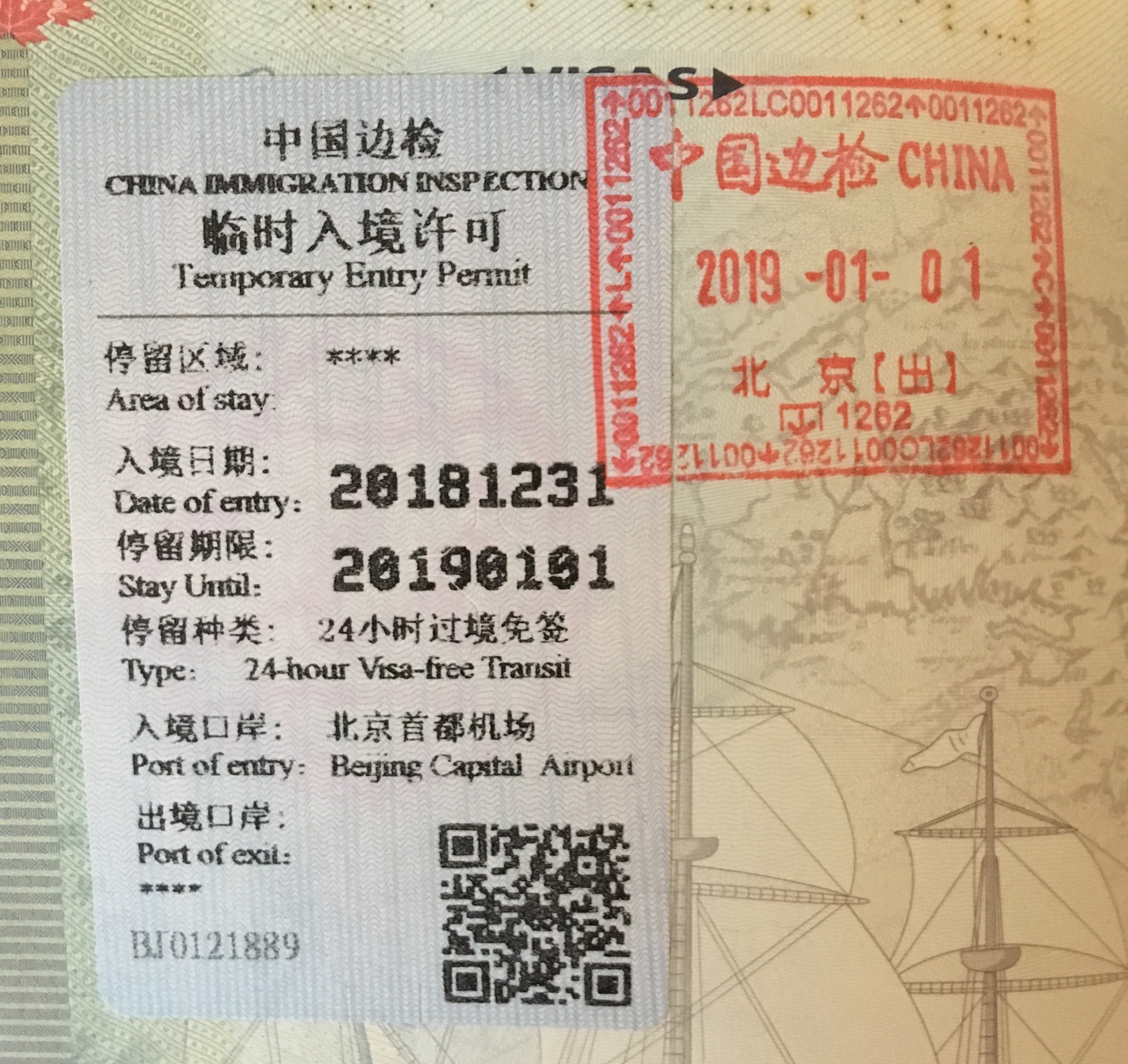
The 24-hour Visa-Free Transit in China, also called the 24-hour Transit Without Visa (24-hour TWOV for short), regulates that visa is not required for air, train, and ship passengers transiting in mainland China for a stay of no more than 24 hours before heading for a third country or region. It is also possible to get a 72 or 144-hour transit visa with similar terms and restrictions.
Since our flight from Canada landed in PEK at 4:25pm, and our connecting flight to our final destination in Japan departed at 3:45pm the next day, we had nearly 24 hours layover time. I had booked a hotel near Wangfujing, hired a chauffeur for the next day, and had all detailed information of our planned layover in Beijing in both English and Mandarin, putting all chances on our sides. We only carried a small backpack each and had our luggages sent directly to our final destination. After reading loads of forums about mixed situations that happened to Canadian travellers during this political dispute, we were quite surprised that the whole process went so effortlessly (at least it did for us). We got our transit visa approved in no time, and passed customs successfully. We exited the airport and walked to the taxis. I was glad to have our hotel printed in Mandarin –it made up for an efficient, timely and appreciated communication with the driver.
Wangfujing Street
Wangfujing Street is the rich affluent shopping area of Beijing including many famous western brands and stores. After walking down the main street, we arrived to the snack street.
Wangfujing Food Street is Beijing’s local foodies paradise. Amongst locals and tourists, we meandered through the crowd, our eyes wandering with curiosity on all to see such as scorpions, snakes, bats, and tarantula on sticks. We weren’t brave enough to try much (after being sick in the Sahara Desert, I sadly tend to be more hesitant of what I eat when I know I’ll be away from restrooms for a longer period of time – however this is a personal experience and I encourage everyone to try street foods), but I couldn’t be on Wangfujing Snack Street without trying out a scorpion. So I did it! The feeling of the fried legs touching the roof of my mouth was scarier than the taste itself. JF had 2 and I’m sure he would had have more. I was content with my one bite. It’s those little things on my bucket list that make me so happy to check off. 🙂
Food
When I was traveling in Tibet back in 2010, the food was surprisingly challenging for me to appreciate. I consider myself an adventurous foodie, always willing to try whatever is presented before me. With this culinary curiosity, I’ve had the opportunity to savor some marvelous (and highly intriguing) flavors from around the world. However, my experience with Chinese cuisine in China, not the Americanized version, didn’t quite align with my palate. Perhaps one of the most challenging aspects was deciphering the menu, which was often solely in Mandarin. Even though photos were somewhat helpful, they didn’t always provide a clear picture of the specific meat or ingredients used in the dishes. I did notice a unique fragrance in the dishes we ordered. My partner opted for three meat dishes, while I went with three vegetarian plates. I found my veggie options quite tasty, but I could only manage a small taste of his dishes (plus, I’m not a big meat eater). Despite the initial challenges, I would absolutely love to return to China and further explore its diverse culinary world.
Great Wall of China
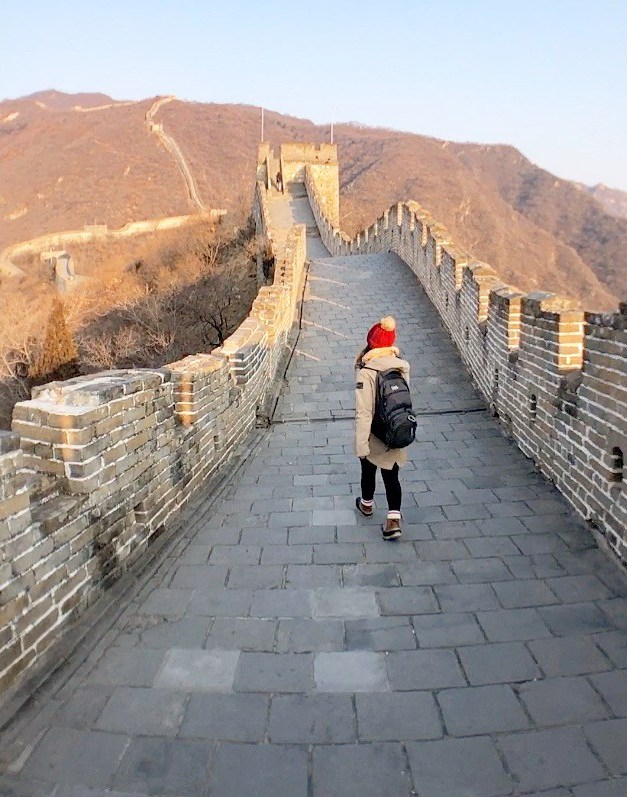
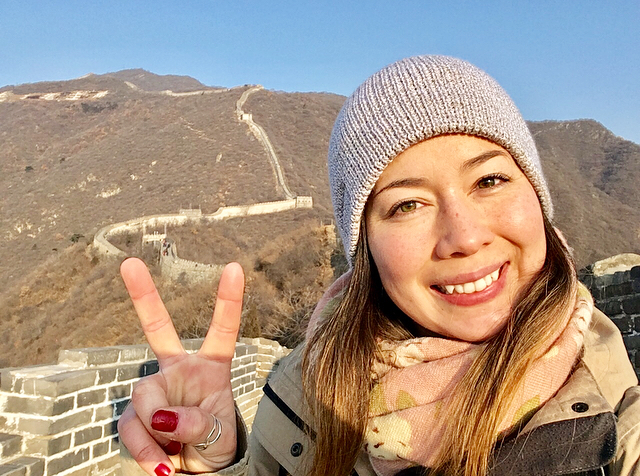
Previously, back in Canada, I hired John Yellowcar whom I found on TripAdvisor. John is a Beijing, English speaking native who’s been chauffeuring visitors around the city for nearly 20 years. My correspondence with John the weeks prior to our trip reassured me. He gave us valuable information on taxis, airport customs, translation, etc. John picked us up at our hotel the morning of January 1st at 6:45am in his clean and spacious vehicle. At our great astonishment, the roads were empty due to New Year’s Day (January 1st). It took us around 1 hour to reach the Mutianyu entrance of the Great Wall. John helped us get tickets and directed us to the entrance where we had the liberty to venture on our own. By 8am we were in the gondola heading up to the stoned path.
John picked us up at 11:30am where he had dropped us off. We headed back to the airport in no time. By 1pm we were back in PEK going through customs. Hiring John allowed us to see a great wonder of the world with a peace of mind. I would highly recommend him, or any great driver, if you have a layover in Beijing.
PEK Airport
PEK Airport doesn’t stand in my top favourite airports. But it’s not bad. Bathrooms are decent, offering both western and squat toilets. Although not very big, PEK offers a few shops and restaurants. Wifi is free, but remember that Internet censorship in China is among the most extensive censorships in the world due to a wide variety of legal and administrative regulations (social medias, YouTube and Safari didn’t work, although we managed to play Words with Friends). If you have a long layover, I strongly encourage you to look at ways to get a Visa-Free Transit to explore some parts of Beijing rather than spend it at the airport.
Safety in Beijing
It’s challenging to form a comprehensive opinion of a place after just a day. However, my general impression is that the streets felt much safer than I had expected. Throughout this layover, I never felt threatened or harassed. I’m not sure if the increased police presence near Wangfujing was related to the Western New Year, but the crowds were cheerful, the merchants were helpful and friendly, and the streets were relatively clean. Even though I was accompanied by my boyfriend, I felt that it would have been safe for me to travel solo. Once again, I chose to get around by taxi and hired an English-speaking private chauffeur to streamline things and save time. Like in any other major city worldwide, it’s always wise to exercise normal caution.
Conclusion
The cleanliness of the streets, the kindness of the people, and the safety of the neighborhoods certainly enhanced my perception of China. If you ever have the opportunity for a long layover in Beijing, seize the chance to explore the city’s rich historical treasures. I know I will return, hopefully for a longer stay than just a layover.
Maybe you are the proud owner of an Epic Pass, or Hakuba has just been on your list for a while now. Either way, you’re excited to meet face to face with the breathtakingly beautiful Northern Japanese Alps and eat Japow for breakfast and traditional foods at night.
Surely, Hakuba stands out as one of Japan’s top winter resort areas, offering some of the best winter sports action in Japan. The host of the 1998 Nagano Winter Olympics consists of 9 ski resorts stretched across a broad valley, and provides more terrain, vertical rise and advanced ski and snowboard slopes than anywhere in the country. Abundant snow falls and excellent powder conditions make Hakuba a continuous top choice of skiers and snowboarders from around the world.
I recently got back from an amazing snowboarding trip to the Japanese Alps, and wanted to share with you my top things to do in Hakuba for the most epic winter trip.
1. Book a Ryokan
Ryokan are Japanese style inns found throughout the country, especially in hot spring resorts. Renting a ryokan is an amazing opportunity to experience the traditional Japanese lifestyle and hospitality. A typical ryokan has a relatively large entrance hall, with couches and chairs where guests can sit and talk. Shoes are removed at the entrance, and if slippers are provided, they must be taken off on tatami floors. The rooms offer elements such as tatami floors, sliding paper doors and windows, futon beds, Japanese style baths, a low table and floor chairs, sliding doors and some supplies for making tea.
Most ryokans feature common bathing area, usually segregated by gender, using the water from an onsen (hot spring) if any are nearby. High-end ryokan may provide private bathing facilities as well.
Renting a ryokan is a special and relaxing experience that everyone should take the opportunity to try.
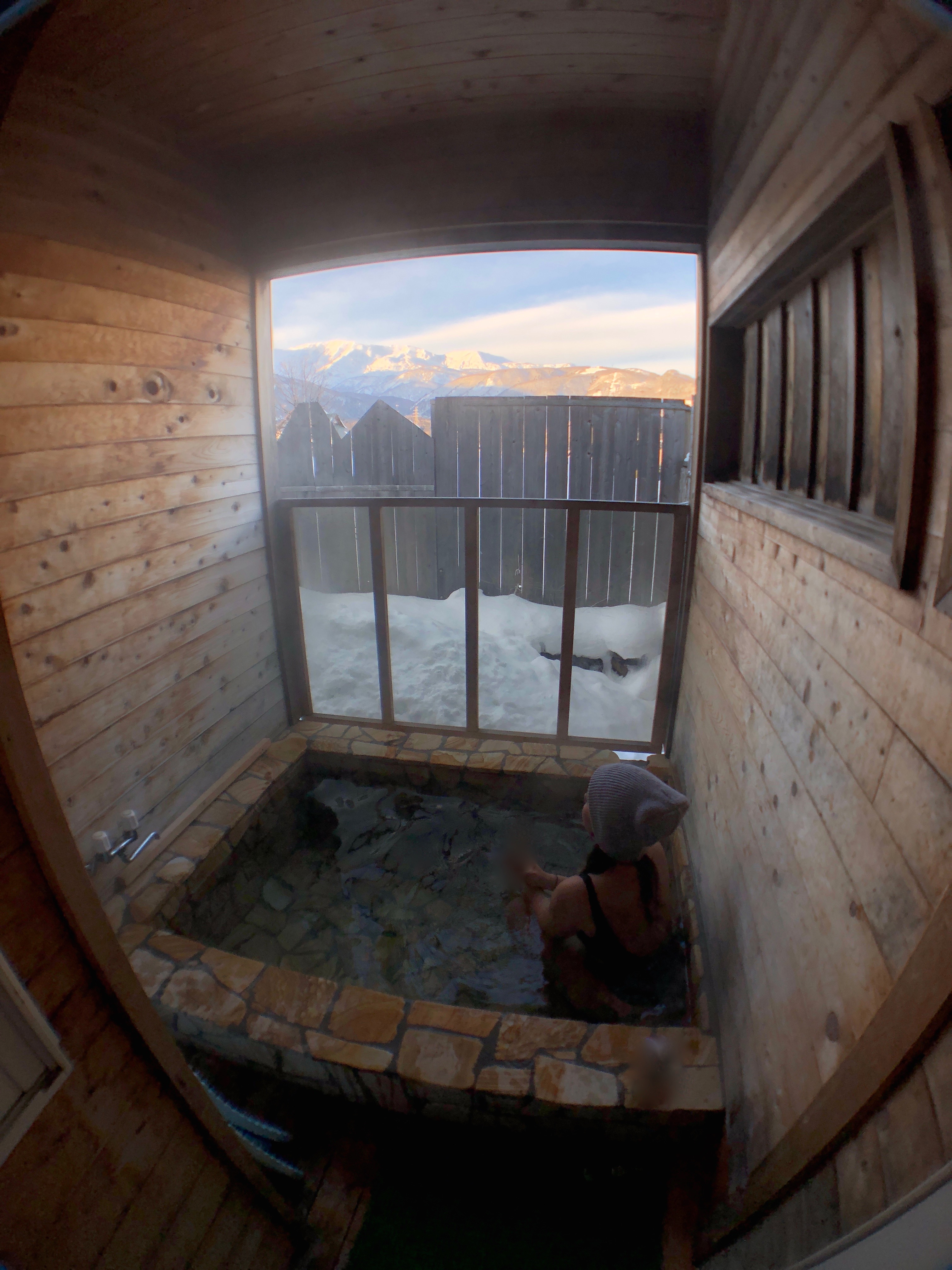
The hot springs of Nagano are treasured throughout Japan as some of the best. Among the most famous, the Hakuba Valley’s hot springs are renowned for their strong alkaline waters which leave the skin soft and smooth. The mineral water of the onsens is also famous for its healing properties, perfect for soothing sore muscles after a day in the mountains. Onsens in Japan have been used as a cure for physical ailments, as well for their beautifying properties. Soaking in an open-air bath under the backdrop of the Northern Alps after a day on the slopes is one of the highlights of a Hakuba winter vacation.
Our private onsen at Pension Funny Inn
If your accommodation doesn’t have an onsen, click here for a list of local hot springs. And don’t forget to bathe your tootsies in Tsugaike Kogen in the foot onsen after a big day on the slopes (located near the base of the gondola).
3. Pack Up at the Convenience Store
While we enjoyed eating on lunch on the mountain and going out for dinner, we decided to pack up at the store for quick-to-eat, cheap and yummy breakfast goodies.
Onigiri is the staple of comfort food in Japan, and a very popular dish for breakfast. These rice balls have so many flavours like salmon, umeboshi, Japanese pickled plum, bonito flakes, different kinds of fish roes and so on. One onigiri in the morning and a cup of green tea kept me full for a whole morning on the slopes. Quick, healthy and delicious!
Also, nothing is greater than to start the day with a nice and warm cup of soup (your accommodation will most likely have hot water available at all time).
We loaded our bags with Ramen noodles, onigiris, egg salad sandwiches (incredibly yummy) and fruits (try the Nagano apples they are sublime). And of course sake, local beers and plum wine.
Snacks for day 1 in Hakuba
4. Ride the TsugaPow DBD Trees
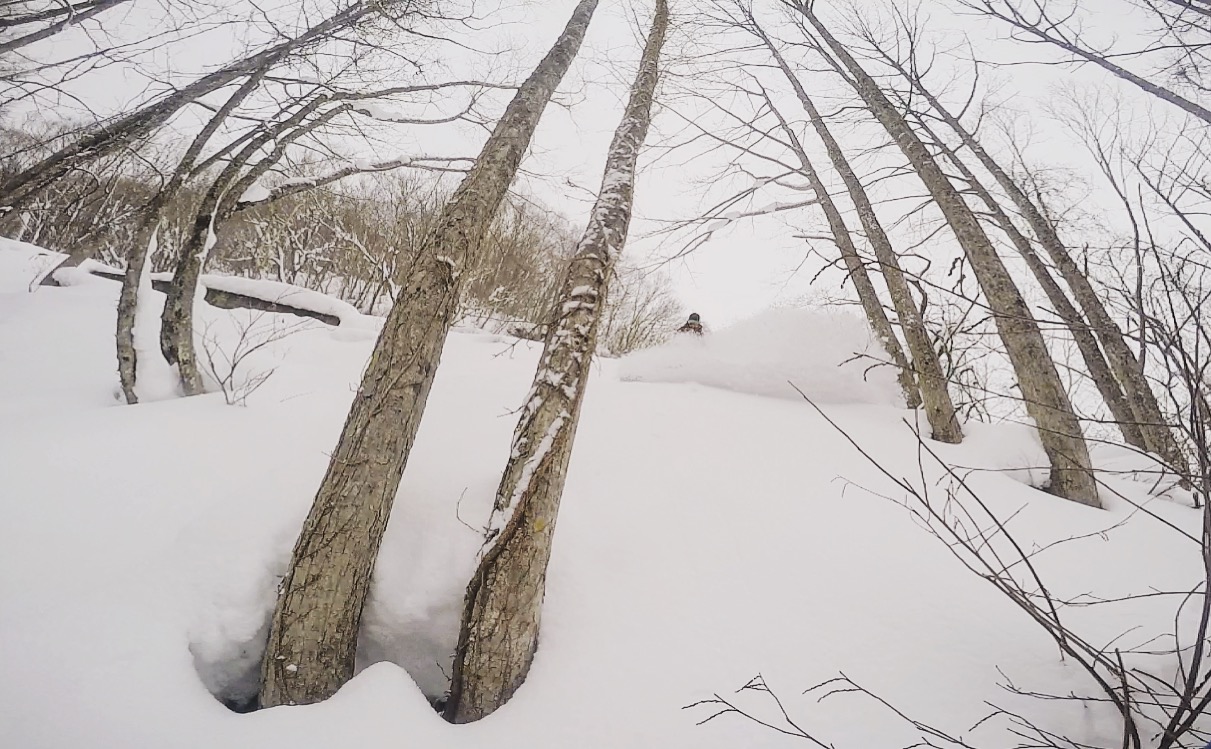
Located north end of Hakuba Valley, the resort of Tsugaike Kogan offers one of the best powder ski areas in Hakuba. For intermediate and advanced powder and trees seekers, the TsugaPow DBD (Double Black Diamond) area offers some of the best lift accessible powder runs in the valley. A 15-min safety course highlighting dangers, risks, avalanches, wildlife and rules is required to pass the gates.
Riding the Tsugapow DBS trees
5. Hire a Backcountry Guide
The Japanese Alps receive an average of 12+ meters of beautiful powder snow each year, and no other mountain range in Japan has comparable terrain with amazing powder. If you wish to get off-piste, access epic terrain and ride the fantastic backcountry Hakuba has to offer, there are many companies in the valley that offer group tours of all levels, as well as tailored tours.
Rather than a single hub, Hakuba is a vast area with multiple villages. Known as the heart of Hakuba, centrally located between Hakuba 47 and Happo ski areas and surrounded on all sides by the Misorano area of smaller hotels, pensions, residences and holiday homes, Echoland has the highest concentration in town of bars, restaurants and shops in one small area, mostly all located on one street. There are some great little Japanese eateries and izakayas where no or barely any English is spoken, and you really feel like you’re in Japan.
Note that most restaurants on Echoland are extremely busy. It is extremely recommended to make booking wherever possible. Some restaurants won’t accept reservation, so arriving before 6pm help.
An izakaya is a typical Japanese gastropub where people enjoy coming for a drink and a bite to eat. Known for their bustling atmosphere, tapas and local sake to enjoy in a comfortable, relaxing environment, going to an izakaya with colleagues after work is a cultural habit in Japan. While the Japanese are generally very reserved, in an izakaya the atmosphere is very lively (literally a gathering to drink). It is a popular place for employees to meet after the day’s work to relieve stress and have a good time together.
Izakaya Hie is one of the best and most atmospheric izakaya venues in Hakuba. The restaurant is housed in a quaint hut and needless to say, the food is beyond yummy. The place gets very busy, so booking ahead is advised.
8. Follow Hakuba on Social Media to Stay in Loop of What’s Happening in the Valley
After a fantastic day on the slopes, be sure to check out Hakuba’s diverse nightlife, which offers something for everyone. Whether you are in the mood for a quiet pub, live music performance or high-energy dance club, Hakuba’s après ski scene has it all. To stay in the loop of what’s happening in the valley, follow the official account Hakuba on social media.
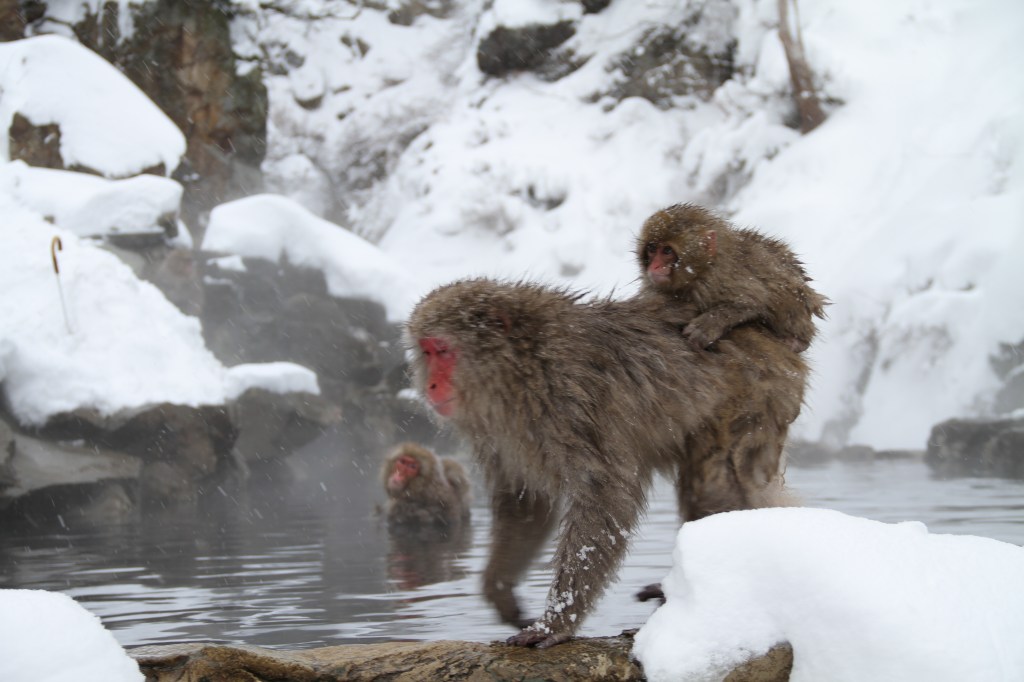
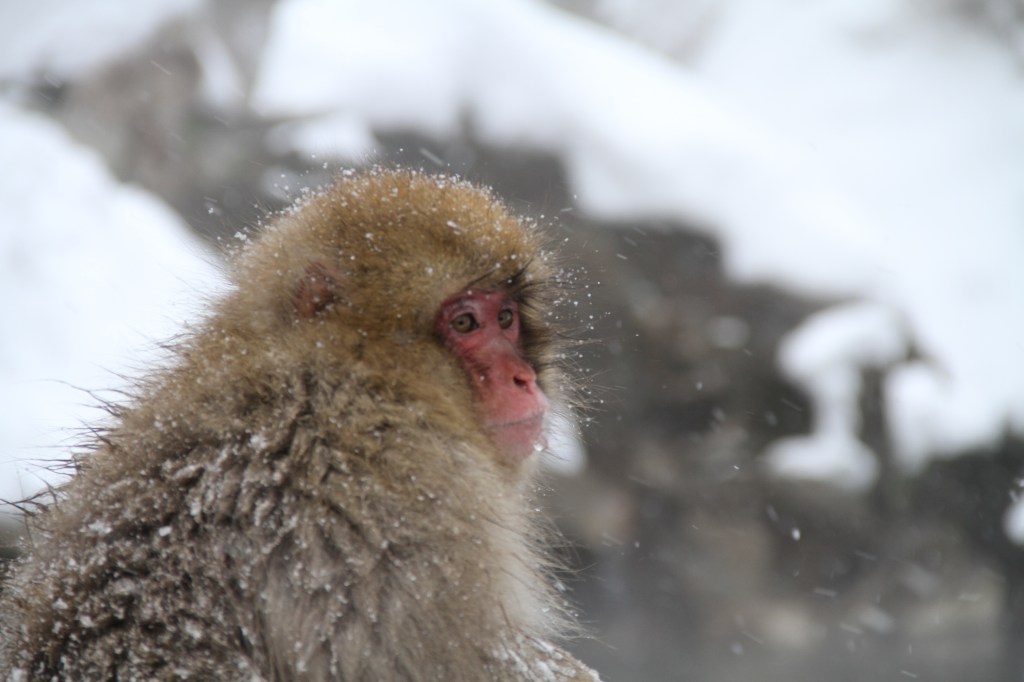
It wouldn’t be a total epic winter vacation in Hakuba without a visit to see the monkeys of Jigokudani. Located near the base of the Joshinestu Kogen National Park, the Jigokudani Yaen Koen (otherwise known as the Snow Monkey Park) is home to a very special troop of monkeys. Those are the only wild monkeys in the world known to bathe in hot springs, making them truly unique. Whether you rent a car or go as part of a tour, the snow monkeys definitely need to be added to your list!
10. Have the Best Time
We don’t always fully grasp how happy and carefree we are until those moments slip away. It’s essential to recognize these instances and cherish them. Capture memories through pictures and videos, share them with friends online, but also remember to disconnect from your devices once in a while. Immerse yourself in the experience, explore local culture, savour traditional foods, engage in conversations with locals, and embrace their customs and traditions.
For some of you, these travels may kindle a desire to return, while others will feel an unrelenting urge to keep exploring new and exciting places. Regardless of your choice, treasure every moment and make the most of it. Someday, you might look back on this journey and realize how fortunate you were to have fully embraced it.
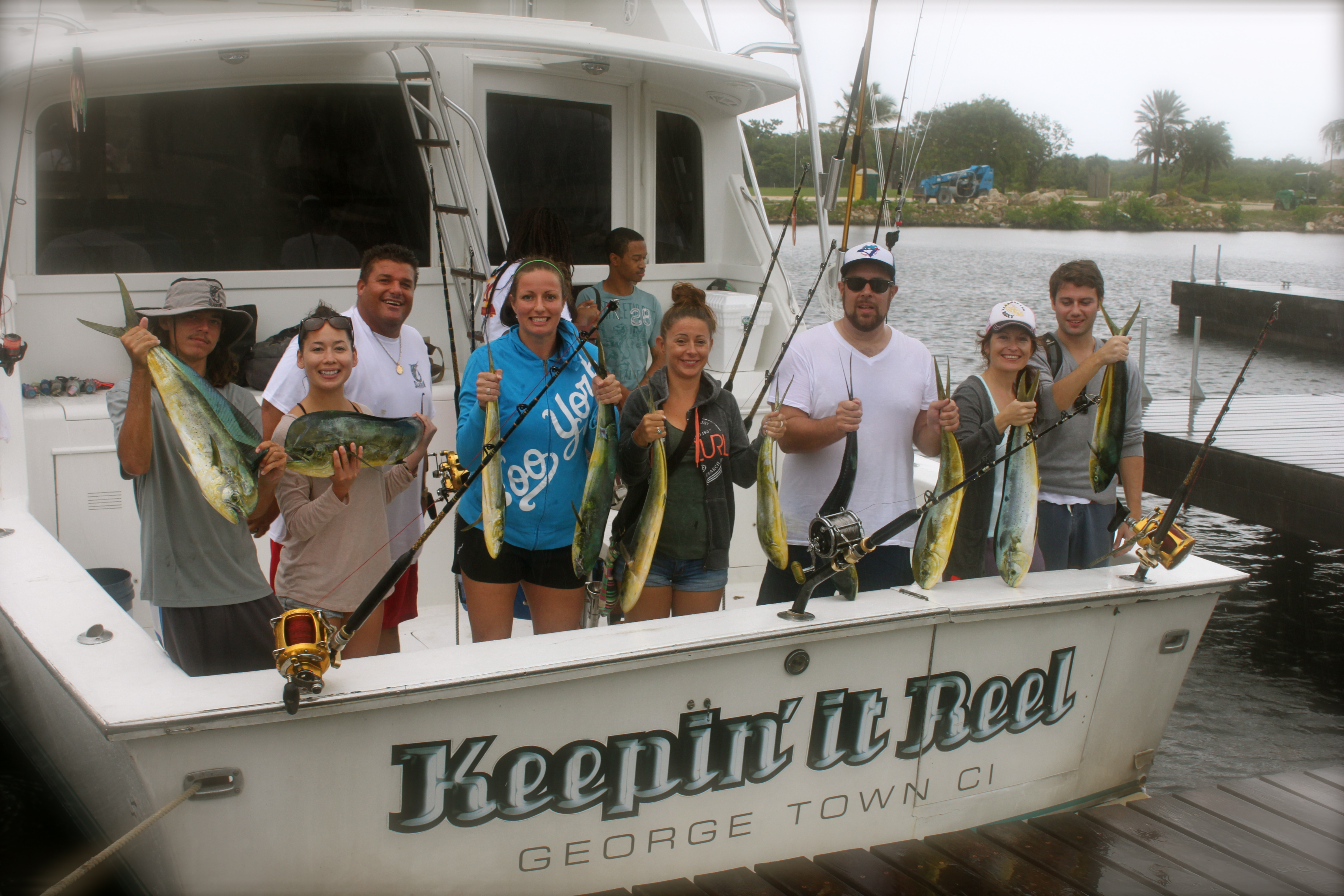
It was a gloomy morning in Grand Cayman, and the tarmac was still wet from the rain that heavily poured the previous night. We grabbed a quick breakfast at a coffee shop in Camana Bay, awaiting impatiently 8 o’clock to arrive. At the dock, Captain Jon, owner of Slackem Charters, and his First Mate Peri welcomed us aboard the ‘Keeping It Reel’ and showed us our ride and roof for the next 4 hours. The 62′ Ocean Sport Fisherman vessel was equipped with a spacious air-conditioned cabin, including a galley (kitchen), 3 state rooms (bedrooms) and 3 heads (bathrooms). It was large enough to accommodate our group of 10, and the crew of 2.
Since the weather seemed to clear out, I decided to climb upstairs and sit by the Captain. We slowly cruised towards the deep ocean. The usual calm and turquoise water was then choppy with shades of dark blues and greys, yet I could see some clear blue patches as we passed shallow areas. It wasn’t raining, but the clouds darkened the sky ahead making the picture beautiful and serene.
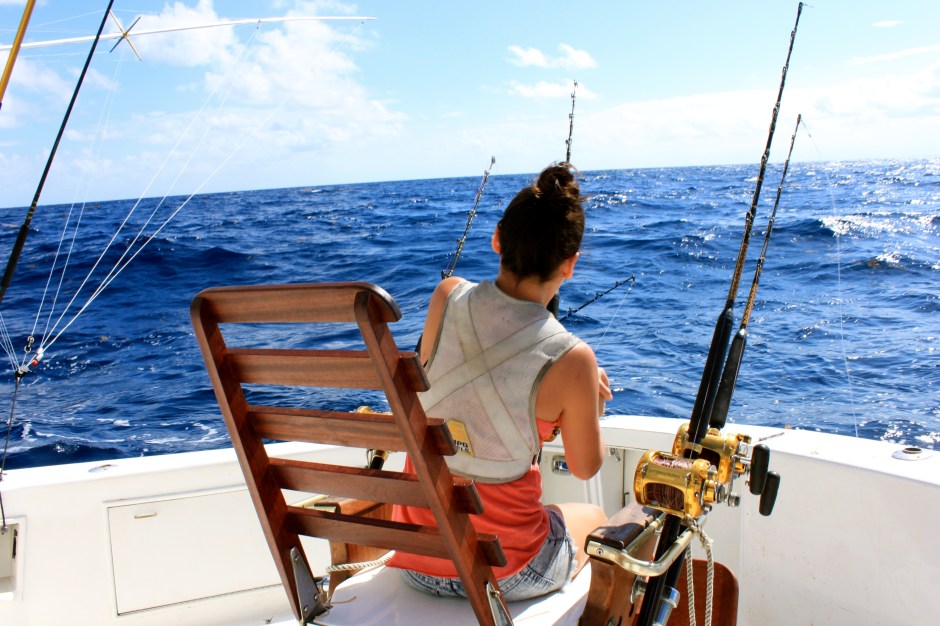
The 7 lines trolled behind the boat at different depths, and everyone was eager to catch a monster.
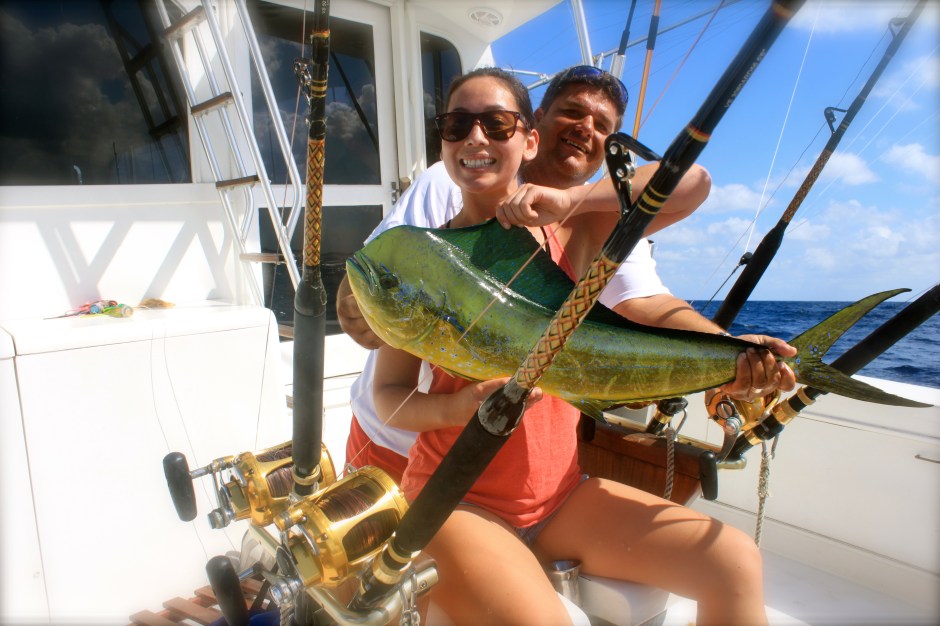
At times the waves picked up, and if I only knew the trick of starring at an immobile point in the boat instead of watching the moving sea, perhaps I wouldn’t have lost my breakfast croissant in the toilet. While I tried to stabilize my motion sickness, laid on the couch in the cabin and starring at the ceiling, I heard the Captain scream: “Fish, fish!” I jumped off my safe zone and hurried to the deck. Kayla, whose sea sickness was beat by excitement to catch a prey, grabbed hold of the rod. After sweat and strong efforts, she victoriously brought back the first mahi mahi onboard.
Back to my couch and to my ceiling… until I hear the captain once more: “Fish, fish!” It was a big one. I was dizzy, could barely balance myself on the deck, but what the heck -I haven’t come here just to stare at a ceiling! I was in, rod in hand, and ready to fight the beast. This is the moment when you hate yourself for gaining those extra few pounds from wine and cheese and slacking on workout and exercise. Captain Jon strapped me to the chair. I wanted to strangle everyone for their endless encouragement words that didn’t help at all: “You’re almost there!” “Ya right”, I yelled between two breathes. “I can see the line 100ft away!” My whole body was shaking, already aching for days. I want to die.I want to quit.No, I won’t quit.I’m gonna get this fish into this boat and thank it for the good fight.Then I’ll eat it. After sweating the last drop of water I had in my already dehydrated body, I saw the end of the tunnel, or rather the tail of the catch. It took 20 min, and a load of sweats and swears, but I reeled it onboard, and all by myself!
I didn’t feel sick anymore. I was too excited! Everyone got turns to reel the rods.
Captain Jon thought at one point we had a marlin. I’ve never seen someone so excited! I’m still not sure what he yelled at Peri, maybe some fisherman slangs in a Caymanian patois. On our way back, the sky growled and the thick black clouds released themselves. We sheltered ourselves comfortably inside the cabin and shared our experience.
When we returned to the dock, Captain Jon offered to filet our fishes. I couldn’t resist and went ahead and ate a big piece. I was followed by everyone else.
We thanked our crew and left with our ziploc bags. It was an amazing deepsea fishing experience with Slackem Charters. Captain Jon and his First Mate Peri were very helpful and knowledgeable. Not only their patience and work ethic made us feel very safe and comfortable, but their passion for the fish and the sea, and their willingness to go the extra mile made this day at sea a memorable experience. That day, we caught 10 mahi mahi. And not that I want to brag, but I got the biggest one 😉
After getting ripped off by the taxi coming from the CTM bus station, we got dropped off at an entrance of the old Medina of Fes, in front of an obscure alley. “Straight ahead, then right” scrambled the driver, directing us to our riad. A fainting light hardly lit the entrance arch. We paid the atrocious amount of 70dh to our driver, to later finding out it was really supposed to be 20dh. We headed up the alley. The ”straight ahead” became a panoply of zigzags going uphill through dark pathways. Soon enough, our confident look turned into complete confusion. A little boy on his bicycle pointed a direction. It couldn’t seem more like the beginning of the end, lost in a maze of confusion in alleys of wandering kids and young men gatherings. However, the way indicated was more attractive than the basic directions our driver told us.
A lot of children wander the alleys, day and night, cruising on bicycles or playing futbol. There will be more happy to show you the way or pose for a picture… in exchange for a dirham or two.
At the end of the passage, a group of young men greeted us by a stand of candies. “Are you lost?”. We tried to hide the truth but our dazed look confirmed his thoughts. “I’ll guide you to your place” he continued, anticipating the answer. At this point, we didn’t have better choice. Either to follow him, or be followed.
After a left, and a sharp right through a gloomy tunnel, another left and a final right, we ended up at the end of the darkest alley where he opened a wooden door. I was reassured as soon as I recognized the living area with the vaulted ceiling pictured on the website. Therefore, the place was unlit and deserted.Suddenly, three giggling heads popped out from an indoor balcony. Pretending to be the only guests in the large riad, the three stooges invited us to join them upstairs. Lisa and I burst into an uncontrollable laugh. When assured we were safe, our guide wished us goodnight and goodstay without asking for any charge. He ended up being a real gentleman. We finally got shown a room: spacious with high ceilings, hand-carved walls, ceramic windows and three balconies facing the ceramic chandelier and overlooking the communal living area. The bed had golden sheets and the detailed lanterns added magic to the room. The bathroom was beautiful and cozy with stone work on the floor and walls. We had our palace. One guy finally admitted to work at the riad and gave us the key to the room. We were still laughing from the moment we got out of the cab and got lost in the dingy alleys. We even dropped of laughter on the floor when I found a pair of old man underwear on our royal couch. Good times. Medina of Fes Founded in 793 AD, Fes is found in the foothills of the North Middle Atlas mountains of Morocco. With nearly 10,000 streets, the medina inhabits about 150,000 Fassis. Probably the largest and oldest in Morocco, the medina is made of about 300 neighbourhoods, each housing five important features: a school, a mosque, a fountain, a bread oven and a hammam. Hundreds of merchants and craftsmen selling products such as dates, spices, carpets, copper urns and musical instruments are found in the narrow alleys, as well as the local people and tourist brave enough to venture the busy maze.
Breakfast on the roof terrace overlooking the Medina of Fes
After an attempt to explore on our own, we soon got lost, as it is a certainty in Fes. We ended up following an other young man to the main square. Five hours later, he was still guiding us. We visited a traditional leather tannery where we got given a bunch of mint at the entrance to diminish the pungent smell. We observed the process overlooking the tanning pits awash with coloured dye. Lisa got a bag made out of camel leather and rug, and a beautiful pair of boots the same style. I got an Indigo wallet made out of camel stomach.
Leather Souq, the oldest leather tannery in the world. Tanning pits are like honeycombs where workers treat and work the leather. First, the leather is soaked in diluted acid pigeon excrement to soften hide, then it is soaked in vegetable dye such as henna, saffron and mint, and finally hung to dry.
We continued with a visit to an argan oil and natural remedy pharmacy. Then the carpet and blanket factory where we had mint tea. Lisa ended up purchasing a beautiful carpet and a cozy blanket.
For lunch, we skipped the traditional tourist restaurant and opted for an authentic family eatery instead. A woman brought us in the kitchen making us sample three different dishes with a communal spoon. I chose the lamb, Lisa chose the beef. It was served as tagines, with side plates of lentils, caramelized onions, white beans, and cooked salad. Our presence was very noticeable as we were the only women patrons in the room. Food was authentic, delicious and a cheaper option.
Tagine: Tagine dishes are prevalent throughout Morocco, and Fes is known for its delicious tagines. These slow-cooked stews are made in a distinctive conical clay pot, often with ingredients like lamb, chicken, beef, or fish, combined with various spices, dried fruits, and vegetables.
Harira: Harira is a hearty soup traditionally enjoyed during the fasting month of Ramadan, but it’s available year-round in Fes. This soup is made with tomatoes, lentils, chickpeas, and a variety of spices, creating a warm and comforting dish.
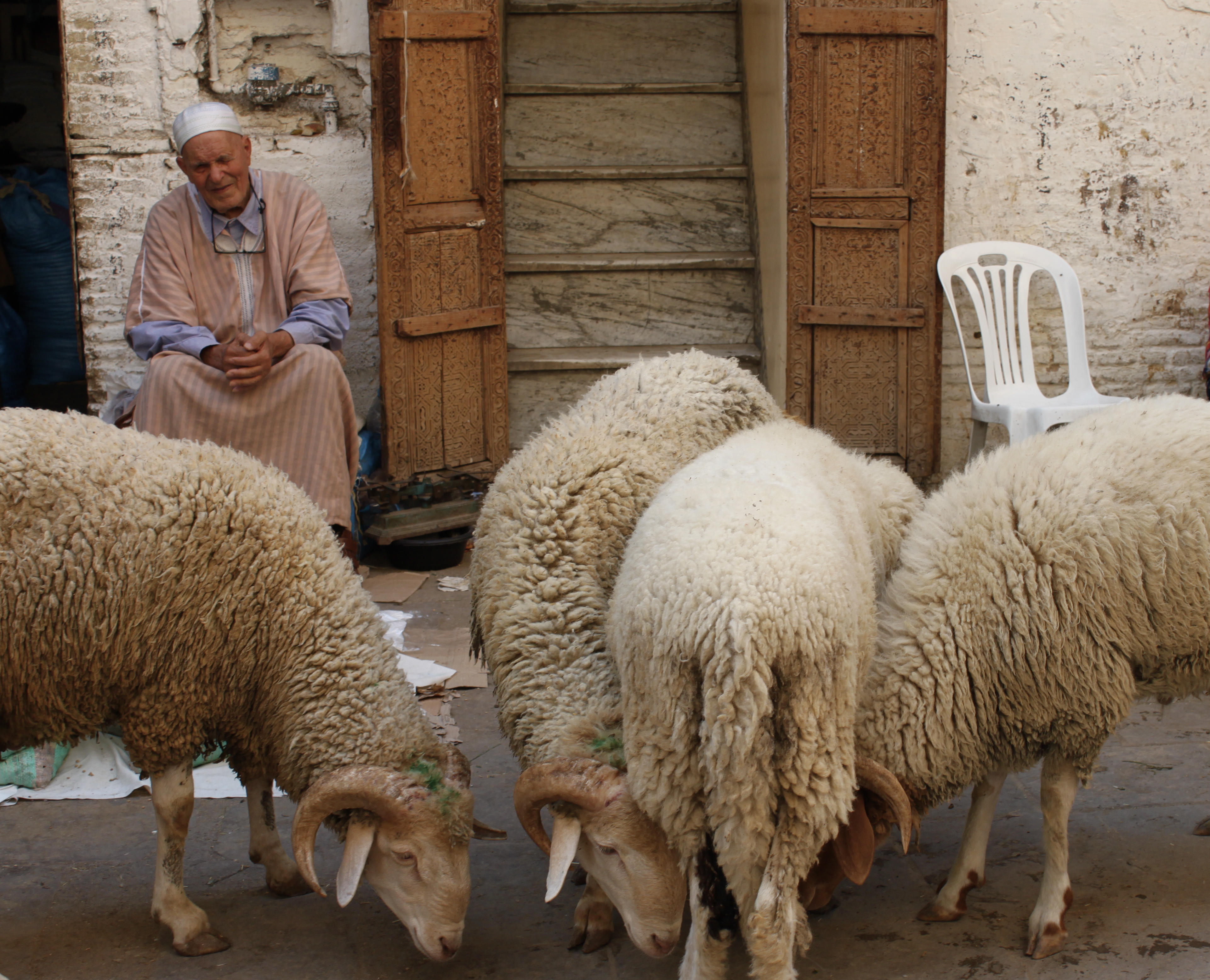
Walking in the streets of the old medina was definitely a tumultuous experience. Venturing through slippery and tight alleys amongst donkeys, Fassis, tourists and sheeps being purchased for the Eid Al-Adha was inevitable and a constant effort. But these are nothing less than the joy of travelling!
Sheeps marked for the Eid Al-Adha
Since we were off volunteer duty for the weekend, we decided it would be a good time to treat ourselves. Morocco doesn’t tolerate alcohol openly however, liquor stores can be found in some of the largest cities. We ventured outside the busy medina and took a cab to Burj Fes (shopping mall) where we stacked up on some goodies. Our plan was to be back on time for sunset, however all cabs were fully occupied due to rush hour. After waiting a good 20 minutes beside a stall selling sheep, we finally got a cab to pull over. Unfortunately, language barrier got in the way and we got dropped off at the wrong entrance of the medina. With the night approaching and a group of locals circling us offering to walk us through the dark maze, I found myself at the edge of losing it. I took a deep breath and stepped back. They were only trying to help us, yet their approach was overwhelming. They put us back in the cab and told the driver the correct way. We made it safe back to our riad. And so on, finishing the day on the roof top terrace munching on goat cheese, sweet dates and chocolate, sipping on Moroccan wine. I admired the old Medina of Fes illuminated by thousands of lights while the prayer chanting of a thousand Fassis soothed the chaos of the day. We shared travel stories with our local host and a German guest while the scent of Moroccan hash floated in the cool air of the African night.
A night layover in Amsterdam is a great opportunity to have a quick taste of this romantic and beautiful European city. Within only a few hours, you’ll be charmed by this famous, small city of the world.
When I booked my return flights from the Canary Islands to Canada, I opted for the 16-hour night layover in Amsterdam. As well as being the cheapest option, it was also an exciting and convenient opportunity. Here are my list of Do’s and Don’ts in Amsterdam during a night layover:
Do:
Look at the seasonal weather temperatures at the time you are going. Amsterdam is charming all year round, whether you visit under the warm sun of July or the chilly drizzles of a November sky. However, since you are here because of transit flights, make sure you are aware of the seasonal temperatures and dress appropriately.
Book accommodation in advance. Amsterdam is a year-round destination, with peak times in the Spring and Summer. However, most weekends are at full capacity. Don’t trust hotel runners; tourists are often approached by runners offering them a good deal on rooms. Upon arrival at the site, in an unfamiliar place, the rates tend to go up radically, and they won’t take a “no thanks” for an answer. There are a few illegal hotels with runners trying to scam tourists. Don’t be a statistic.
Take advantage of the nightlife. There are plenty of venues, dance festivals, and clubs to please every taste. However, don’t get too drunk; remember you have a flight to catch in a few hours.
Bring enough money. The Euro is highly expensive, so be smart and plan a decent budget for your trip. Be ready to spend 10 euros for a vodka, plus 5 euros for a side of soda or juice. Don’t expect all establishments to accept credit cards. I’d say 8 out of 10 places we patronized took cash only. Some hostels will also refuse plastic cards. Have enough cash on you to cover the bills.
Rent a bike for an authentic local experience. Biking in Amsterdam is a safe and easy way to explore the city thanks to the flat landscape and the panoply of cycle trails. Take a map, understand the rules of safety and use, and enjoy the ride! However, don’t walk on the bike paths; Amsterdam is known as the most bicycle-friendly capital of the world, and designated areas have been made to avoid accidents. Make sure you stay in the right one.
Get stoned. Legal coffeeshops are marked with a small green sign in the window. You can buy a gram or more, but most will let you purchase only half a gram (which might be just enough for a layover). Most shops will let you smoke your own weed, but remember they are running a business, so buy something from their shop, like a coffee, for example. However, don’t get too stoned; you are a tourist in a touristic place. Pickpocketing and scamming happen mostly to vulnerable tourists. Remember you are also flying in a few hours. Be a smart tourist. And most importantly, don’t buy drugs from strangers. Here’s an interesting link on the subject:
Stroll through the Red Light District. Amsterdam’s most famous tourist attraction hosts brothels, sex shops, and museums. This neighborhood will confirm all the rumors you probably overheard back home. The Red Light District is a necessary check while having a layover in Amsterdam. However, don’t act like a desperate teenager. What saddened me the most was to see groups of young and old men salivating in front of the girls. This legal prostitution involves real human beings, so be respectful of the ladies. This neighborhood can be shocking for a lot of people, so if you can’t control yourself, go take a hike.
Take photographs. Amsterdam has beautiful historical sights and romantic cobbled-stoned streets filled with restaurants, coffeeshops, bicycles, and people to photograph. Also considered the ”Venice of the North,” the city has kilometers of attractive canals and bridges. Taking a cruise on the canals is a perfect way to snap great photographs. If you are there in the Spring, don’t miss the colorful tulips blossoming. However, don’t take pictures of the girls in the Red Light District. Once again, respect the girls. Don’t even attempt to take a slick picture; most likely, someone will see you and might take away your device.
Visit a museum. The city has a rich collection of museums such as the Rijksmuseum, Van Gogh Museum, and Anne Frank House. However, don’t feel you have to go to a museum. If those establishments don’t normally excite you, there are many more things to do in Amsterdam. You only have a short period of stay, so do things that make you happy.
Taste the Dutch cuisine. Explore Holland’s best dishes, cheeses, sweets, and bread spreads. Have a sit-down dinner at one of the local restaurants or eat on the go at the street stalls.
Don’t:
Rely on the weekly forecast. Weather in Amsterdam can be unpredictable, meaning a sunny morning can soon change into a rainy afternoon. Come prepared with a light jacket if in the summer or a warm coat during the winter.
Trust hotel runners. Tourists are often approached by runners offering them a good deal on rooms. Upon arrival at the site, in an unfamiliar place, the rates tend to go up radically, and they won’t take a “no thanks” for an answer. There are a few illegal hotels with runners trying to scam tourists. Don’t be a statistic.
Get too drunk. Remember you have a flight to catch in a few hours.
Expect all establishments to accept credit cards. I’d say 8 out of 10 places we patronized took cash only. Some hostels will also refuse plastic cards. Have enough cash on you to cover the bills.
Walk on the bike paths. Amsterdam is known as the most bicycle-friendly capital of the world, and designated areas have been made to avoid accidents. Make sure you stay in the right one.
Get too stoned. You are a tourist in a touristic place. Pickpocketing and scamming happen mostly to vulnerable tourists. Remember you are also flying in a few hours. Be a smart tourist. And most importantly, don’t buy drugs from strangers.
Act like a disrepectfully in the Red Light District. Be respectful of the ladies. This neighborhood can be shocking for a lot of people, so if you can’t control yourself, go take a hike.
Take pictures of the girls in the Red Light District. Once again, respect the girls. Don’t even attempt to take a slick picture; most likely, someone will see you and might take away your device.
Feel obligated to go to a museum. If those establishments don’t normally excite you, there are many more things to do in Amsterdam. You only have a short period of stay, so do things that make you happy.
Go settle for the traditional fast food. Amsterdam offers a diverse culinary scene. Skip the usual fast food and embrace the local flavours. Be adventurous! You’re in Amsterdam, after all!
I hope this provides a more comprehensive guide for your night layover in Amsterdam. Enjoy your time there!
After a six-week adventure exploring Morocco, I decided to head west to the Canary Islands of Spain for a 10-day vacation. Despite not being a fan of all-inclusive options, the need for a relaxing break and the consideration of the expensive Euro led me to opt for the convenience and cost-effectiveness of a nice hotel where I wouldn’t have to worry about a thing.
Playa Taurito
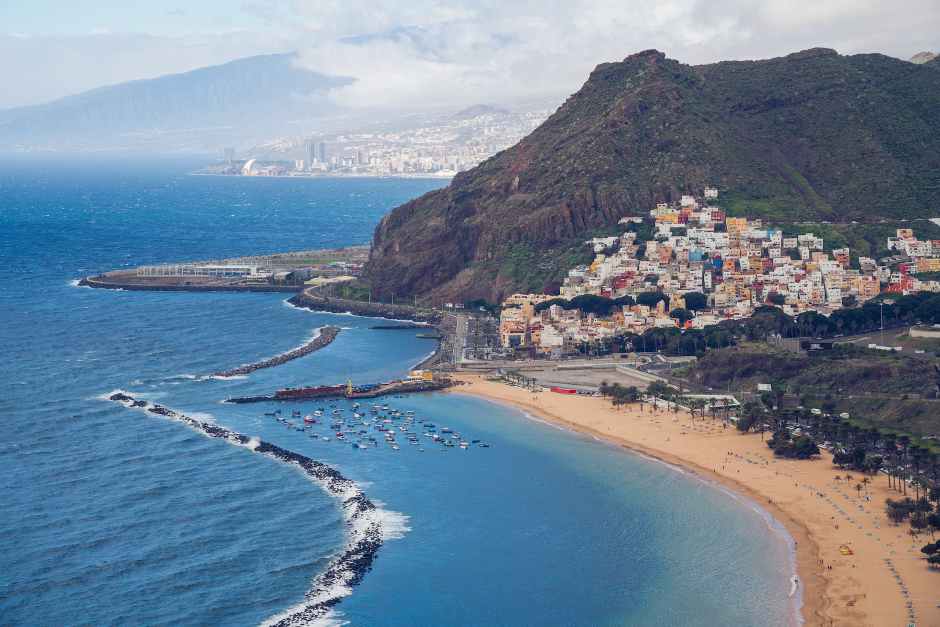
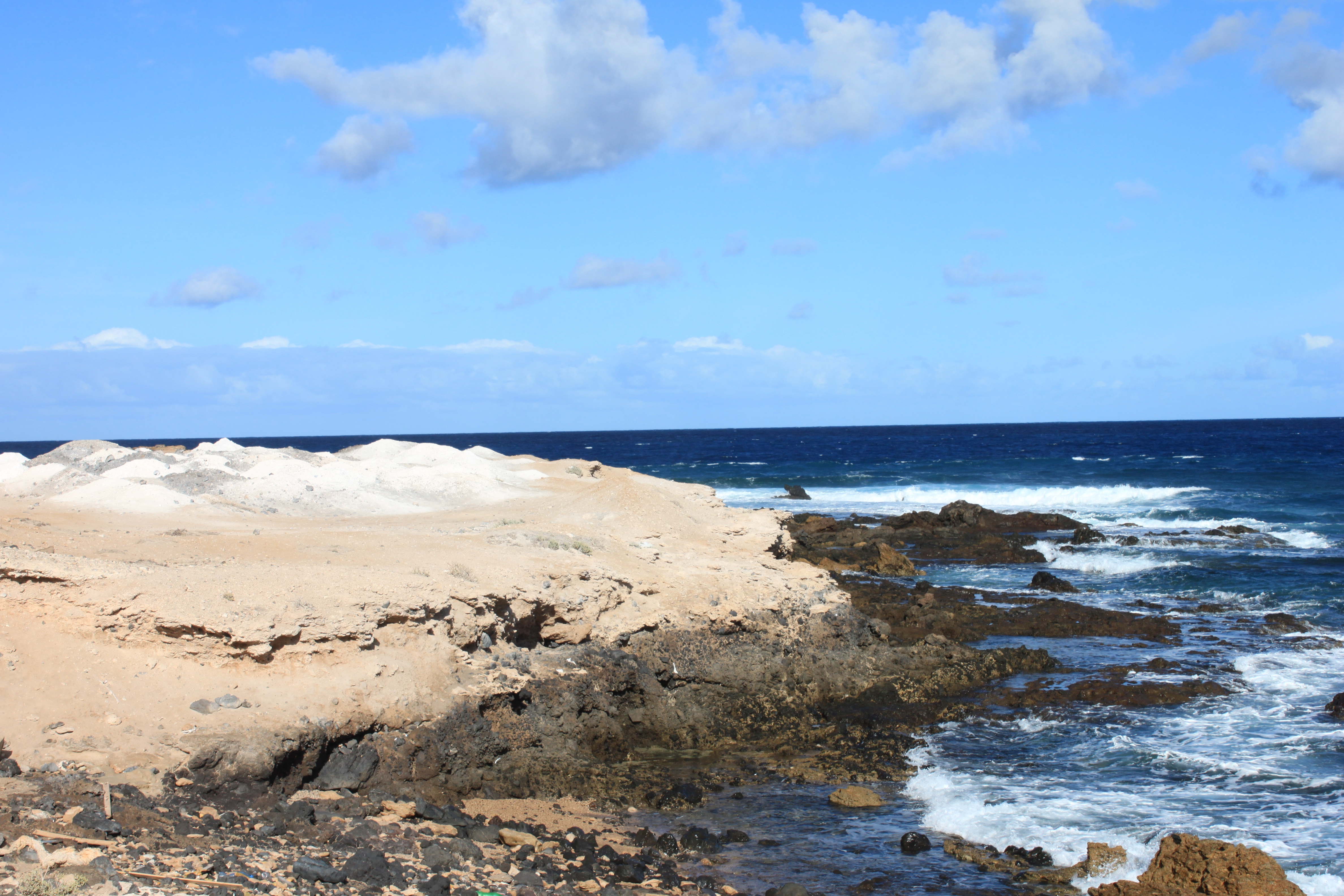
Situated on the southwest coast of the island of Gran Canaria, between the port town of Puerto Mogan and the popular town of Puerto Rico, Playa Taurito is perched on volcanic hills. Notably, the iconic sand dunes of Maspalomas are just a short drive away, offering the chance for a camel ride along the desert-like dunes.
Paradise Valle Taurito
Choosing the hotel Paradise Valle Taurito through www.booking.com proved to be an excellent decision, given its scenic location, reasonable pricing, and a plethora of attractions (my personal reviews are listed at the bottom).
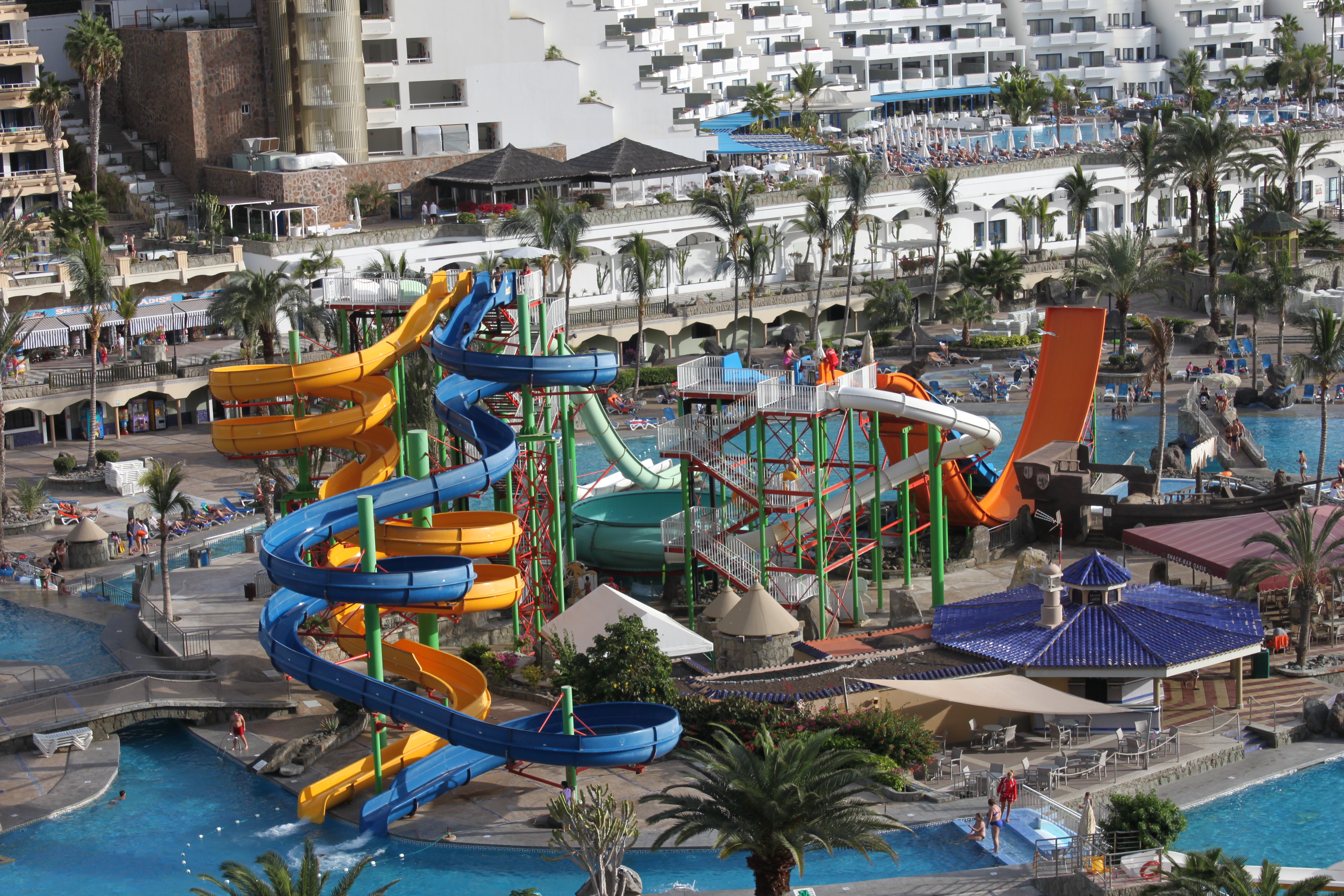
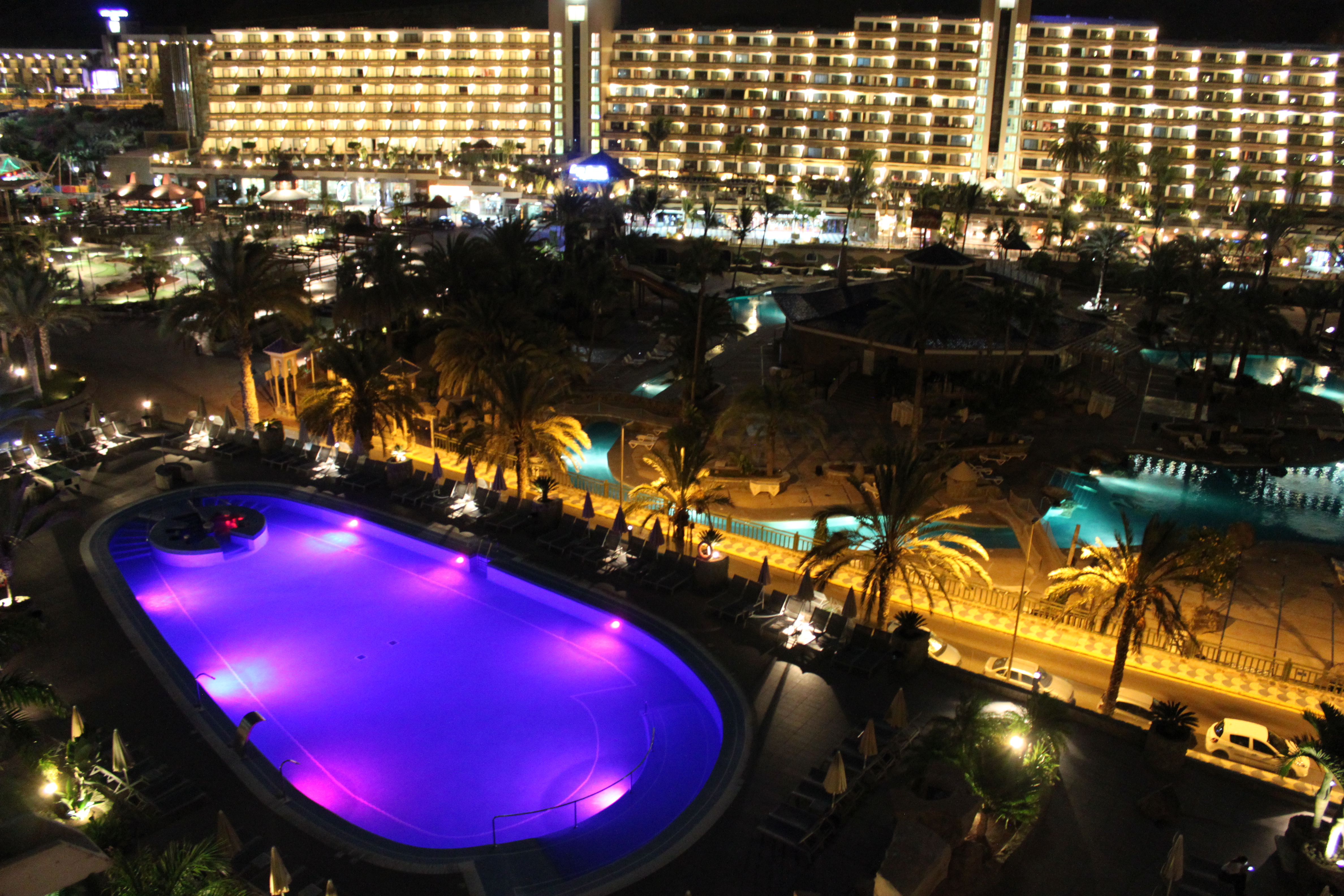
This family self-sufficient resort provides all the services and amenities one could need. Picture waking up to a delicious breakfast on the terrace, followed by a leisurely day by the pool with a book in hand and a refreshing pina colada. For lunch, savor a seafood paella or opt for a classic burger and fries. If an action-packed afternoon is more your style, the waterpark offers slippery rides, or you can unwind on your patio while admiring the beautiful views of the resort and the nearby ocean. For extra relaxation, indulge in the full-service spa.
There’s no shortage of activities in Taurito. Book a package with one of the beachside companies offering jetskiing, banana boating, parasailing, snorkeling, diving, and sailing.
The black sand beach of Taurito is just a few feet from the hotel, nestled between two wind-shielding cliffs, creating a peaceful and comfortable area to relax, take a stroll, or simply watch the warm golden sunsets.
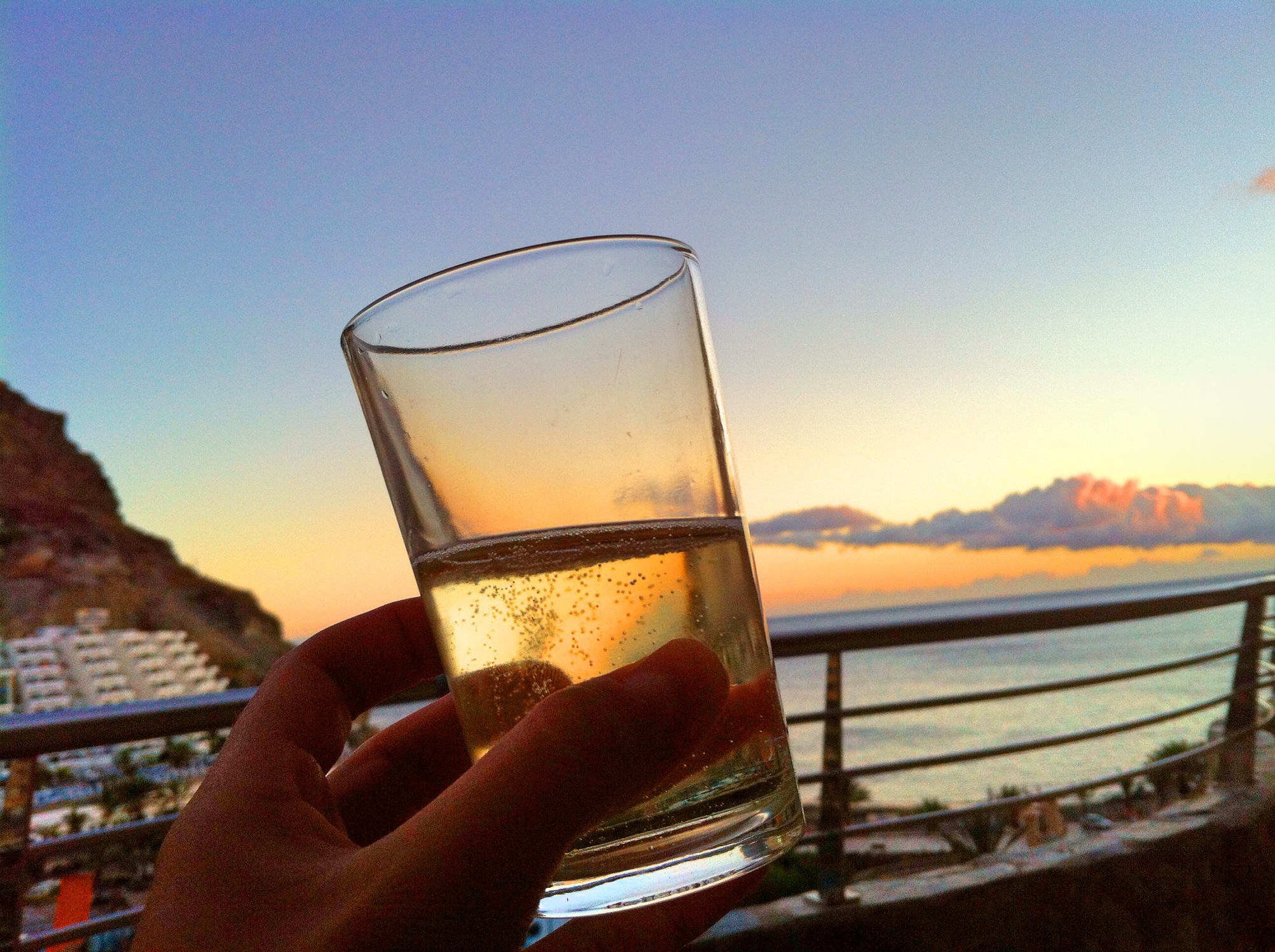
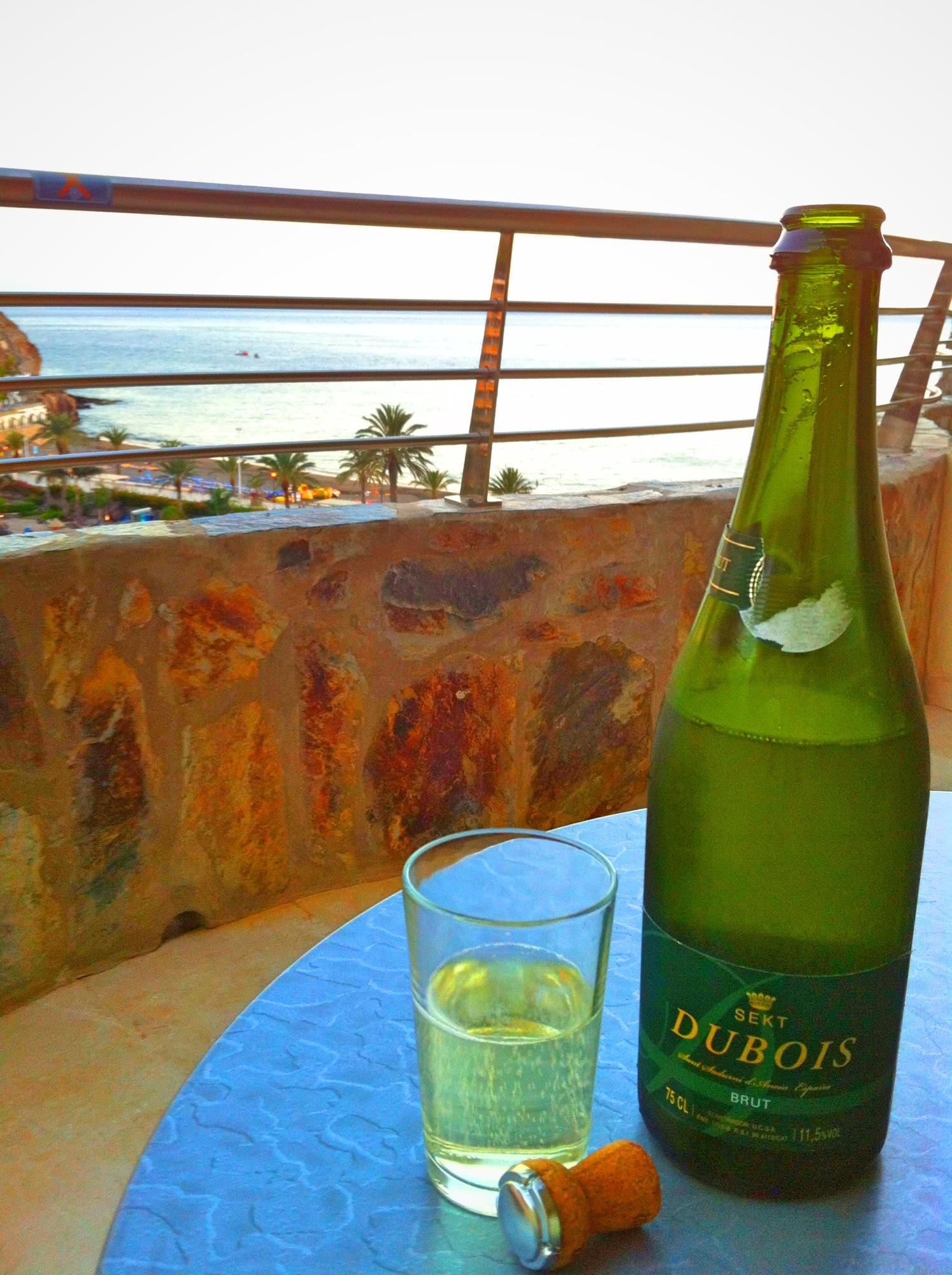
The hotel room patio becomes a perfect spot to catch up on work, share adventures with those back home, or simply enjoy a glass of wine.
Evenings can be spent savoring a nice dinner under the stars, followed by a leisurely stroll on the venue. Public shows and entertainment add to the lively atmosphere. For those seeking a quieter experience, the poolside bar, manned by friendly bartenders, offers a perfect setting for conversations over a glass of wine with fellow vacationers. Nothing beats the tranquility of these moments.
Scuba Diving at El Cabron
I booked a day diving trip with Delphinus and did 2 beautiful dives at the marine reserve of El Cabron.
Exploring the port town of Puerto Rico
The vibrant port town of Puerto Rico provides a delightful escape, offering a variety of experiences. Whether you prefer a leisurely walk along the oceanfront promenade, catching glimpses of fishermen returning to the marina, enjoying a delectable dinner at one of the authentic local restaurants, lounging on a beach chair by the shore, or strolling through the pedestrianized development surrounded by gardens of bougainvillea, palm trees, bird-of-paradise flowers, hibiscus, and other colorful plants, this little “Venice of the Canaries” is sure to enchant you with its diverse and charming offerings.
Cruise along the coast
Finally, it wouldn’t be a complete vacation if you don’t cruise along the coast. Whether it is by bus, by car, or by scooter, the road along the ocean offers a scenic drive with the perfect sea breeze. We opted to rent a scooter and rode along the winding cliff roads, wind in the hair, chasing the sun setting over the Atlantic. Epic, scenic, simply majestic.
Paradise Valle Taurito Hotel review:
Location: The hotel is located south west of the island of Gran Canaria, between the towns of Puerto Mogan and Puerto Rico. The sand dunes of Maspalomas are a short drive away. No airport transfer is included with the hotel. You can choose to pay a taxi, but be prepared to pay a good 100 euros. You can opt to take public transportation. Ask the bus station clerk at the exit of the airport which bus to take to your destination. To get to Taurito, we took 2 buses, a total of 10 euros each. It took about 1 1/2 hour. Renting a car could be a great option.
Hotel: Very clean and comfortable newly renovated rooms with beautiful views of the resort and the ocean. Hotel always clean and well-maintained. Beautiful flowers and gardens.
Amenities: Small but nice pool surrounded by free long chairs. Pool tables, hot tub and free access to water park. The water has fun rides, although could need a good deep clean and TLC on the slides. Entertainment is a bit poor, but great for kids. Games room fun, but bowling is expensive. Mini-golf is a must! There is a nightclub that opens late for adults. Doesn’t get too busy and the drinks are not included, hence a bit pricey. Beach is clean and located only a few feet away. There is also a full service spa.
Food and Drinks: As most affordable all-inclusive resort, the food isn’t close to gastronomy. It tends to be a bit repetitive, but overall it is decent and eatable. The drinks are also ok. However, the self-service wine at dinner is horrible. Drinks and wine at the poolside bar are way better.
Staff: Had a great experience thanks to the staff. Very kind and helpful and, even after long days, they keep their smiles. Good job especially to the service and bar staff as well as the housekeepers. However, the front desk wasn’t too helpful with indications and recommendations, which made us miss our bus and take an expensive cab to the airport.









































 Footloose Diary