PNW Hikes

Shaking hands with Grand Cayman Island

July 4, 2011.
29ºC, feels like 41. Partly sunny. 11:54 a.m. (Eastern Time Zone, UTC/GMT -5).

Welcome to Grand Cayman Island!

I stepped off the plane and into the heavy heat. The sweater I wore to fight off airport air conditioning was useless now. Standing in line at immigration, surrounded by tourists eager for a week of sun, I felt out of place — just me, my photocopied work permit, and two suitcases, tangled up in nerves and excitement.

This was the moment to grow up. No chaperone, no companion, no mentor. Just me, in a foreign country, with no one waiting on the other side. Time to face reality, trust my instincts, and stay positive. Yes, I felt lonely. But I also knew this was my chance to push myself, to break out of the coconut shell I’d been living in.

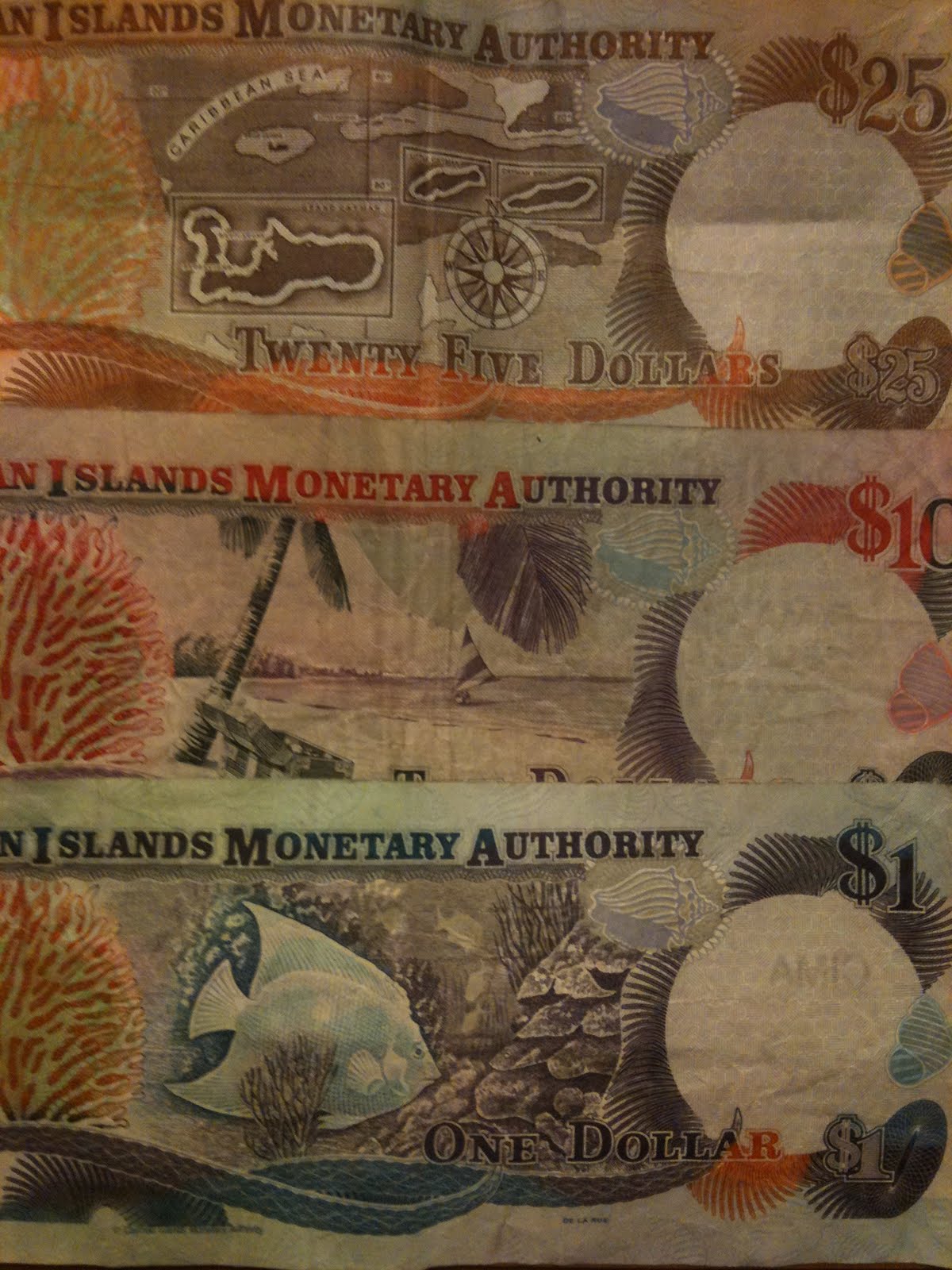
After searching the airport for a currency exchange (and realizing there wasn’t one), I was glad I’d brought U.S. dollars. Tip: if you’re coming from Canada, exchange before you leave. You can use U.S. dollars here, but the exchange rate in shops and restaurants is much worse.
Next step: a taxi. The prepaid stand quoted US$20 for a 10-minute ride to Treasure Island. Pricey. Luckily, the woman behind me was headed the same way and offered to split the fare. Another tip: if you split a cab, let the prepaid stand know, otherwise you risk being double-charged. We weren’t, and had a lively debate with our driver before settling on the original fare.

I’d booked a room at Treasure Island Resort for my first month. At CI$1,000/month (about CAD$1,200), it was steep for my wallet but reasonable by island standards. The perks: a gym, two pools, a beach bar, and private beach access. The room itself was fine — double bed, sofa bed, kitchenette, bathroom, cable TV, and a phone. The balcony faced the parking lot, so the curtains stayed closed, but at least I was on the second floor, which felt safer during hurricane season. All in all, a decent starter pad.

After a shower, I left my bags unpacked, grabbed a map, and walked north along the main road. Subway, pharmacy, fruit bar, coffee shop, grocery store, liquor shop — all within reach. Forty-five minutes and two miles later, I reached my new workplace. Perfect timing: the staff were in a meeting about a new menu. I listened in, had a glass of wine at the bar, chatted with my new coworkers, then headed back “home.” Work would start tomorrow at 4.

A Week Goes By…

The restaurants I’d be working for — Eats Café, Legendz Bar, and Yoshi Sushi — were owned by a Canadian couple. Eats is a busy diner with eclectic décor, Legendz a sports bar packed with tourists and regulars, and Yoshi, of course, serves sushi. The kitchens are shared between them, just like the last place I worked in Whistler. I was assigned to Legendz.

Work was non-stop. With the Westin right across the street and loyal regulars, we were constantly busy. Six days a week, nine to ten hours a day, often in split shifts. So this was the Caribbean work ethic — exhausting, but part of the deal. In one week, I’d barely seen the ocean, my fridge was still empty, and my bags remained unpacked. But I was meeting good people, making contacts, and picking up tips on island life.

Walking those two miles in the heat every day wasn’t sustainable, so I started using the bus. At CI$2 a ride, it’s pricey for the short distance, and the system is unpredictable. They’re private minivans — you wave, they honk, they stop. After 9 or 10 p.m., though, they stop running. Which leaves me walking (not recommended with the rise in crime), overpaying for a cab, or relying on coworkers for a lift. Thankfully, people have been generous, even if most live north and I live south.

Tomorrow will be my first real day off. Kendra, a coworker, and I are planning to swim with the stingrays. It’ll be good to explore more of the island — so far I’ve only seen the stretch between work and home.

It’s only been a week. The first days were hard — I missed my friends, my dog, my life back home. Loneliness is still there, but slowly I’m finding my way.

Departure

I’ve had my share of trips and adventures, but this one feels different. I’m pressing pause on my life in Whistler and heading to the Caribbean for five months of work — this time, completely on my own.

YVR → SEA → ATL → GCM

I feel lonely. Not just because I’ll be alone, but because I’m leaving behind the friends, the life, and the dog I love to start over overseas. The challenge is real, and I can already feel the weight of it.

I already feel lonely. Not just because I’ll be by myself, but because I’m leaving behind my friends, my dog, and the life I built over the last eight years. That part is hard.

Grand Cayman isn’t a scary place — it’s safe, modern, and full of other expats. I’m not worried about the island. What I’m worried about is how it feels to start over from scratch, with no one waiting for me. But this is what I asked for: a challenge.

I want to see if I can do this on my own. Learn more about myself. Get stronger. It’s scary, but it’s worth trying.

So here I go. Chin up. I got this!

A City Infested of Crazy Canucks

That was it. The moment that made history. But this time there was no gold medal, nor a Stanley Cup. All that was left to the ground were burnt flags, garbage, broken glass, and alcohol streams. All that is left in our minds are degrading images of drunk, high, and sadistic anarchists, criminals, and grungy followers destroying our city.

Let’s rewind.

Friday, June 10, 2011. The Canucks of Vancouver win 1-0 against the Bruins of Boston. Game 5 of the Stanley Cup. Two days closer to celebration. The game was tight, the game was strong. Around 100,000 fans reunited downtown to watch the game on the big screens. And there it is: Max Lappiere scores the first and last goal of the game. Notching his team to within one win of the Cup. Evoking joy and sanity in the city. When the period ends with a third-game win for our team, the crowd disconnected from the ground, jumping and bouncing around from happiness and excitement. Not only flags were flying high, but also smiles and high fives! My hand couldn’t get tired of clapping people’s flat palms. My cheeks were holding my smile up high. Celebrations went on and on. It was a good night, yes, a good night.

Wednesday, June 15, 2011. The Canucks of Vancouver lost 4-0 against the Bruins of Boston. Game 7. The Stanley Cup. I rushed my way down to the city to embrace one more time the energy of the crowd. Yes, I was hoping for another win. Perhaps I was selfish or too positive. But I felt that we could do this, this time. The sun was warm, the fans were ready. I squeezed my way amongst old and young Canucks for a place to glimpse. The game was hard to see. I mean, there were so many people in front of me… But seriously, it was hard to see. The last minutes of it were the most painful. I mean, bottles and shoes were thrown at the big screen until it broke. We couldn’t see the end, only could we imagine. It could’ve stopped right there. We knew our defeat and so be it.

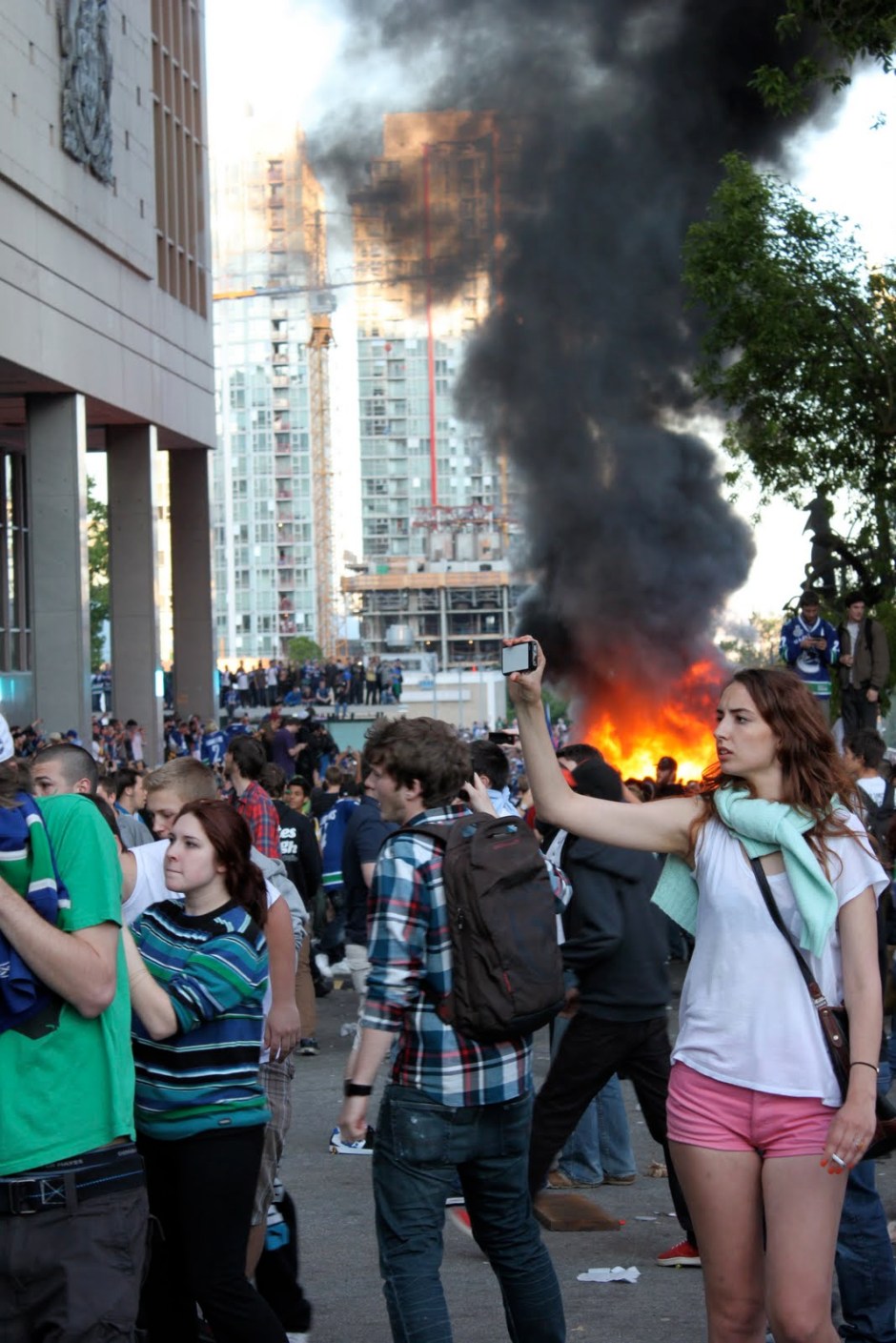
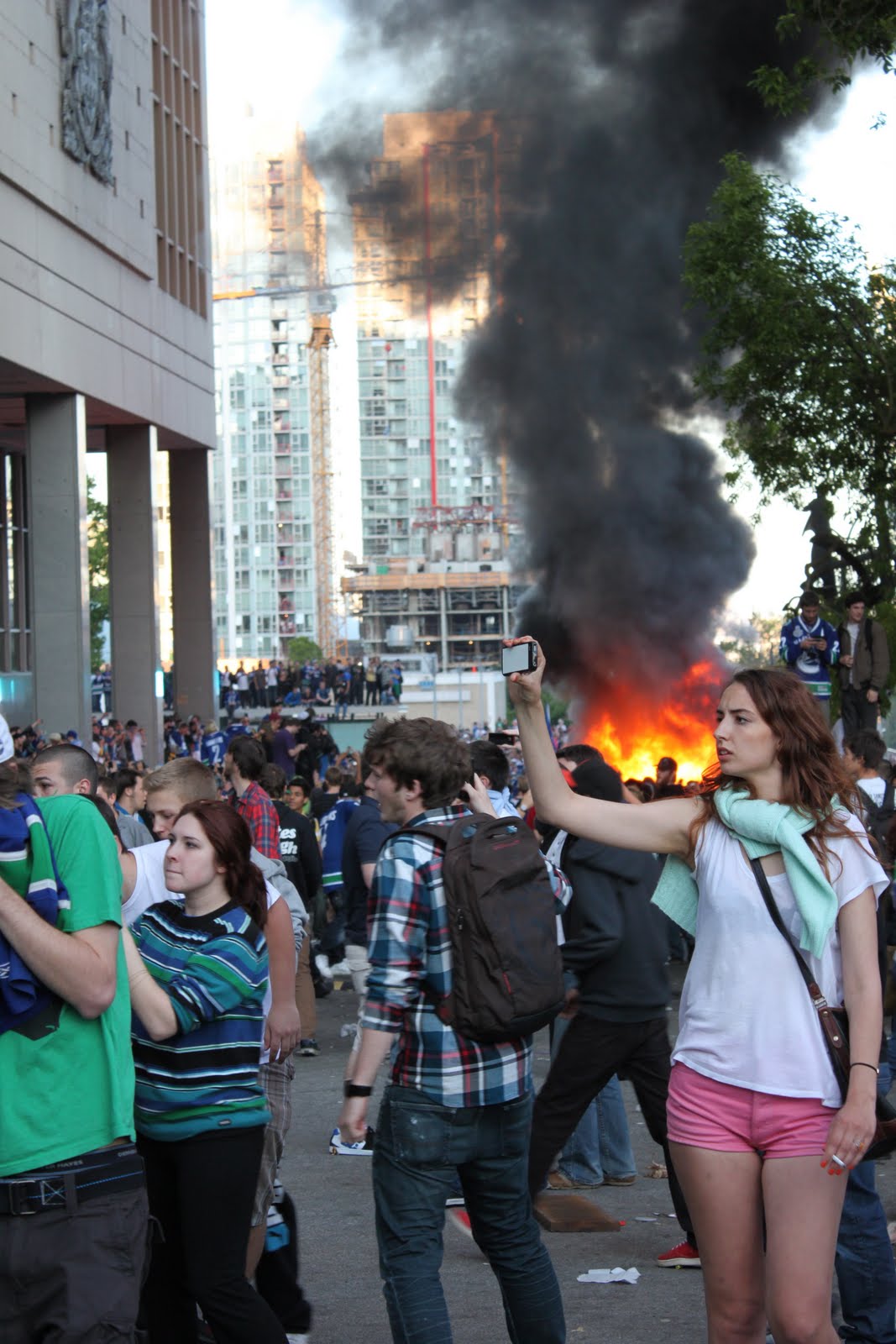
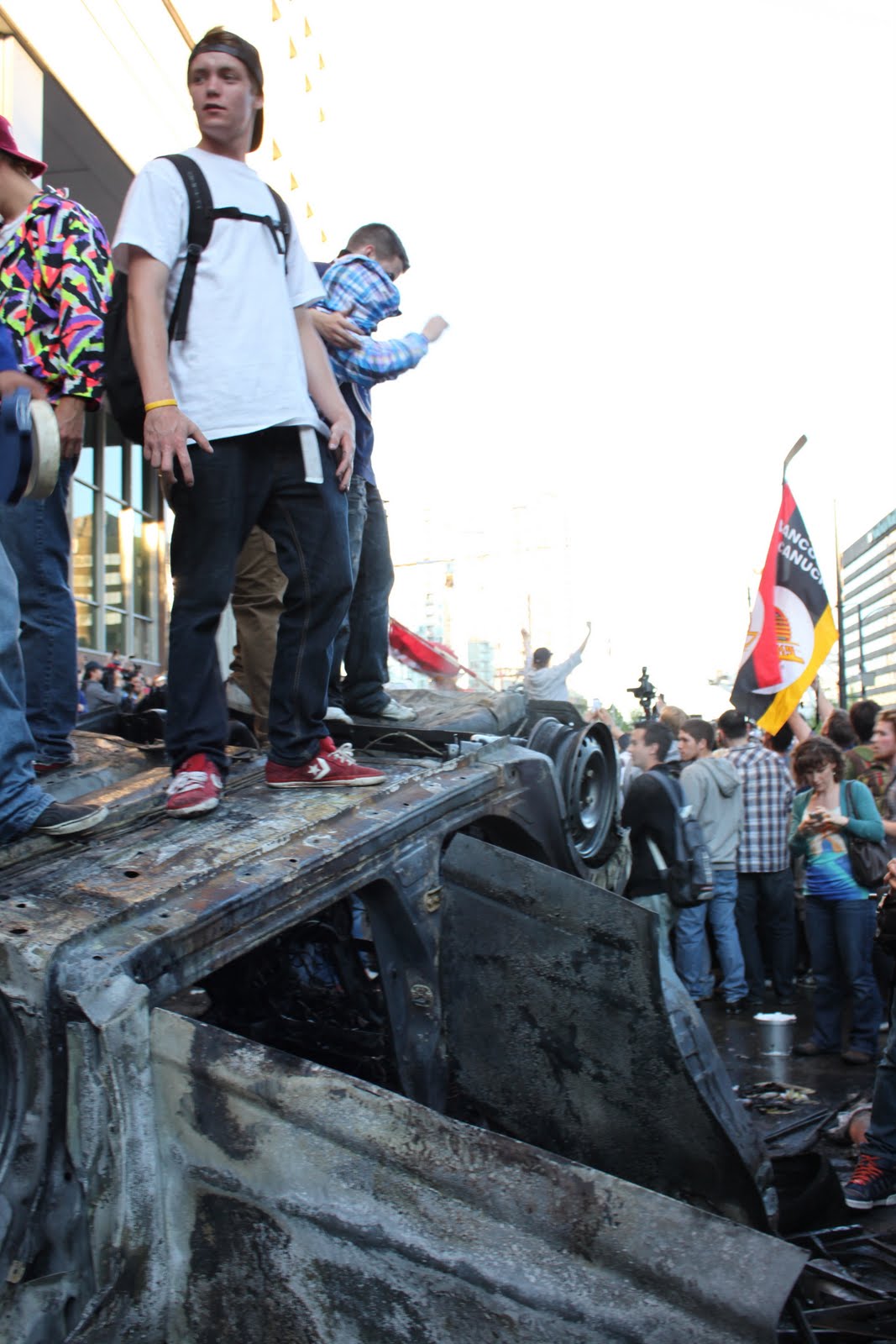
We arrived second, didn’t we? Isn’t this enough for us, Canucks? Yes, it was. But for an incomprehensible percentage of idiots, calling a riot in our beautiful streets seemed the plan for the night. After the main screen broke, a car got flipped, then burned. Black smoke ruined the air and rioters got hit by the flame; hit by the flame of destruction and mayhem. Cocktail bombs were thrown to the ground, and glass bottles were propelled in the air. Reactions arose amongst the crowd: fires, fights, screams, vomits, loots, blood. The perfect recipe for a nightmare in beautiful BC.

Currents of hundreds of fans were crashing one way, then the other. At some point, following the pod, I had no idea if I was running away from something, or running after something. The city was turned into a massive ocean infested with crazy Canucks.

Fools were jumping on cars set on fire, while others were looting stores and breaking windows. Some were shooting cocktail bombs at cops, while others were smashing residents’ vehicles. Aren’t we in 2011 where the invention of such things like iPhone and social media offer direct online information? Yes, fools. You are all fools to think you will be able to run away safely from your mess.

I feel angry. I feel sad. I feel scared. But somehow, I am standing in the middle of this civil disorder. Call it excitement, call it curiosity, I feel ashamed, but I wanted/needed to be there and capture the moment, from my own eyes. And let me tell you: it was absolutely insane.

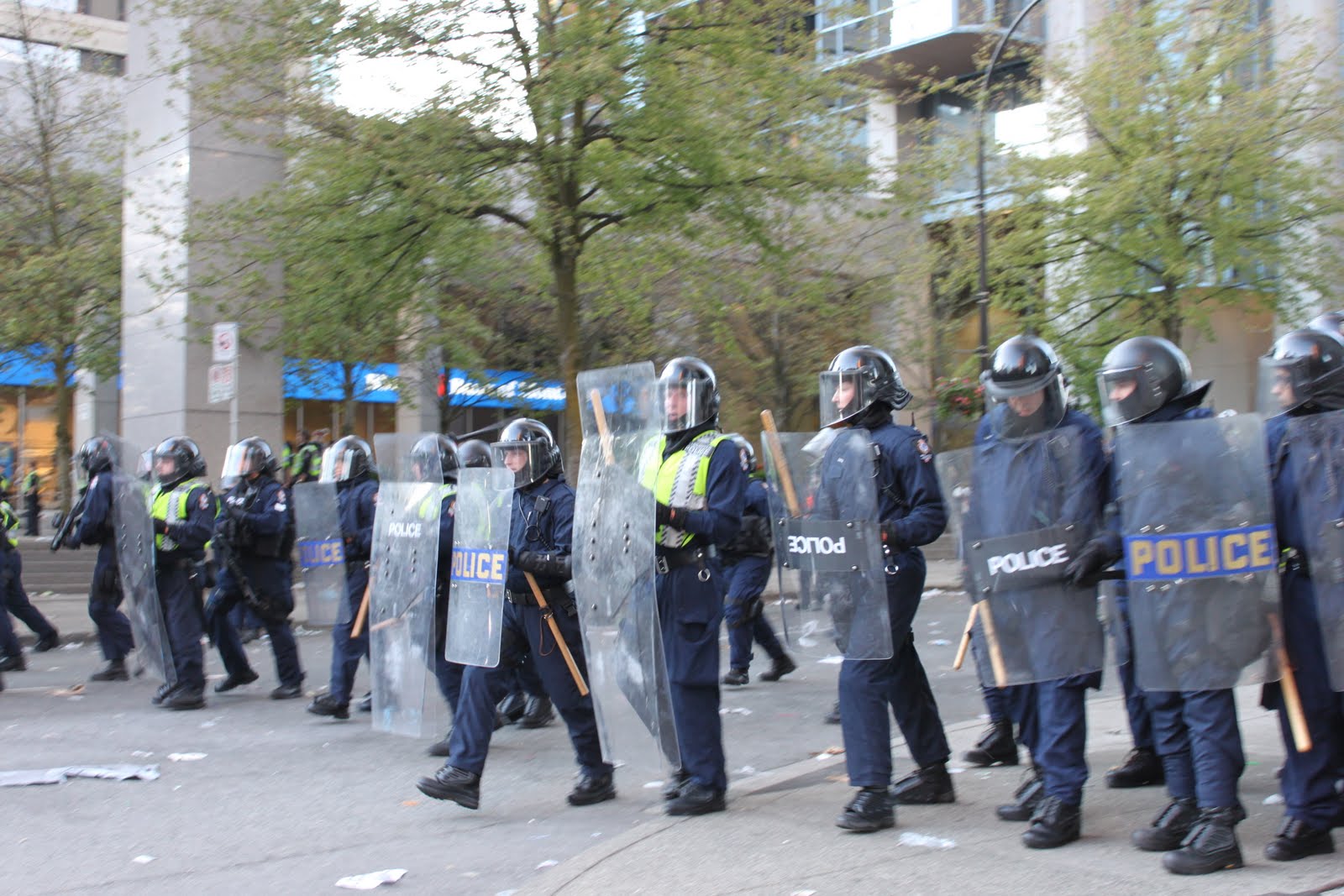
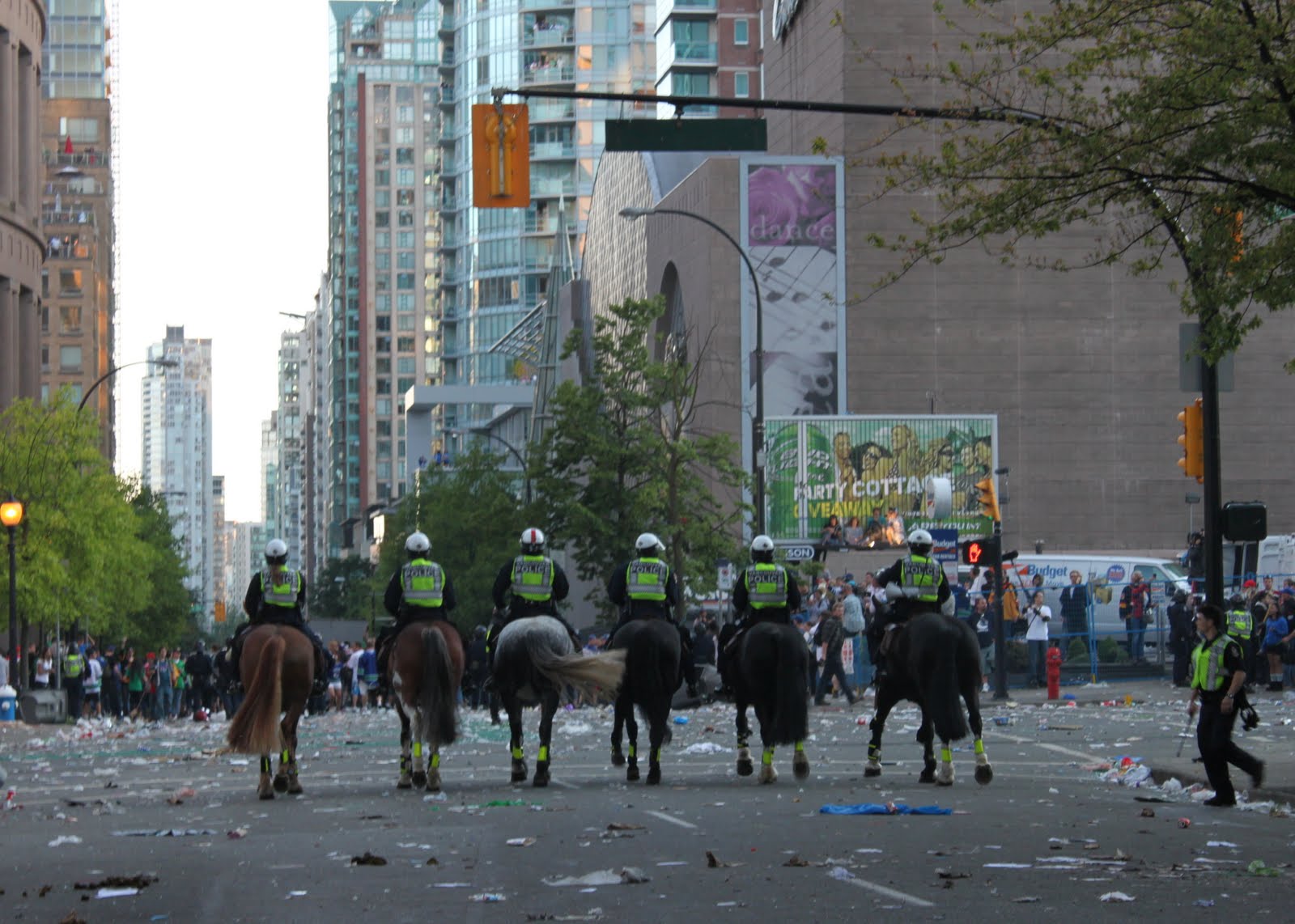
After the army of police lined up with their mounted team and announced their advancement in the square to disperse the crowd, I decided it was time to leave. I snapped some more pictures and we left the scene on our motorcycle, dodging flying items as we rode through the chaos and managing to make our way through the police line. When I thought I was getting away from all this commotion, it didn’t take too long for me to realize that the riot had already spread to all the nearby streets. The parking garages were filled with people vandalizing cars. An old man collecting money at the entrance of the garage was forced out of his booth after the window was smashed. Rocks and glass were being thrown, and people were getting injured. There was blood everywhere. Two young men with bandanas covering their faces robbed a private boutique, stealing mannequins and clothing, then rushed past me while running. A 10-year-old kid hit an advertisement lightbox with a hockey stick, breaking the glass and gleefully replaying the hit. What the hell happened to our citizens? Damn. That’s it. I’d had enough.

A Sri Lankan Holiday

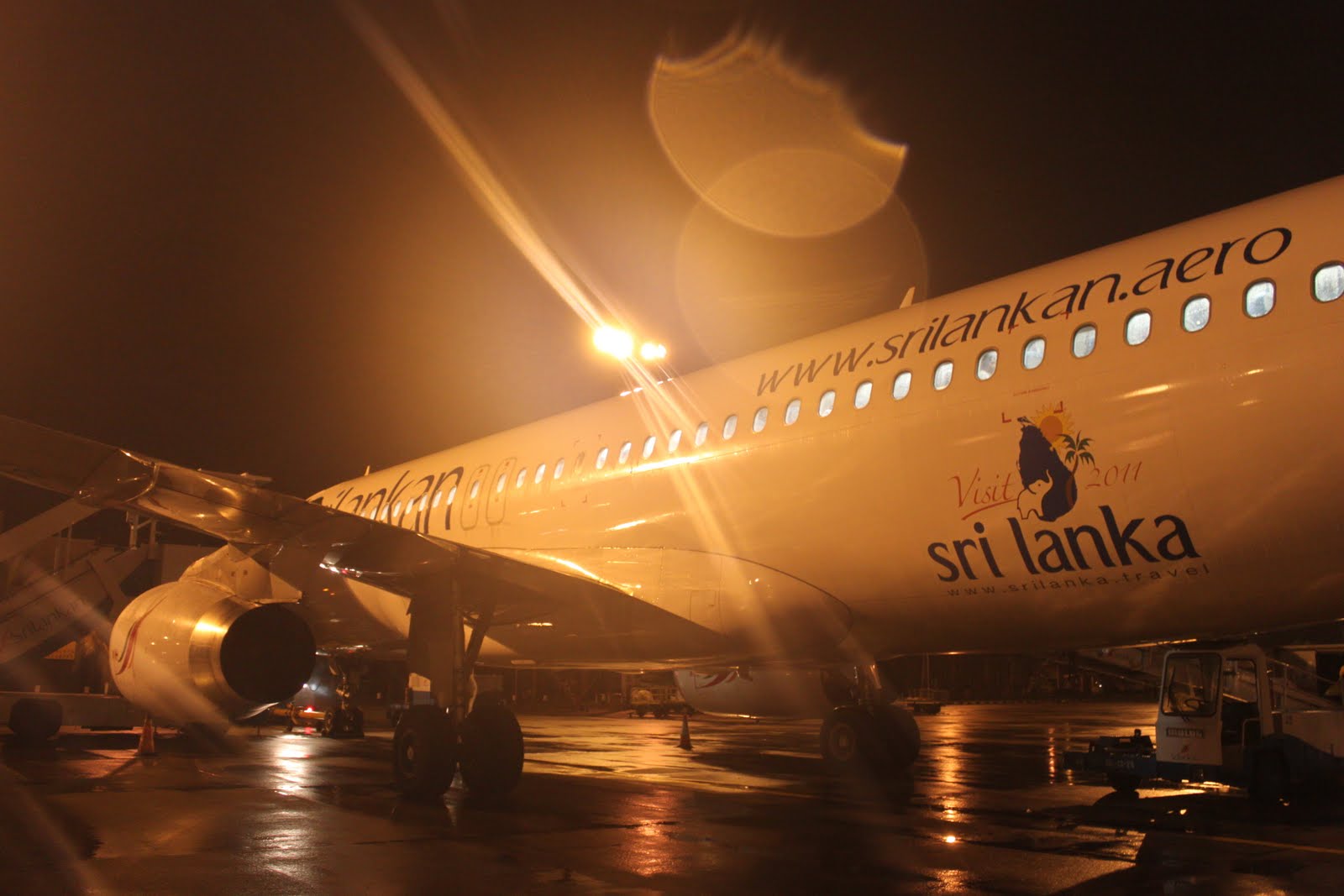
Our journey into Sri Lanka began with a 45-minute plane ride filled with unlimited Carlsberg, setting the stage for our final destination. Welcomed with warm smiles by the immigration agent, our passports were stamped with a free visa, and we were wished a great stay in this captivating country.

Colombo, the bustling capital, greeted us with an unexpected challenge—a recent flood of 400mm of rain, an anomaly for this time of year. However, the resilient sun quickly reappeared, drying the city’s remnants. Stepping out onto warm, dry ground, we were ready to immerse ourselves in the fourth and last country of our itinerary.

Complications with our Indian Visa necessitated a day’s stay in Colombo. A trip to the Indian Embassy, reminiscent of a bureaucratic maze, proved both frustrating and confusing. Memories of a similar ordeal in Nepal lingered, raising the question of necessity. After navigating through the complexities and obtaining a somewhat ambiguous approval, we sighed in relief and retired to a hotel.

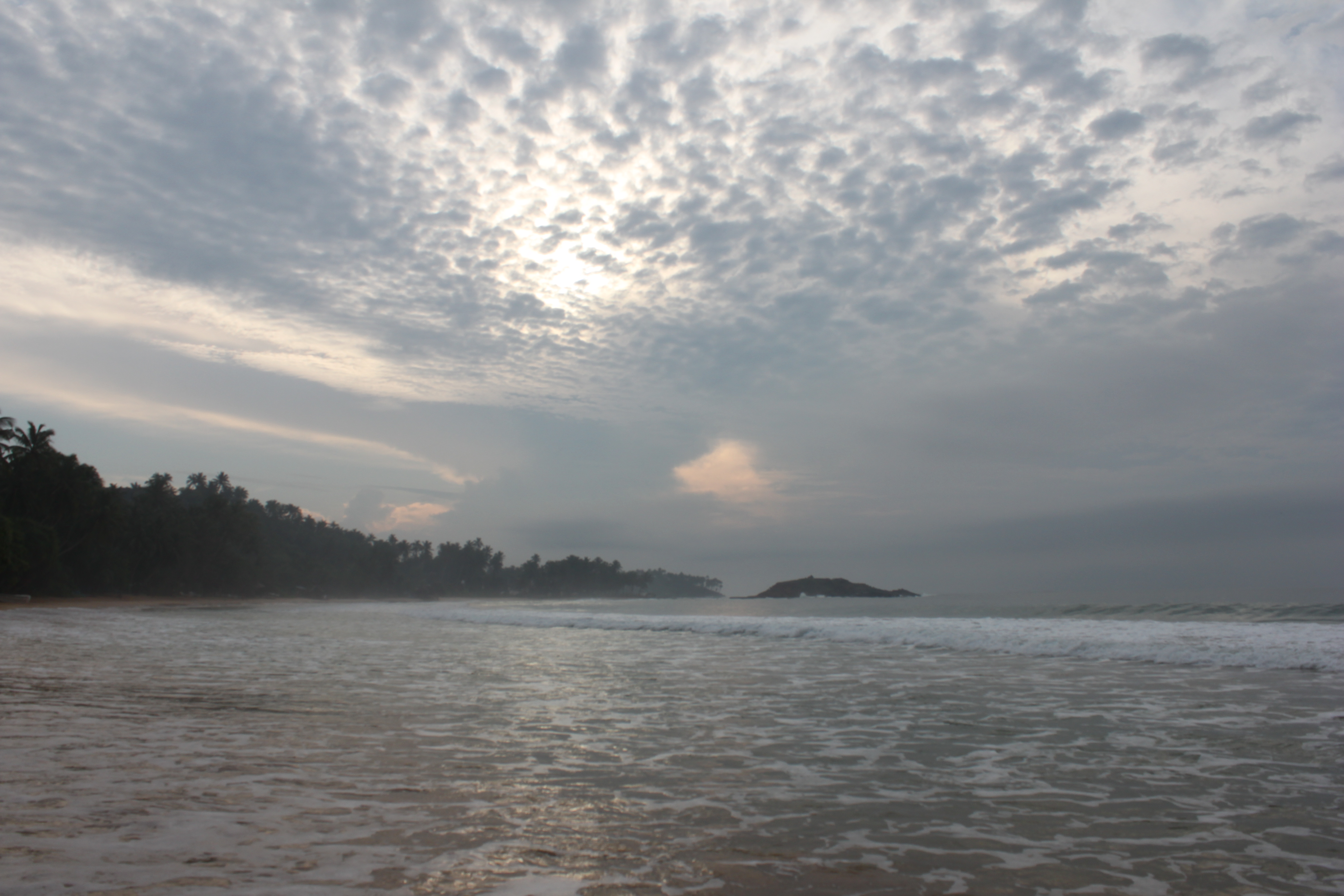
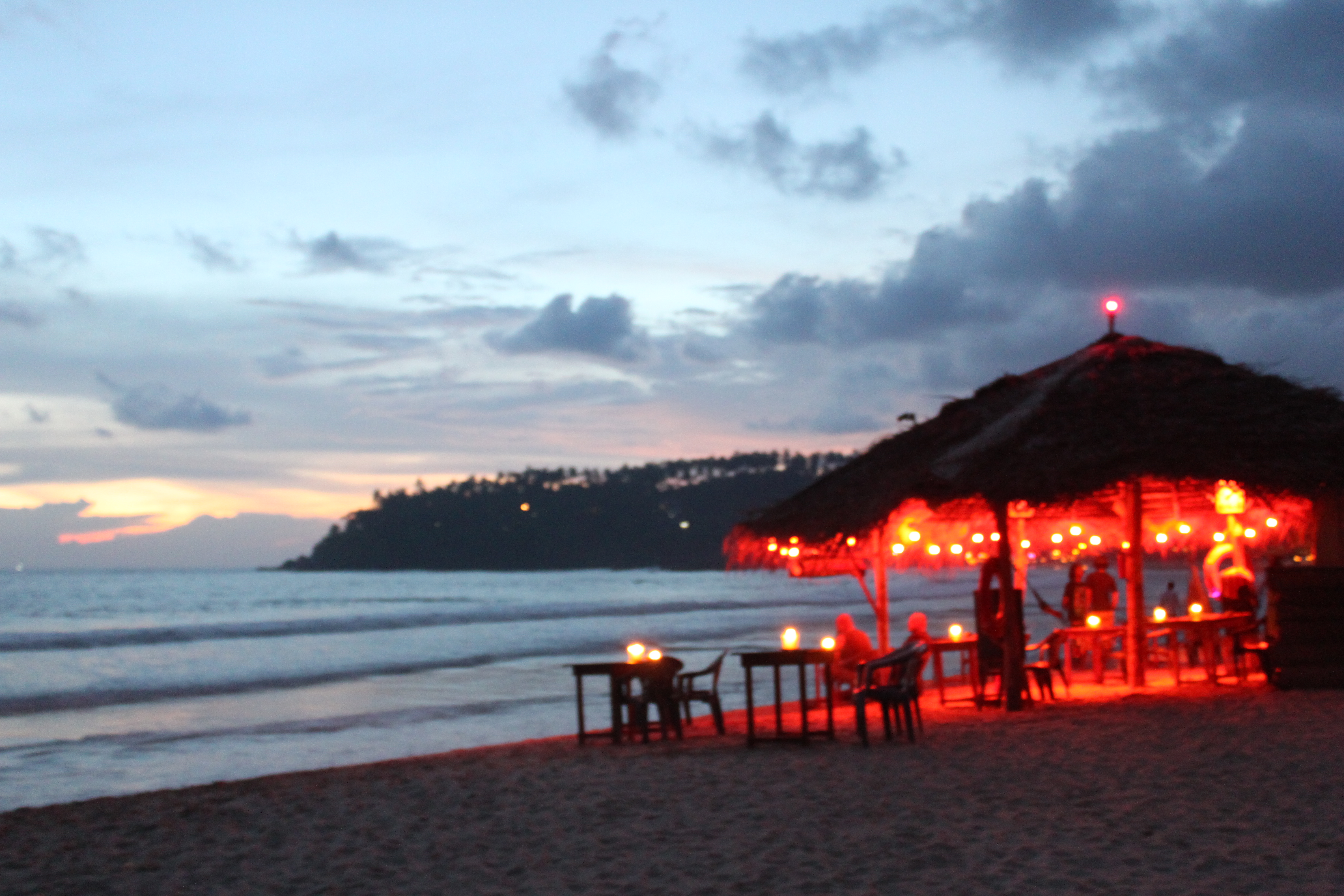
Our journey to Mirissa, booked for its budget-friendly Paradise Beach Club, involved a local bus adventure adorned with Hindu God figurines and pulsating Sri Lankan music. Despite a fare dispute and discomfort, the crescent beach of Mirissa welcomed us with its turquoise waters and tranquility, offering the relaxation we sought.

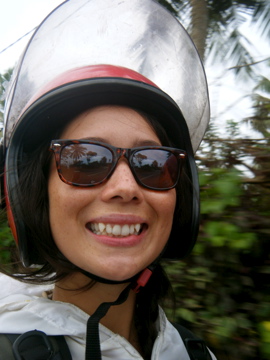
To add excitement to our lazy days, we rented a motorbike, exploring coastal roads and neighboring towns. From scuba diving in Hikkaduwa to capturing stilt fishermen in Polehna, our days were a blend of relaxation and adventure. A failed motorbike lesson added a touch of humor to our escapades.

As thundershowers painted the sky in black and grey, we found solace in the fresh rain. A mesmerizing lightning show and a power outage turned dinner into a candlelit affair, creating an unexpectedly charming atmosphere. Amid the storm, I took the opportunity to reflect, read, and enjoy a glass (or a few) of wine.

Two months of traversing the Indian Subcontinent, trekking Nepal, exploring Tibet, and now unwinding in Sri Lanka have been filled with discoveries and encounters. Witnessing the real colors of each country and learning profound lessons about life, I feel closer to whatever it is I’ve been seeking. With itchy feet and anticipation, I look forward to hitting the road again, already planning my next adventure.

Kanyakumari: The End of the Road

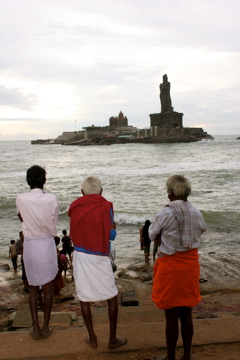
There I stood, with my feet soaking in the confluence of three seas, at the land’s end of the country, at the tip of my Indian journey.

Kanyakumari, a quaint and unassuming village, graces the southern extremity of the Indian subcontinent. Nestled at the confluence of the Indian Ocean, Bay of Bengal, and the Arabian Sea, it is often said that reaching this geographical nexus signifies the conclusion of a profound journey of self-discovery—a moment steeped in accomplishment.

Our expedition spanned the length of the subcontinent, tracing a route from the northern border to the absolute southern tip. We traversed vast distances on the labyrinthine roads of India, delving into the lives of its people, absorbing the nuances of their diverse culture. From the colonial imprints on cities and their denizens to stark disparities in wealth and caste, our expedition unfolded a tapestry of experiences. We bore witness to the harsh realities of poverty, glimpsed the stark juxtaposition of opulence, and comprehended the disheartening absence of hope for many. Our gaze met the faces of countless homeless individuals, orphaned children, beggars, and disabled souls, including a man ravaged by leprosy, his skeletal limbs protruding. Amidst the chaos, overcrowding, disorder, and injustice, we beheld a nation yearning for salvation.

Yet, amidst the shadows cast upon India, rays of goodness pierced through. Pristine beaches adorned with swaying palm trees graced both coasts. Architectural marvels, spanning the epochs from history to contemporary times, stood as testaments to India’s rich heritage. The tapestry of diverse religions woven into the fabric of daily life. The aroma of delectable dishes, crafted from the freshest ingredients. The unwavering pride of the citizens in their national sport, cricket. The shy smiles adorning each face.

And so, at this juncture, on the brink of the nation, facing the convergence of three seas, I find myself at the culmination of a journey marked by introspection, comprehension, admiration, and compassion. India, I extend my gratitude for rendering this expedition the most indelible of all.

As the curtain falls on this chapter, the time for vacation beckons. Join me on the forthcoming leg of my adventure in Sri Lanka, chronicled in my next blog.

Under a Keralan Sun

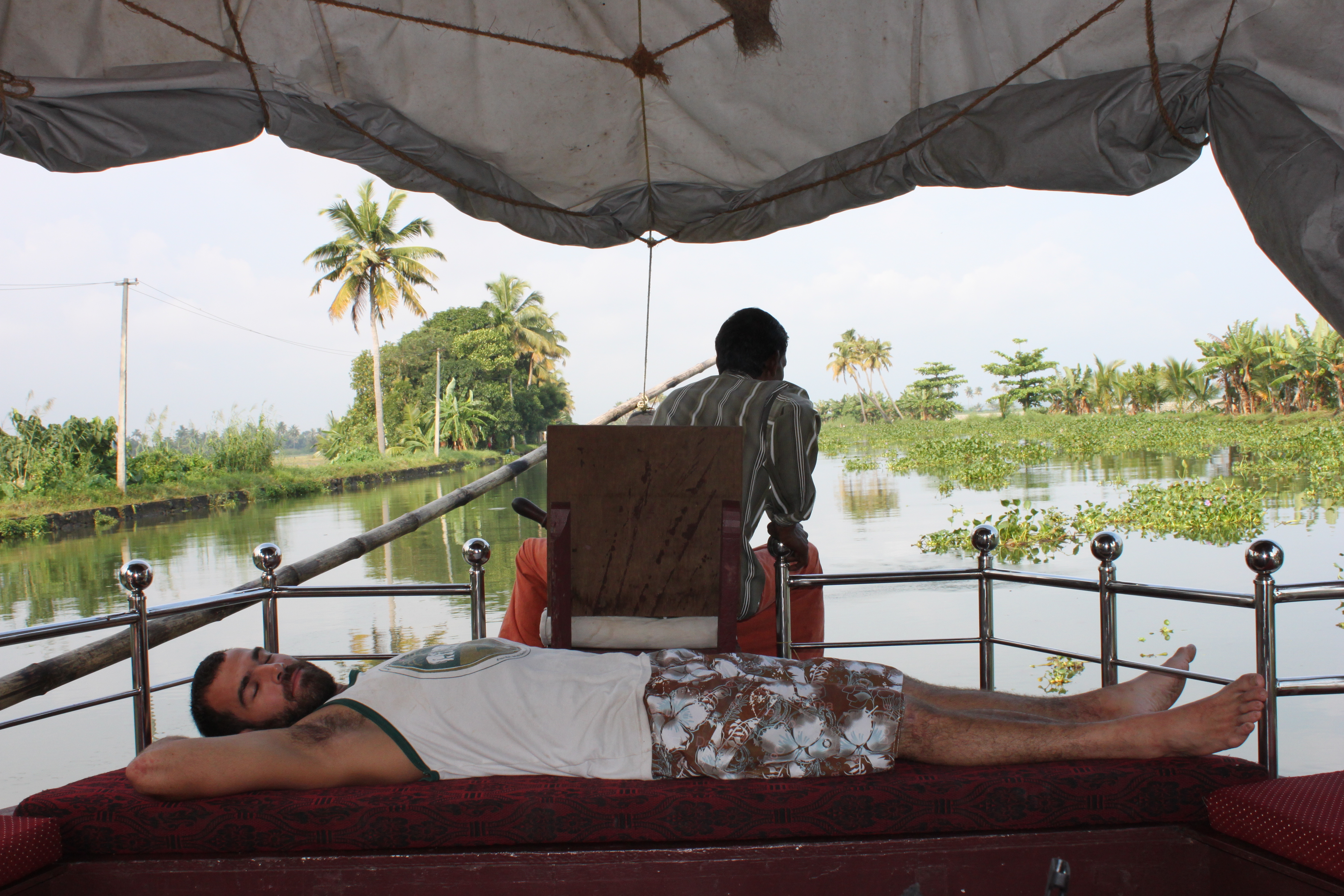
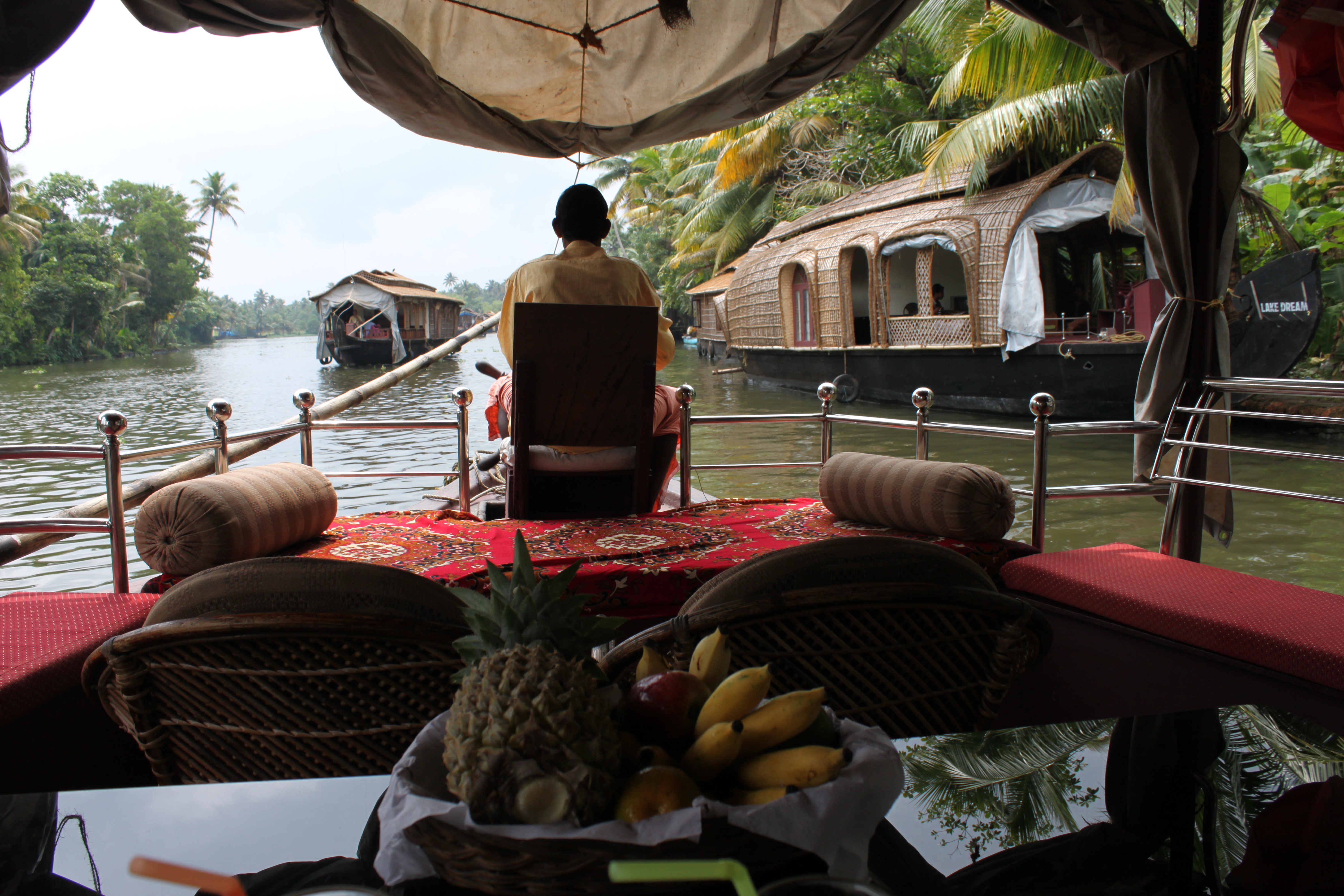
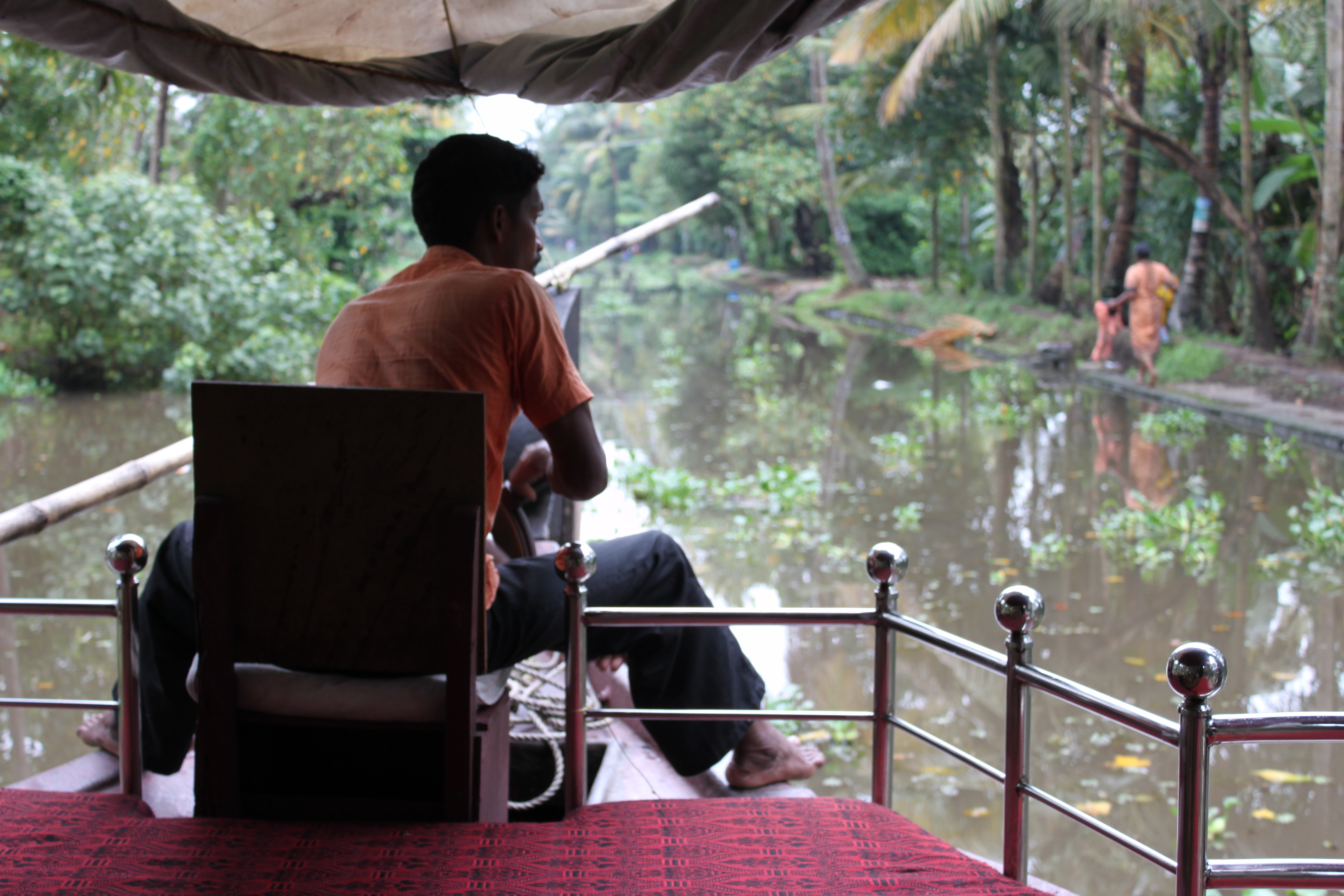
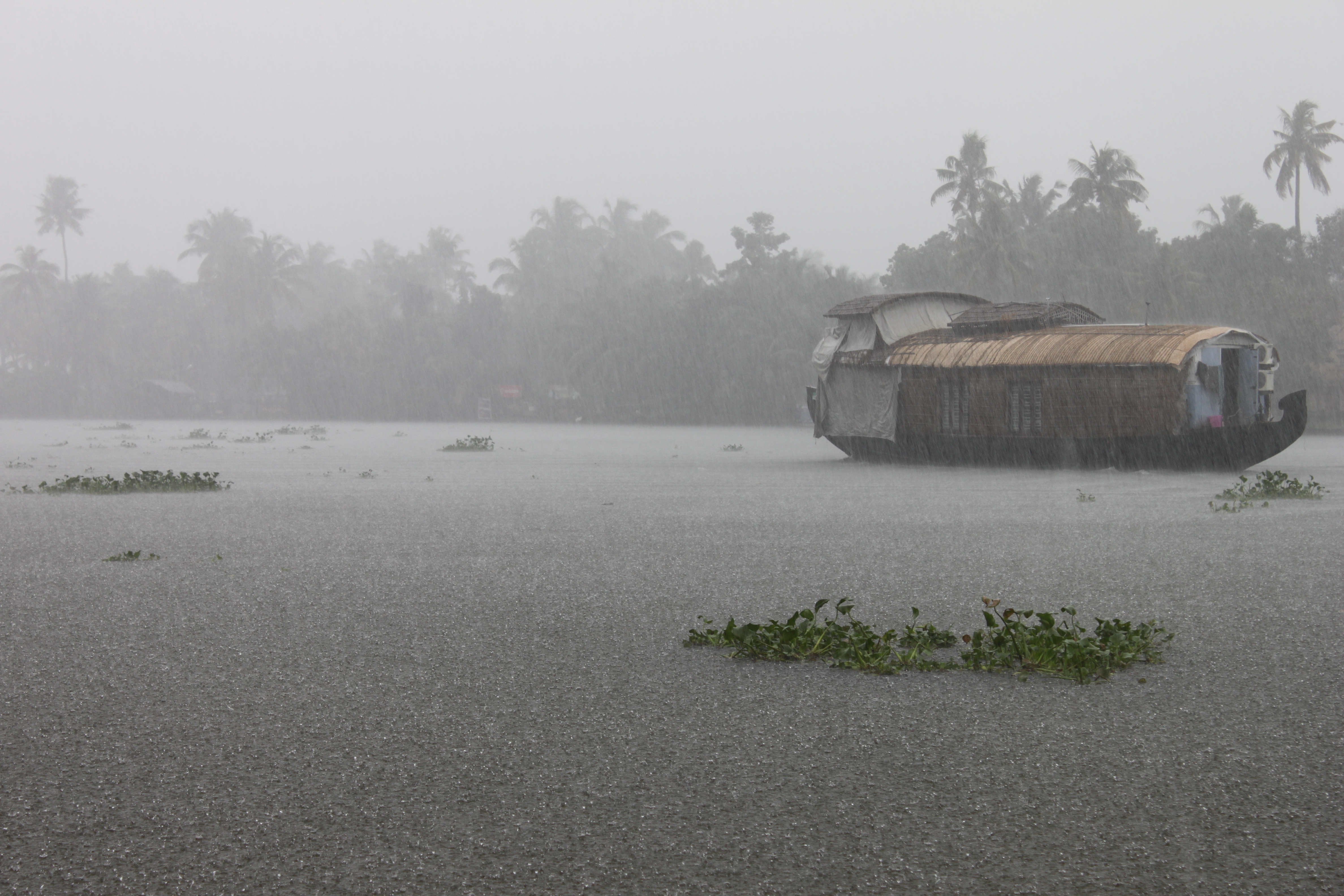
Cruising through the backwaters of Kerala is like a gentle treat you absolutely deserve while exploring India. Jumping aboard a traditional houseboat designed like a rice barge, we dive into these tender moments of pure serenity and quietness.

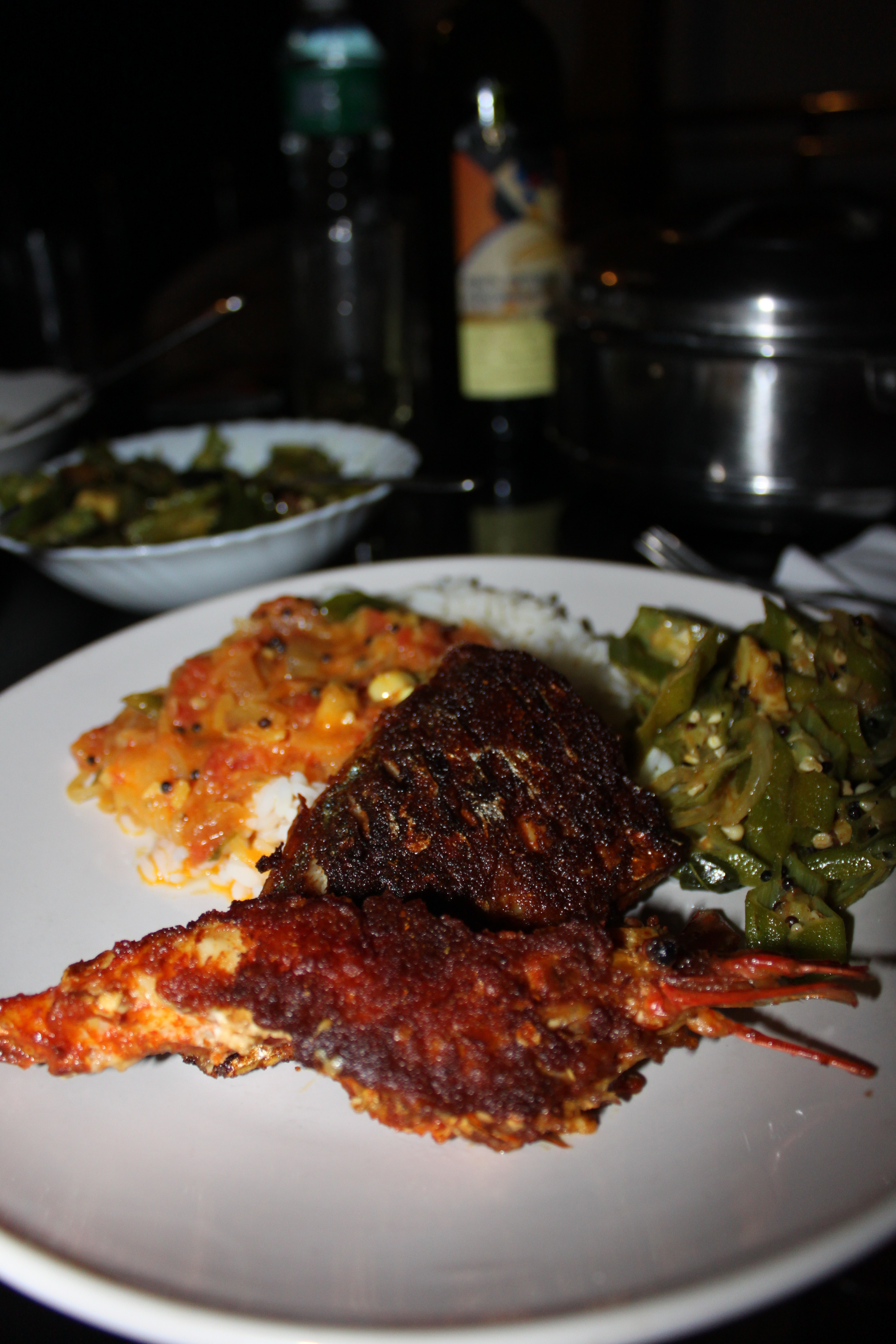
With a network of waterways snaking from the coast to the inland, the state has embraced this unique way of traveling the canals using houseboats. The trip consists of a leisurely cruise through tranquil canals with delicious authentic Keralan food prepared by the captain, along with a night or two aboard, sleeping on the water.

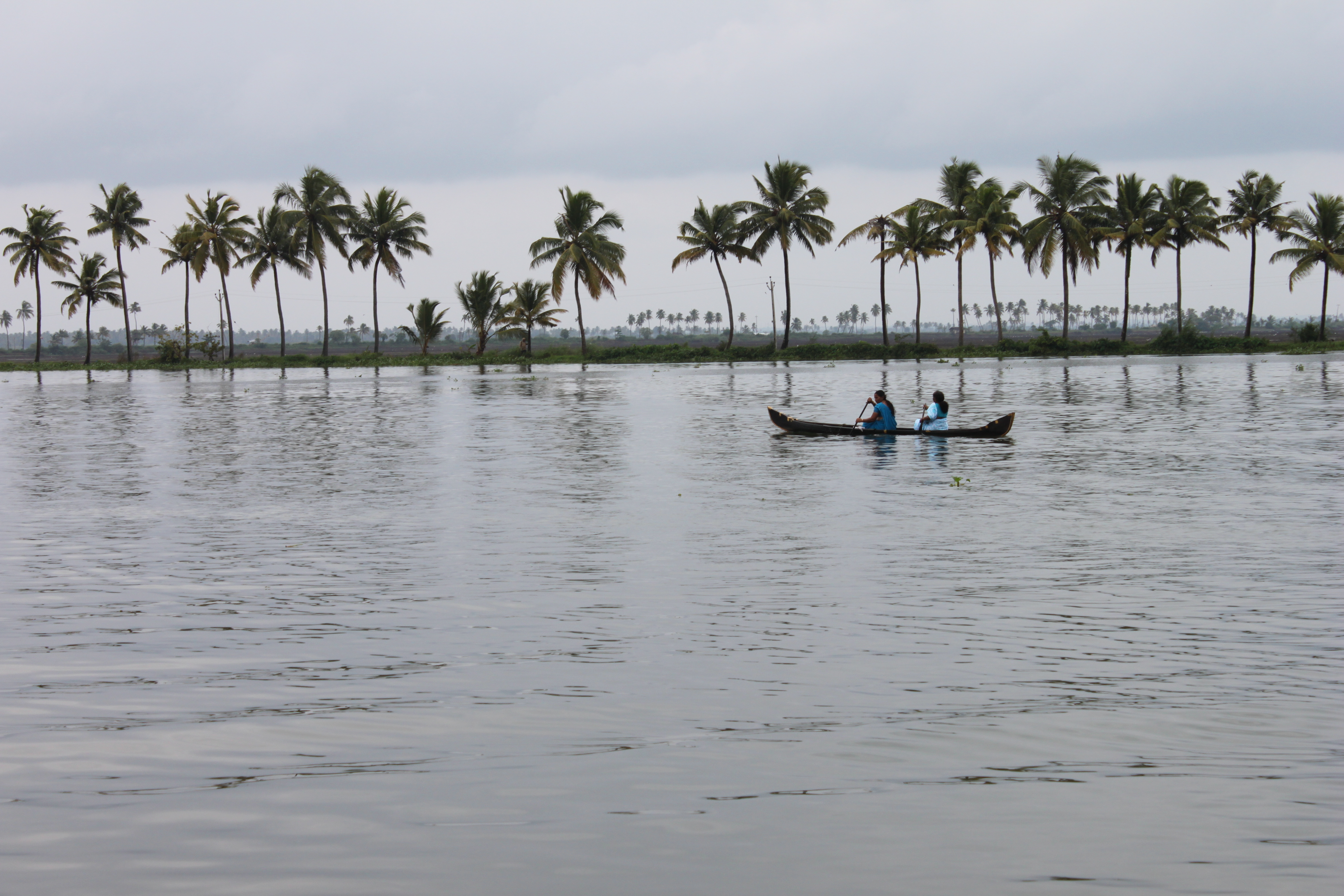
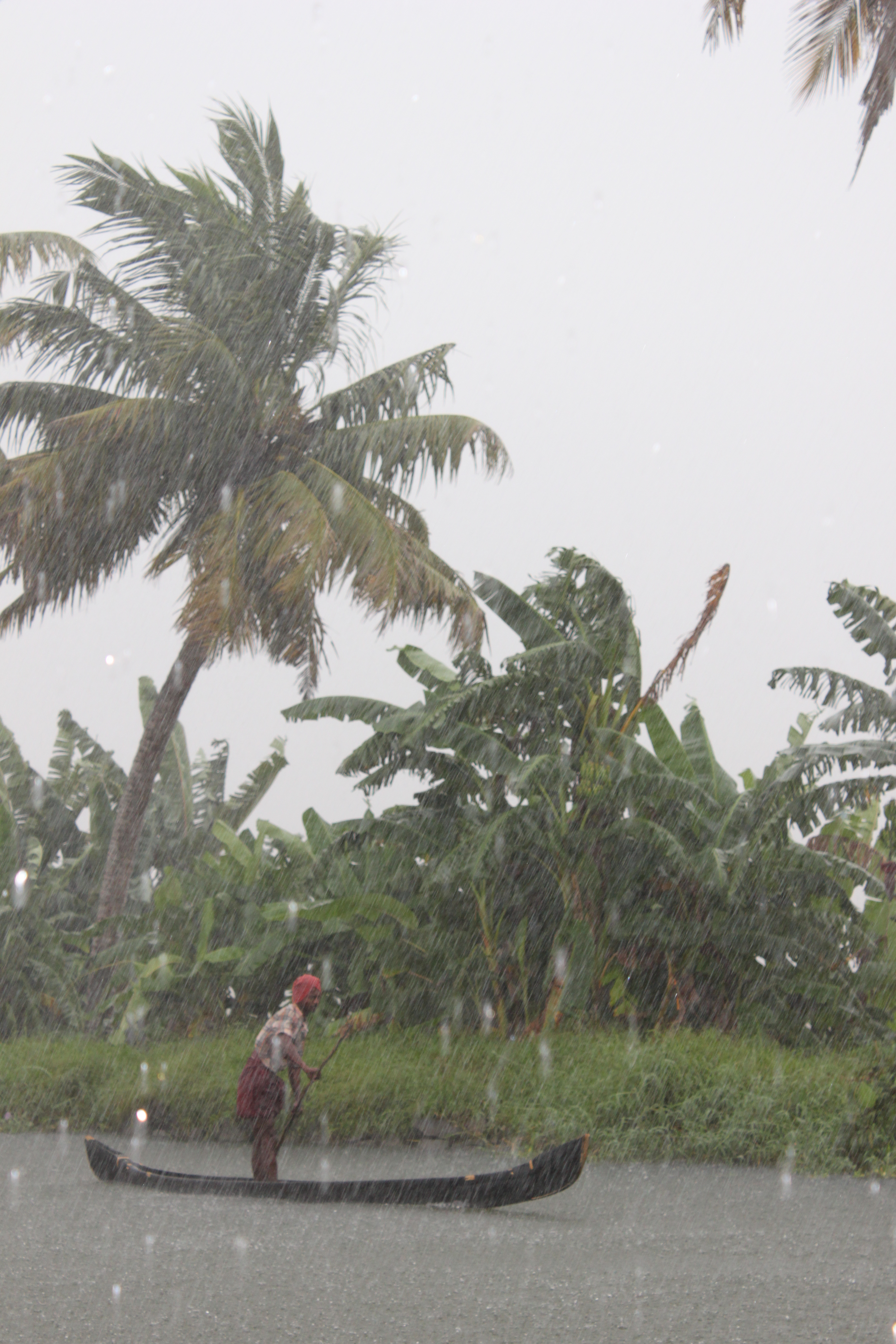
As we slowly cruise along rows of palm trees, rice fields, and villages, we catch glimpses of everyday life – a man shaving his beard, a lady washing a load of clothes, children splashing each other, and a man washing his cow. The canals serve as a shared space for personal hygiene, fun, and care. The small houses and their villagers, once happily isolated, are now exposed by our voyeurism.

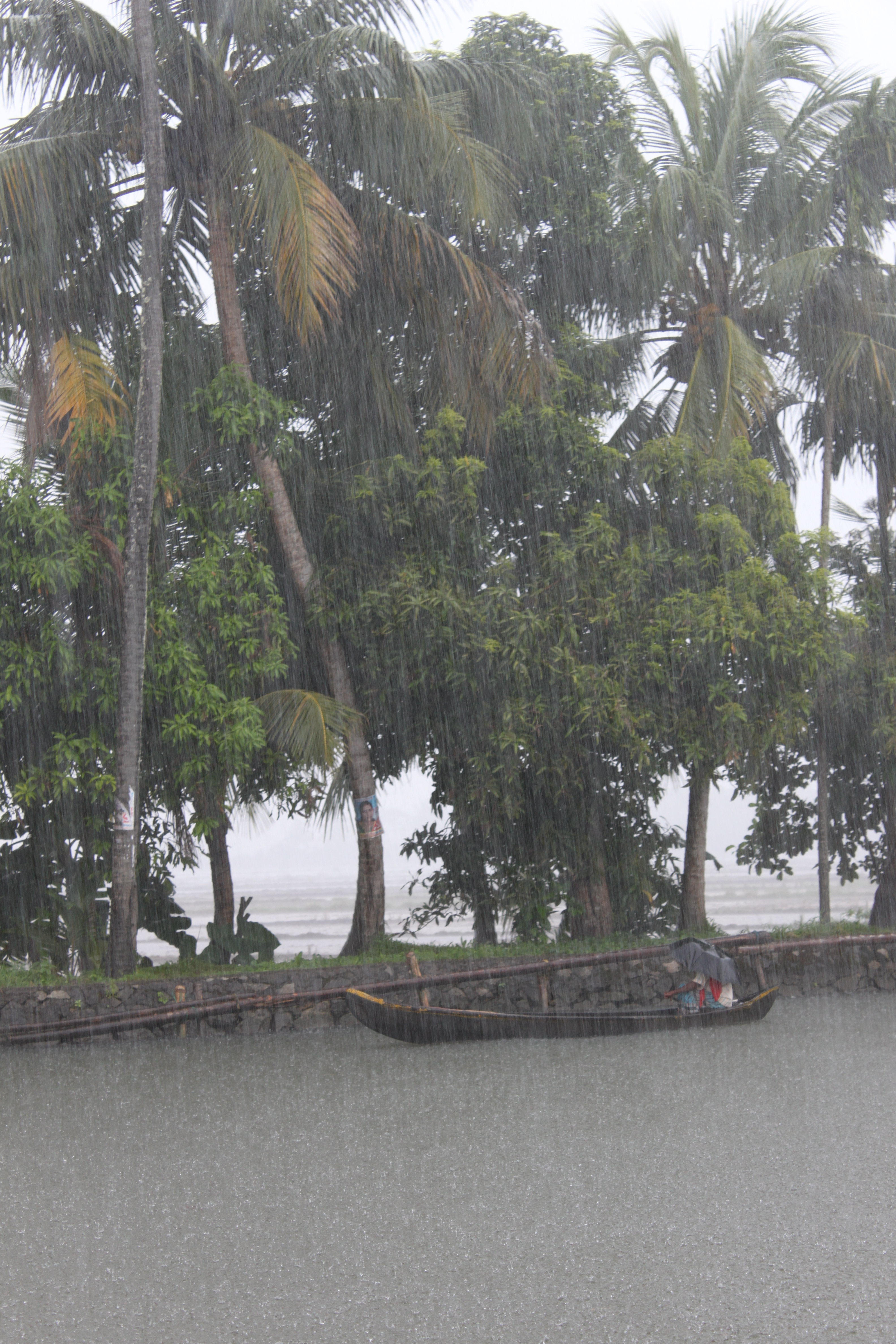
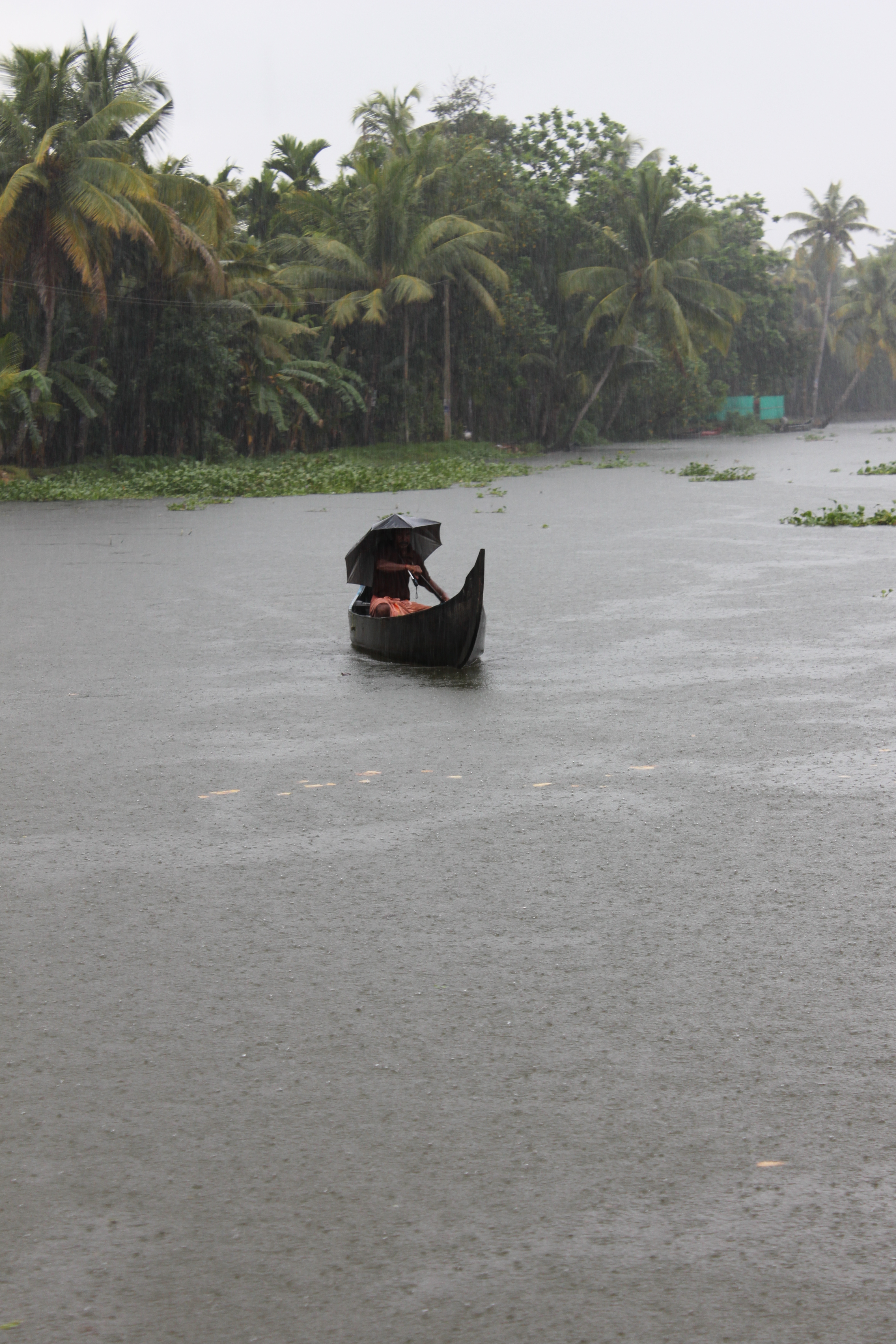
The clouds blanket the skies, releasing multiple tiny molecules of H2O. Heavy rain cleanses the air and refreshes the atmosphere, the drops falling vigorously, resembling a thunderous anger. The sound of the falling rain fills my ears, the freshness of the air cleans my lungs, and caresses my nostrils. There’s nowhere else I want to be…

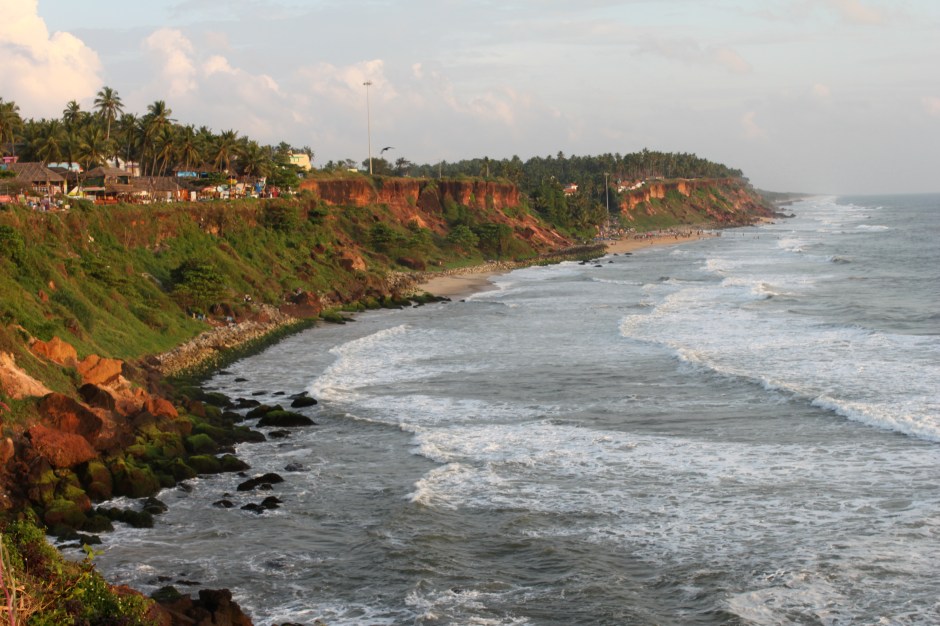
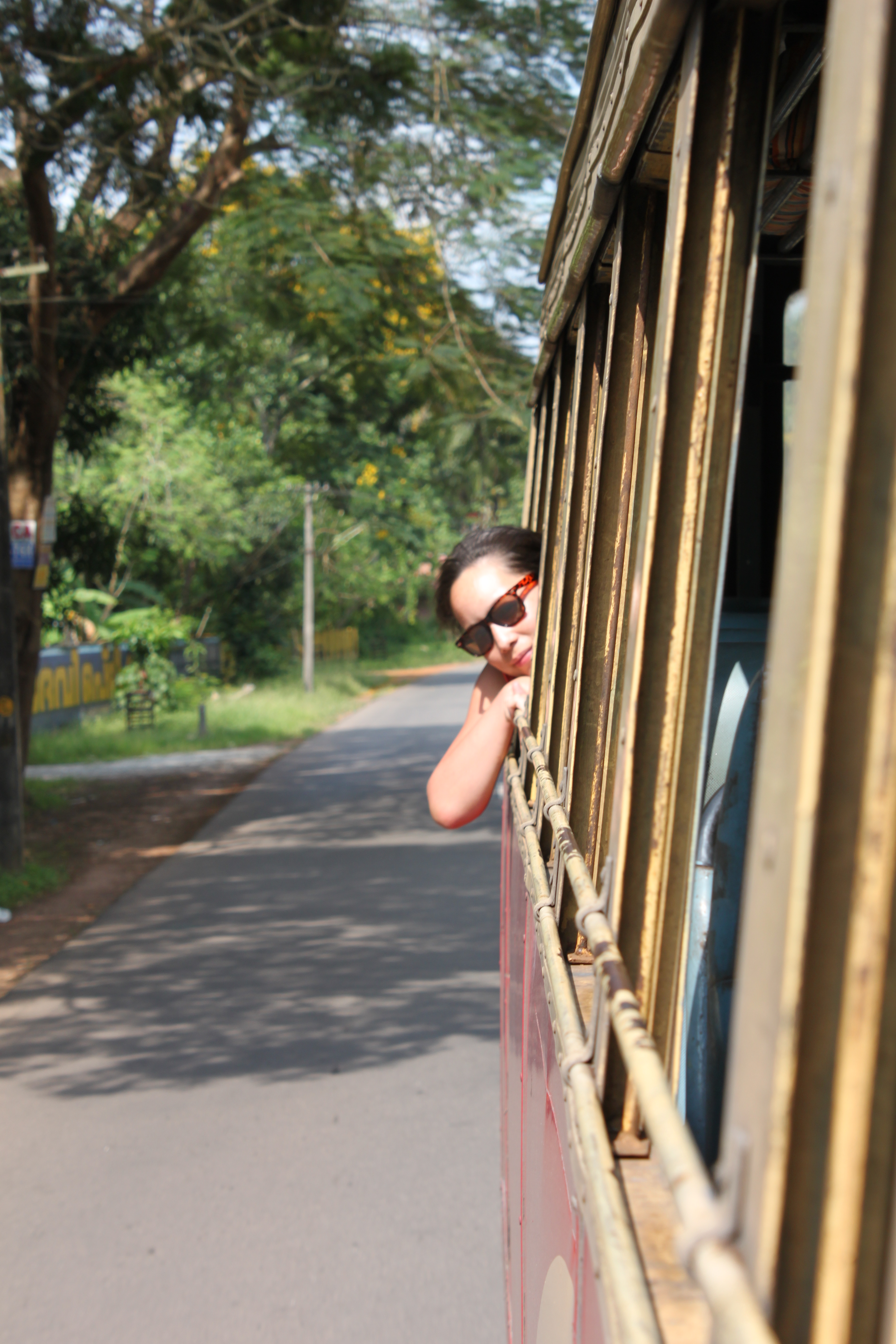
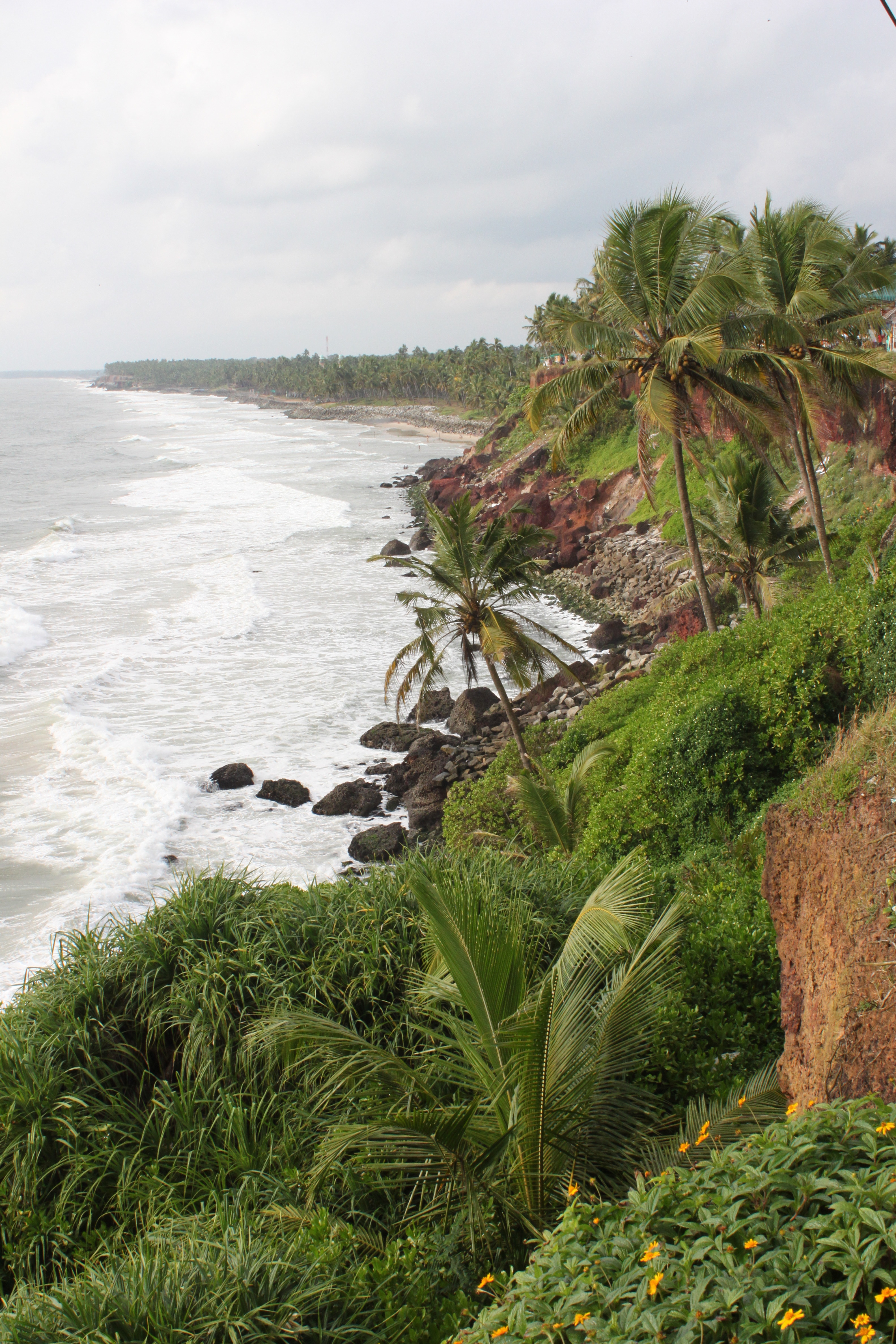
After the houseboat experience, we board a local bus and travel south for about four hours. High cliffs surround the sea, the waves are strong and aggressive, and the sand is black. Welcome to Black Sand Beach in Varkala, a quieter alternative to the bustling main beach. Hotels and restaurants line up along the cliffs, offering breathtaking views and a wide selection of fresh fish. Although the wine is a bit pricey, fresh cocktails are a good alternative, and a mojito always pairs well with fish.

Keralan people are incredibly kind – very friendly, smiley, and welcoming. Born and raised in the most socially advanced state in India, most of them went to school and learned to speak English. Marriage is by choice and is proven with the love found in the air: couples cover themselves with tender kisses and soft words. Their generosity is as contagious as their head-wobble – that strange habit of moving their head like a bobblehead. Yes, No, Maybe… who knows what they really mean?

Kerala’s communism, symbolized by the hammer and sickle, brought about a more equitable distribution of land and income. A focus on infrastructure, health, and education brings a promising future for this successful and beautiful state.

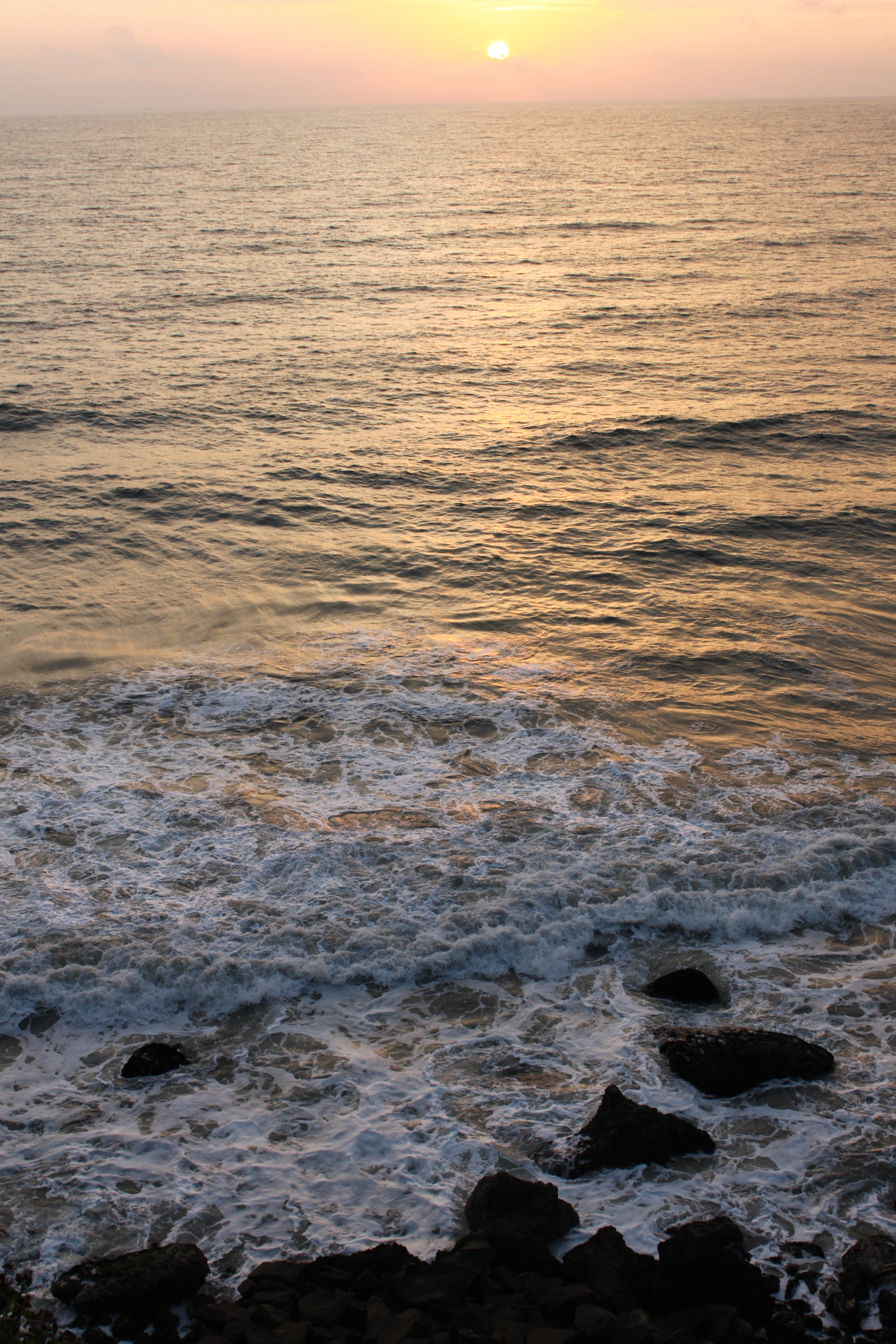
After a final seafood dinner watching the sun go down in Kerala, we prepare for another departure. This time, we will be traveling south to the tip of the Indian subcontinent: Kanyakumari, where the three seas meet.