Marrakech, often called the “Red City,” is a vibrant hub of Moroccan culture and cuisine, where traditional flavours are celebrated with fresh, locally sourced ingredients. At its heart lies the iconic tagine, a slow-cooked stew that embodies the essence of Moroccan cooking. Made with tender lamb or chicken, dried fruits, and a medley of aromatic spices, the tagine is a testament to Berber and Arab culinary traditions. The design of the tagine pot, with its conical lid, allows for condensation, ensuring the dish remains succulent in the arid desert climate.
Marrakech also offers the opportunity to explore the pastilla, a sweet and savoury pastry filled with an exquisite combination of flavours.
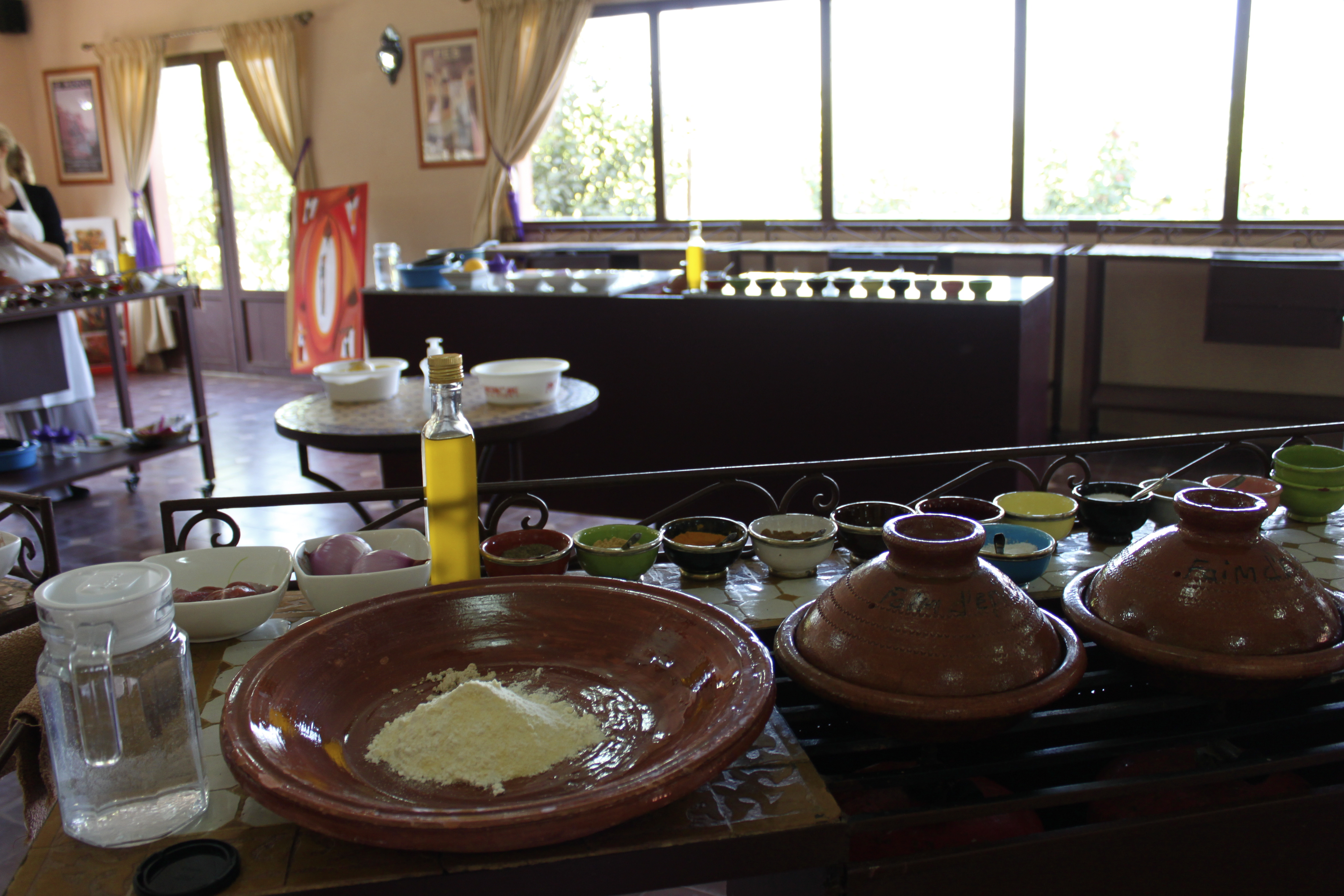
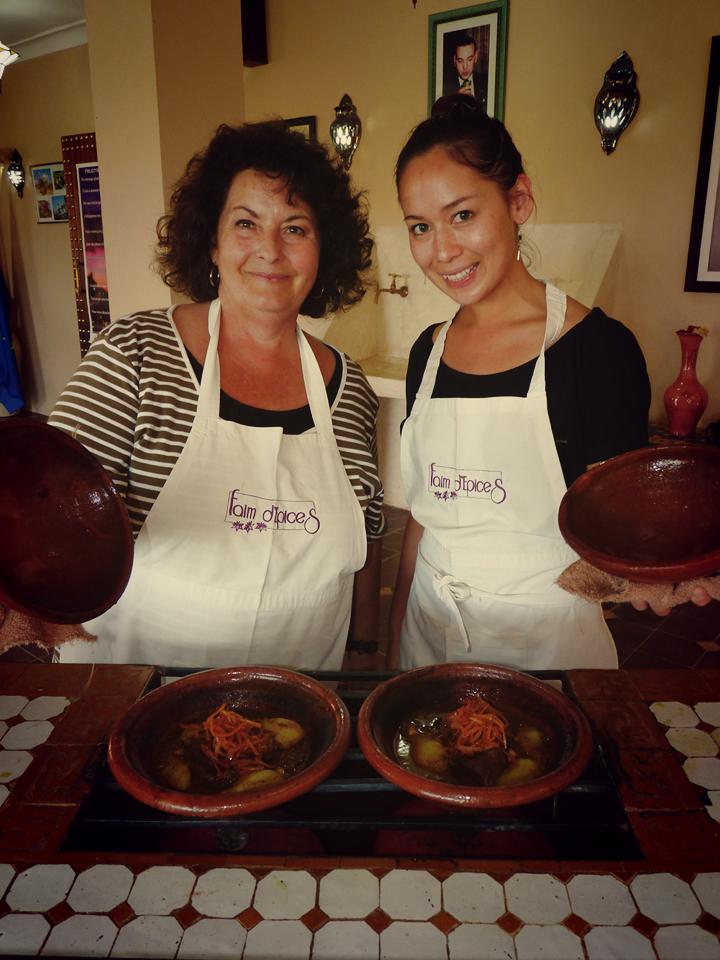
Additionally, a cooking class in Marrakech provides an immersive experience, allowing you to learn the secrets of preparing tagines and other Moroccan specialties while gaining a deeper appreciation for the culture and traditions that make these dishes so extraordinary. It’s a hands-on opportunity to unlock the culinary heritage of Morocco and savour the flavours of the “Red City” for a lifetime.
Some traditional foods and dishes commonly enjoyed in Marrakech:
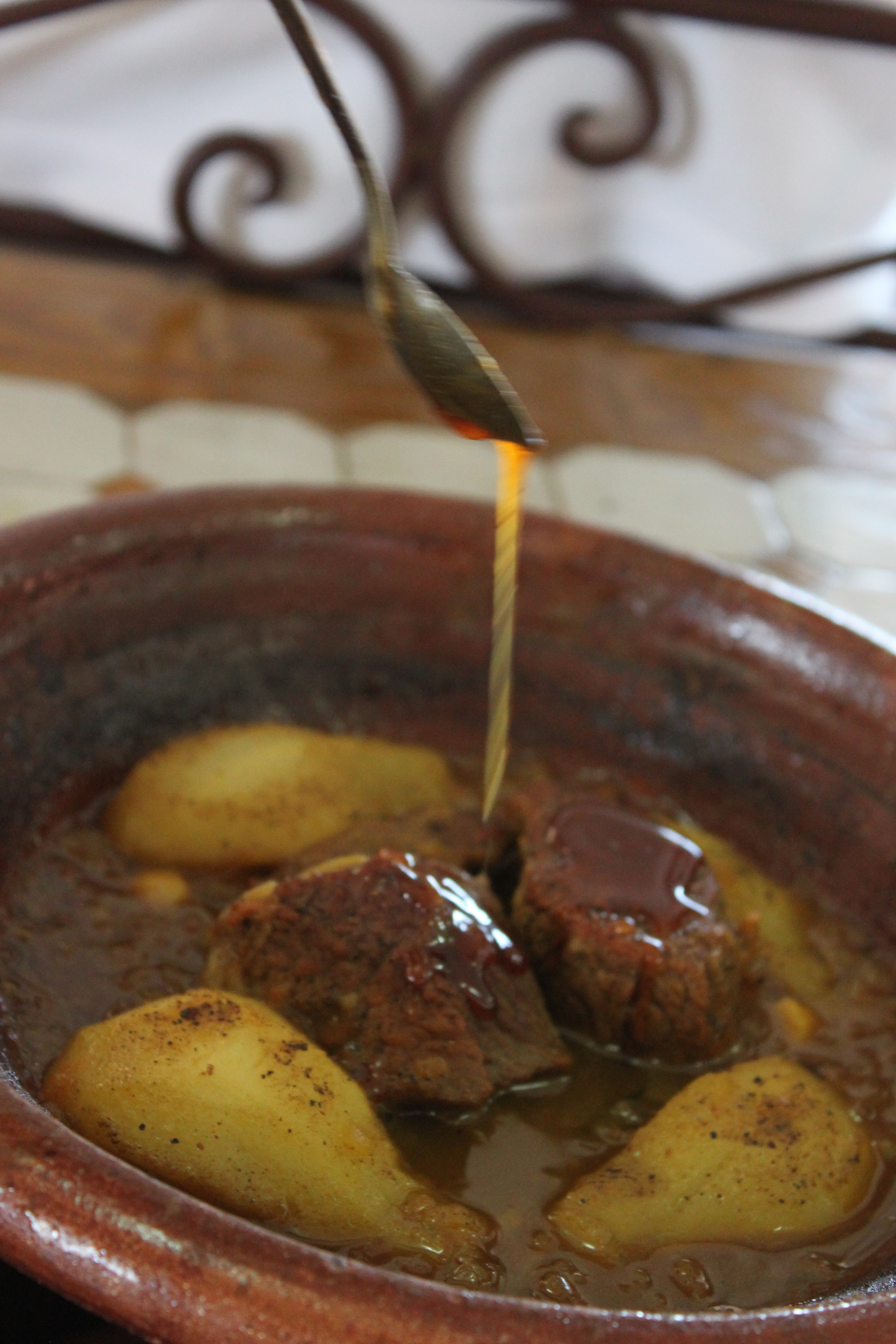
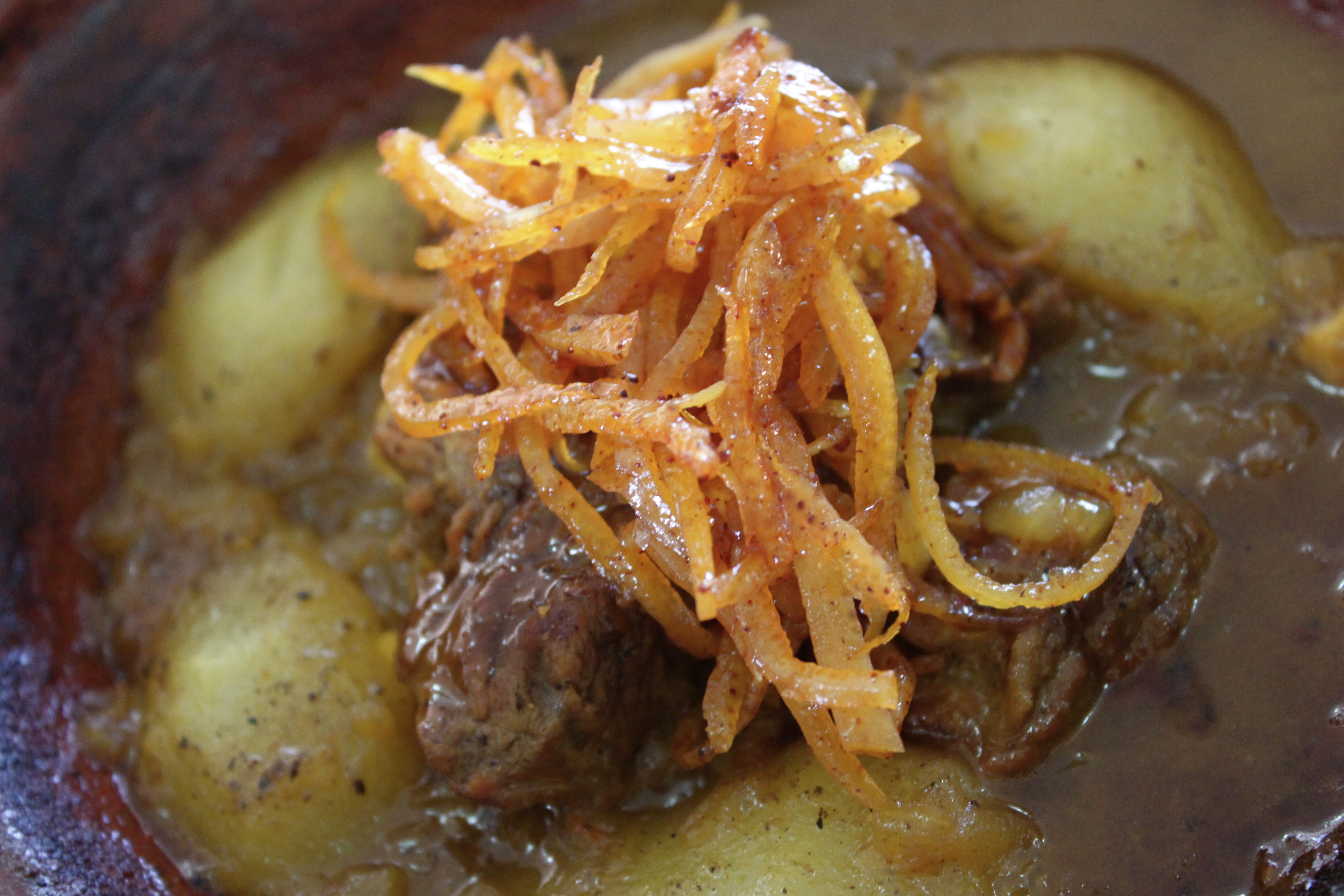
Tanjiya: A slow-cooked stew named after the earthenware pot it’s cooked in, Tanjiya typically features meat (often beef or lamb), vegetables, and a blend of spices.
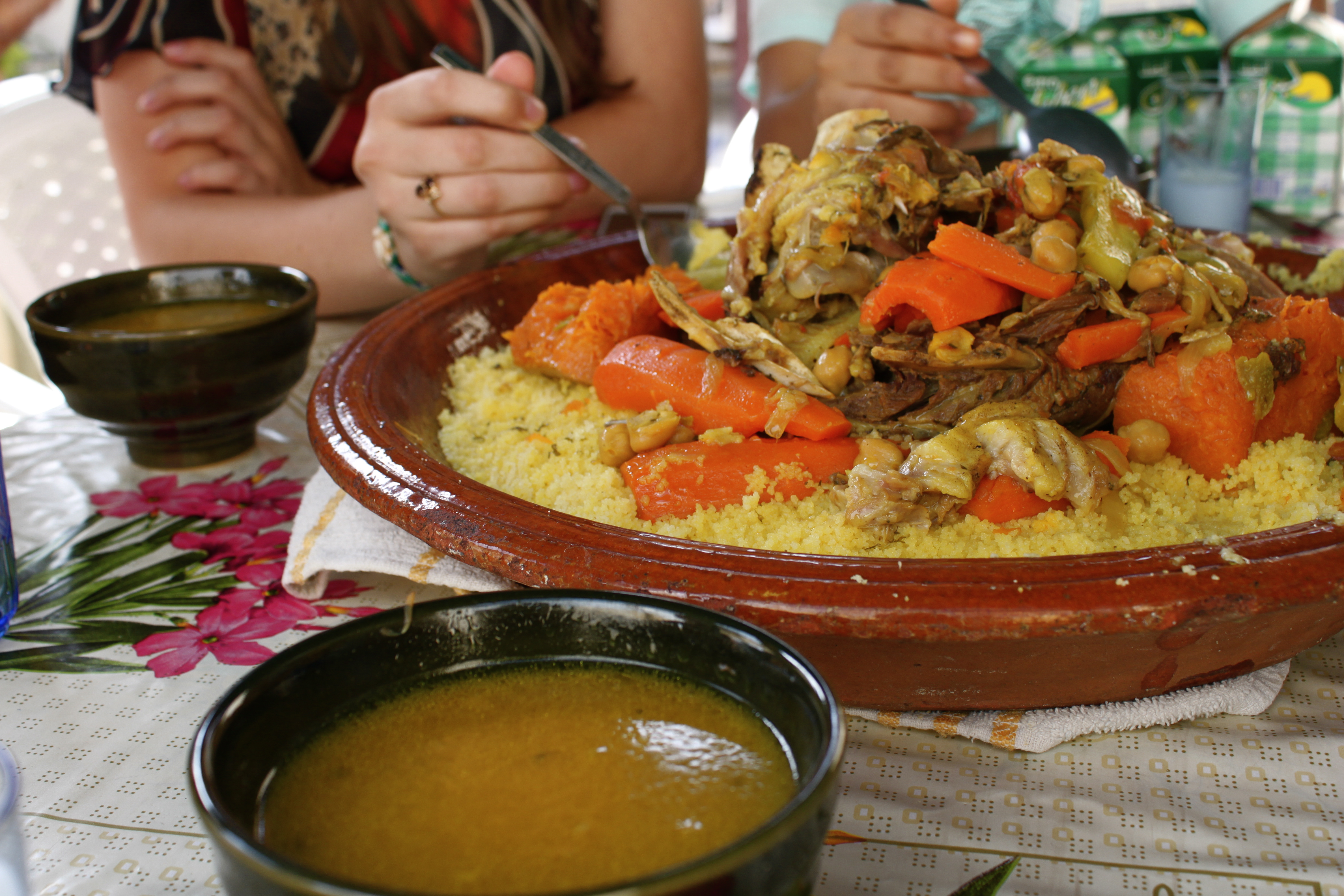
Couscous: A staple of Moroccan cuisine, couscous is often served with a variety of accompaniments, such as vegetables, chickpeas, and a flavorful broth.
Méchoui: Roasted whole lamb, seasoned with traditional Moroccan spices, providing succulent and tender meat.
Pastilla: A sweet and savory pastry filled with pigeon or chicken, almonds, and a mix of spices, often topped with powdered sugar.
Harira Soup: A hearty soup, particularly enjoyed during Ramadan, made with tomatoes, lentils, chickpeas, and a blend of spices.
Kefta Tagine: Minced meat (usually lamb or beef) formed into meatballs, cooked in a savory tomato-based sauce.
Bissara: A thick soup made from dried fava beans, seasoned with garlic, olive oil, and cumin.
Makouda: Deep-fried potato fritters, often served as a popular street food snack.
Khobz: Traditional Moroccan bread, round and flat, served with various meals.
M’hanncha: Also known as “Snake Cake,” M’hanncha is a coiled pastry filled with almonds, sugar, and cinnamon.
These traditional dishes contribute to the rich and diverse culinary experience one can enjoy while exploring Marrakech.
Awakening in Fes to the mesmerizing sounds of the call to prayer echoing through the ancient medina is a unique and spiritual experience. Fes, the spiritual and cultural heart of Morocco, offers an unforgettable breakfast setting as you sit overlooking the medina’s labyrinthine alleys, surrounded by the soulful melodies of the call to prayer. This city is also famous for its culinary traditions, and one dish that shines is its intricate couscous. This delicate semolina pasta is steamed to perfection and served with rich stews and an array of vegetables. The preparation and presentation of couscous in Fes are steeped in tradition, passed down through generations, and it’s a true culinary art form. The meal isn’t just a feast for your taste buds; it’s a cultural immersion that connects you to the spiritual and culinary heart of Morocco.
Some traditional foods and dishes commonly enjoyed in Fès:
Bastilla (Pastilla): Delicate pastry filled with pigeon or chicken, almonds, and spices, topped with powdered sugar.
Couscous with Seven Vegetables: Moroccan couscous served with a hearty vegetable stew, including carrots, zucchini, and chickpeas.
Harira Soup: Nourishing soup with tomatoes, lentils, chickpeas, and a blend of spices, particularly enjoyed during Ramadan.
Mechoui: Slow-roasted whole lamb seasoned with traditional Moroccan spices for tender and flavorful meat.
Tagine with Prunes and Almonds: Slow-cooked stew with meat (commonly lamb or chicken), prunes, almonds, and aromatic spices.
Fekkas: Moroccan cookies made with almonds, sesame seeds, and anise, often served with mint tea.
Makroud: Sweet pastry filled with dates and nuts, fried until golden, sometimes coated in honey.
Briouat: Triangular pastries filled with a mix of meats, vegetables, or nuts, commonly served as appetizers.
Khlii: Preserved meat, typically beef or lamb, air-dried and preserved in a mixture of oil and spices.
Rfissa: Dish made with lentils, fenugreek, and shredded msemen (Moroccan pancakes), often prepared during special occasions.
These traditional Moroccan dishes capture the essence of Fès’ culinary heritage, showcasing a rich blend of flavors and textures.
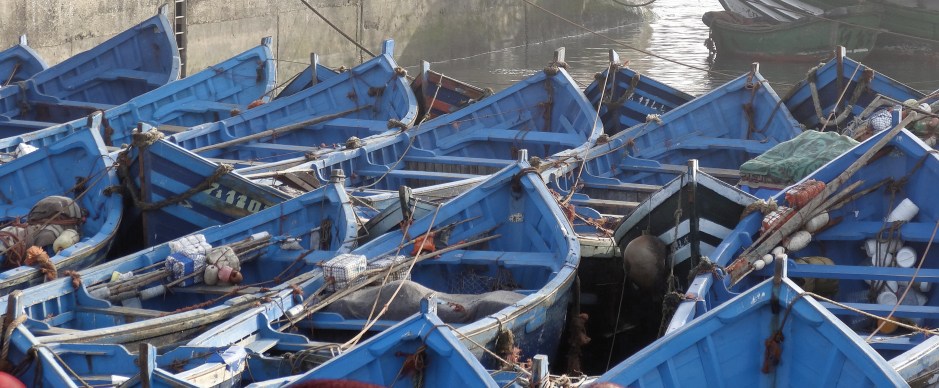
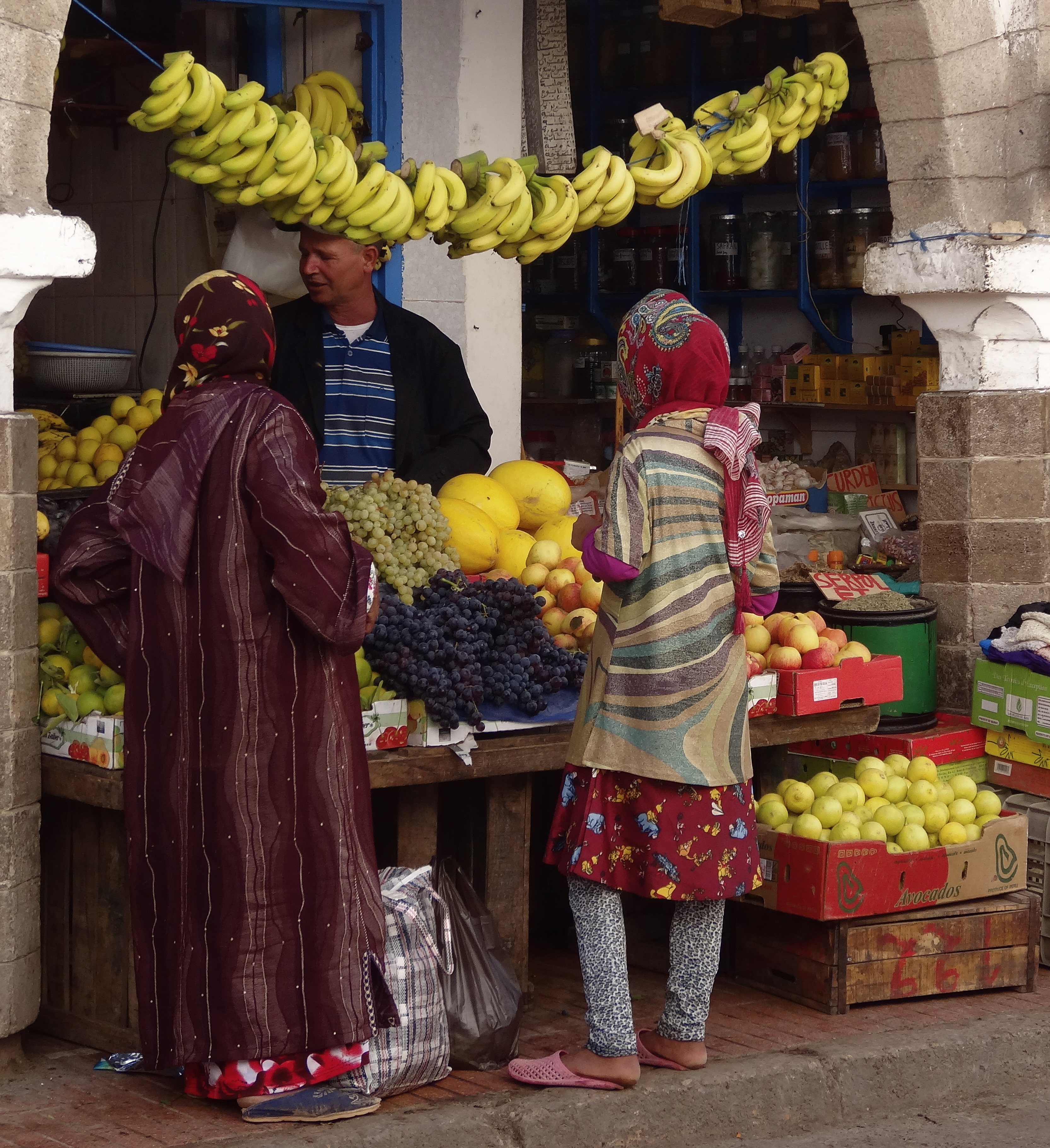
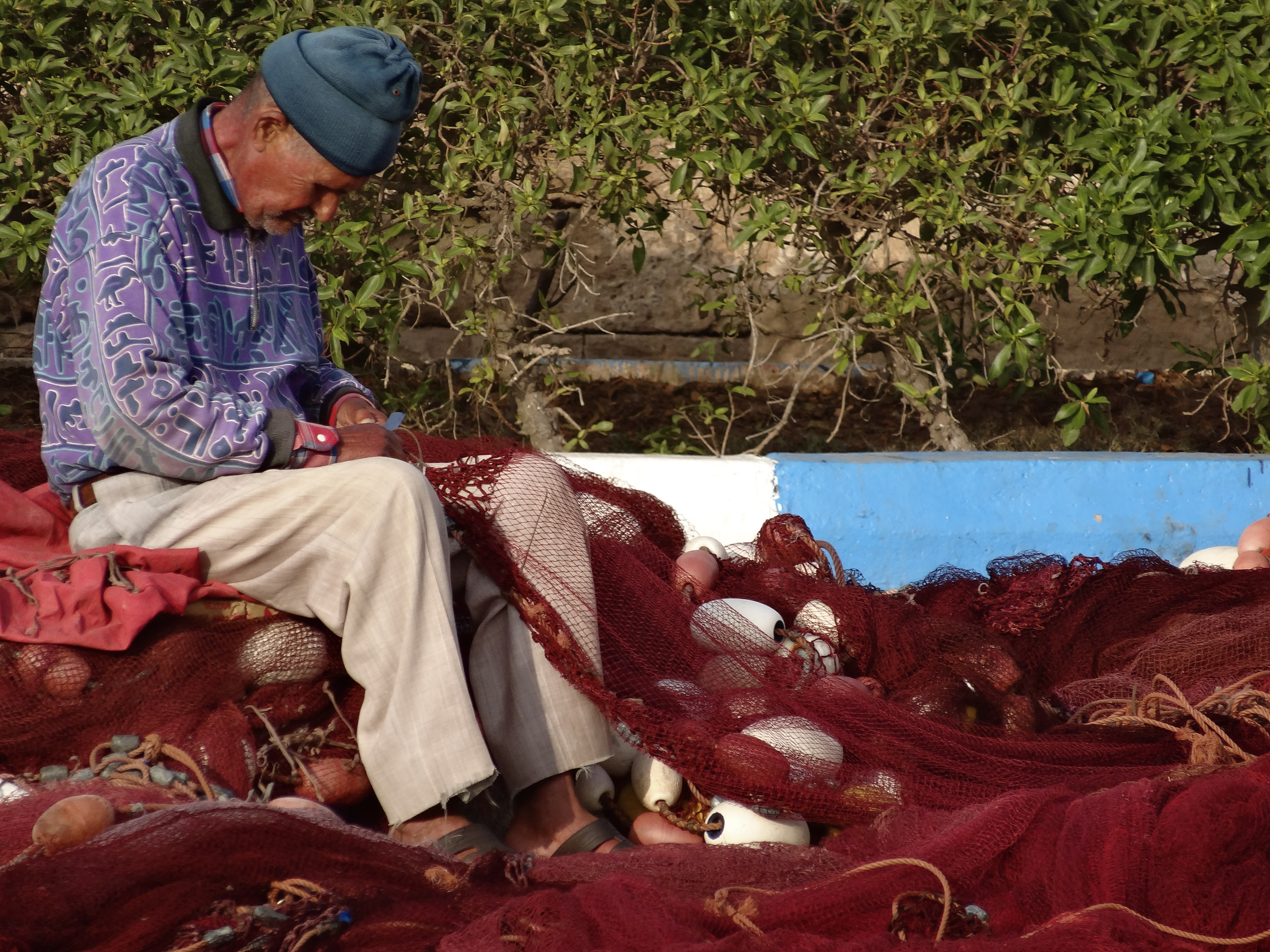
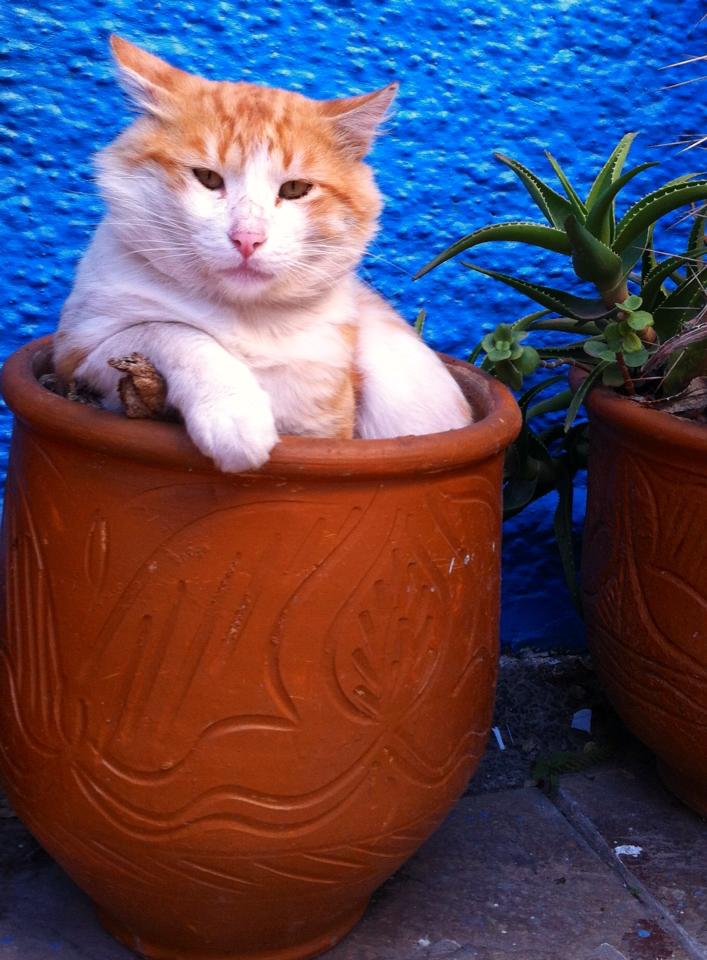
Nestled along the Atlantic, Essaouira stands as a coastal gem and a seafood haven. Grilled sardines, fried fish, and seafood tagines take center stage in markets and seaside eateries, embodying the town’s deep connection to the ocean and reliance on the region’s rich marine resources. Beyond seafood, Essaouira entices with fresh fruits like dates, figs, and pomegranates, complemented by the renowned argan oil, enhancing salads and dips. Adding an artistic flair to the gastronomic adventure, the town is celebrated for its thuya wood crafts, where utensils and platters seamlessly blend functionality with aesthetic charm. Amidst the market hustle, a unique charm unfolds as local cats gracefully navigate the narrow lanes, becoming silent observers of daily life.
Some traditional foods and dishes commonly enjoyed in Essaouira:
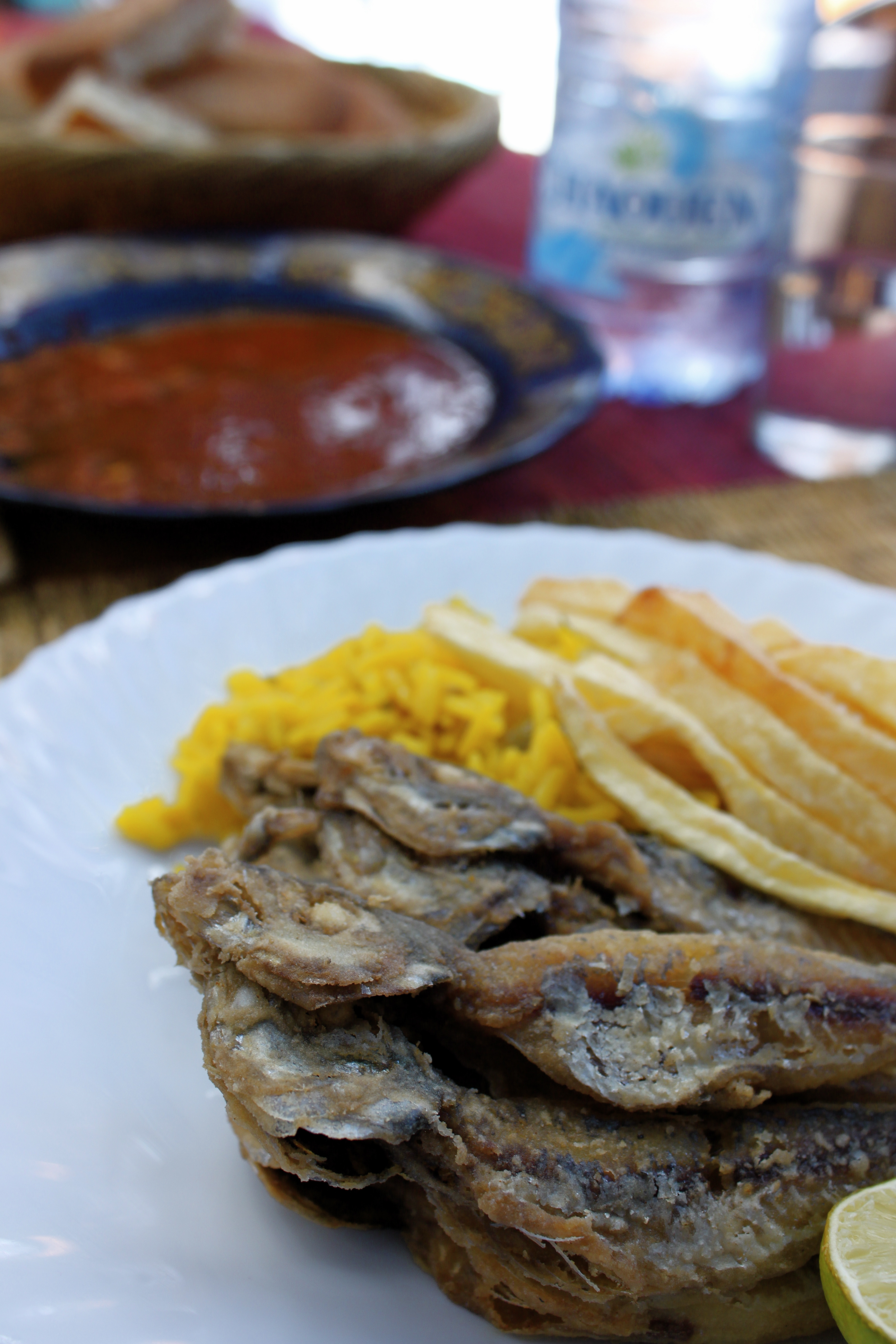
Grilled Sardines: A local delicacy, sardines are often grilled with aromatic spices, reflecting the town’s seaside character.
Fried Fish: Fresh catches are expertly fried, providing a crispy and flavorful seafood experience.
Seafood Tagines: A quintessential Moroccan dish, tagines in Essaouira are infused with the rich flavors of the ocean, combining various seafood with spices.
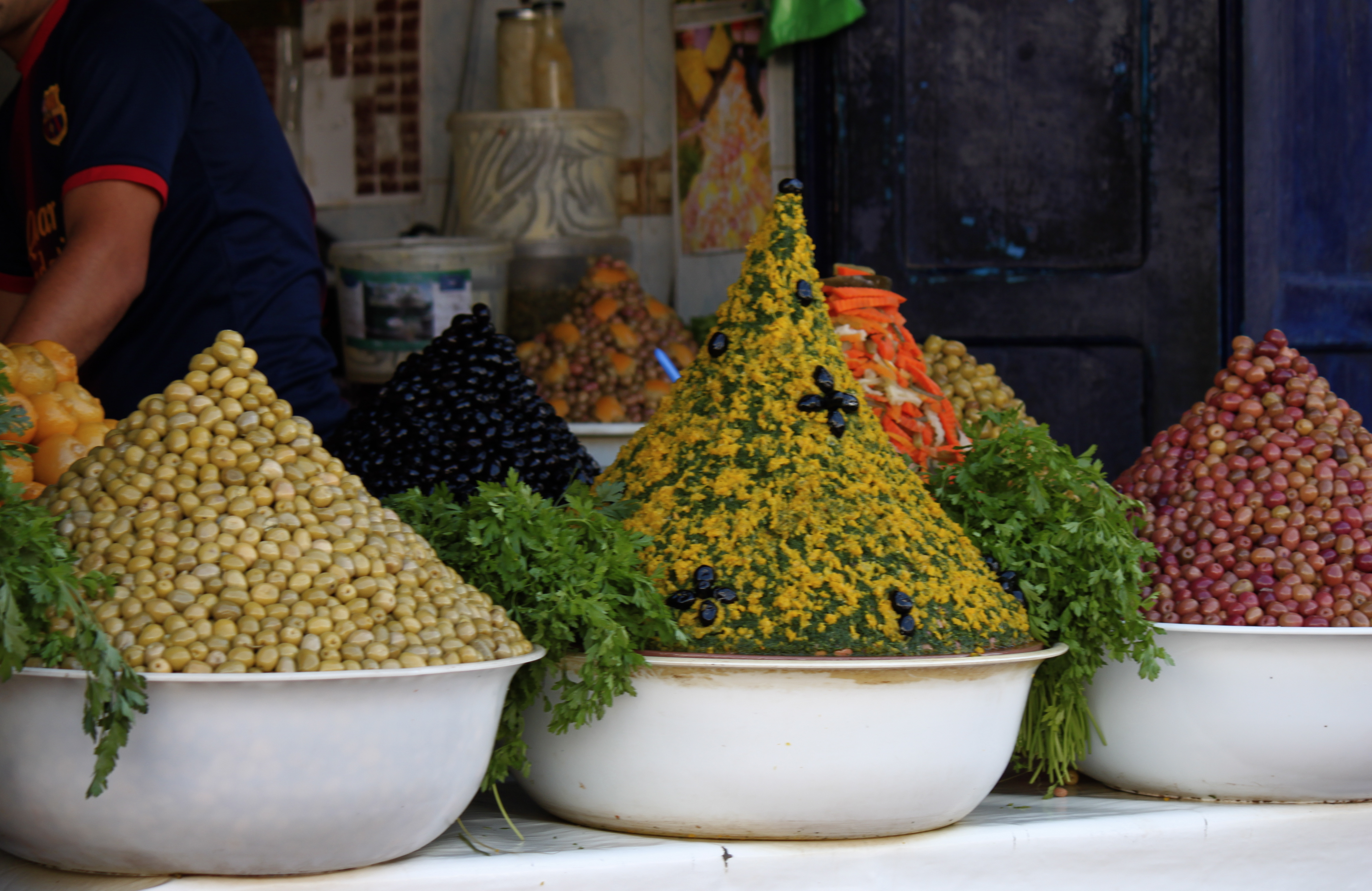
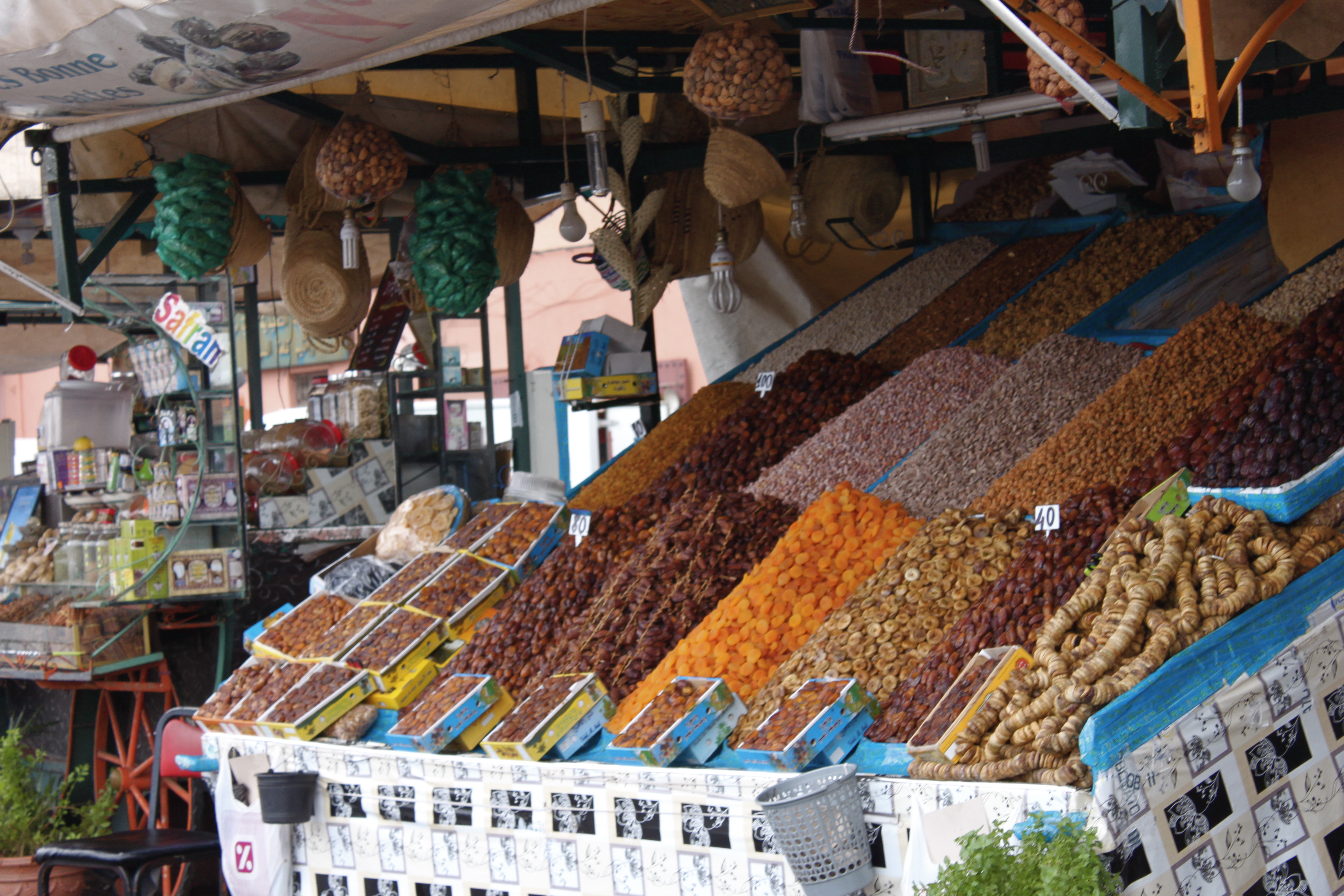
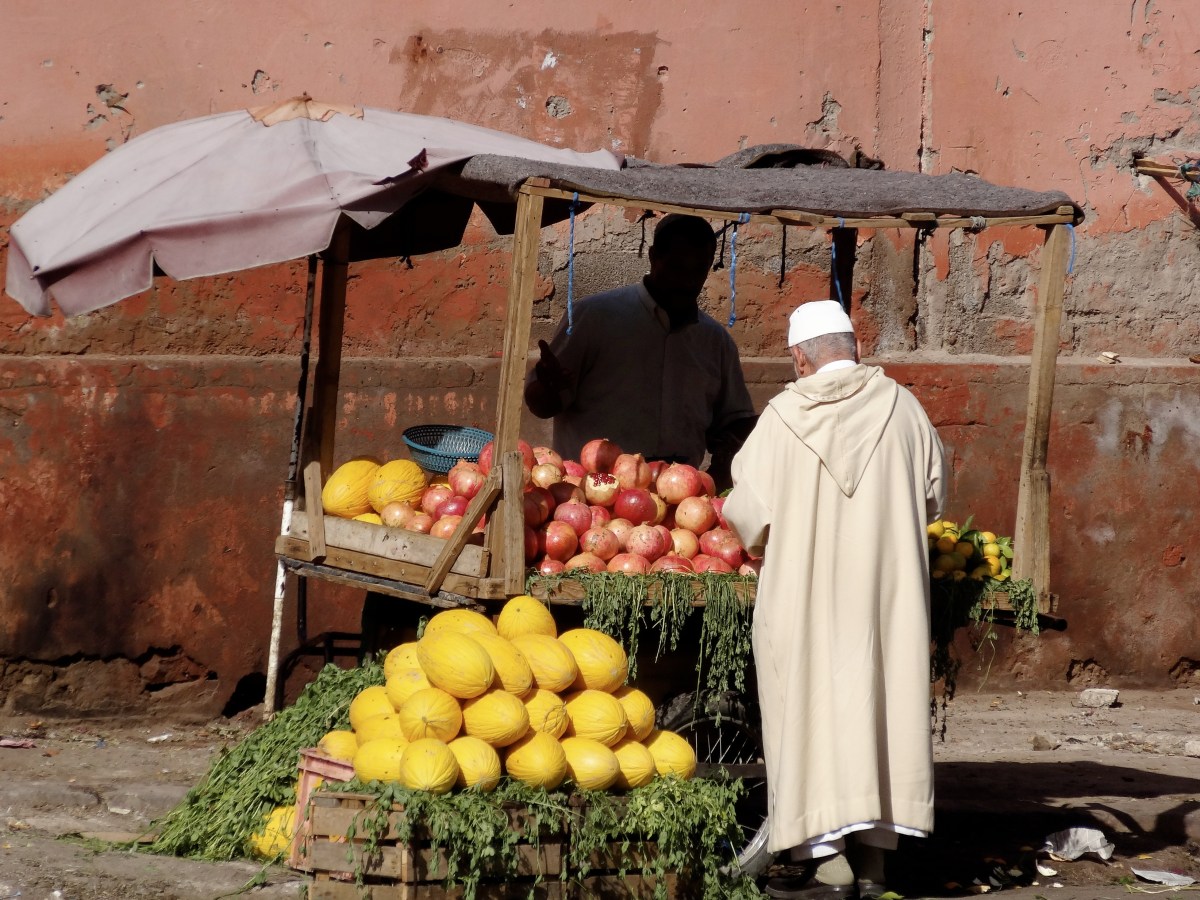
Dates, Figs, and Pomegranates: Essaouira’s markets boast a variety of fresh fruits, including dates, figs, and pomegranates, offering a sweet contrast to savory dishes.
Argan Oil: Renowned for its unique nutty flavor, argan oil is a local specialty used to enhance salads and dips.
These traditional foods reflect the town’s coastal identity and the broader Moroccan culinary heritage, creating a diverse and flavourful gastronomic experience in Essaouira.
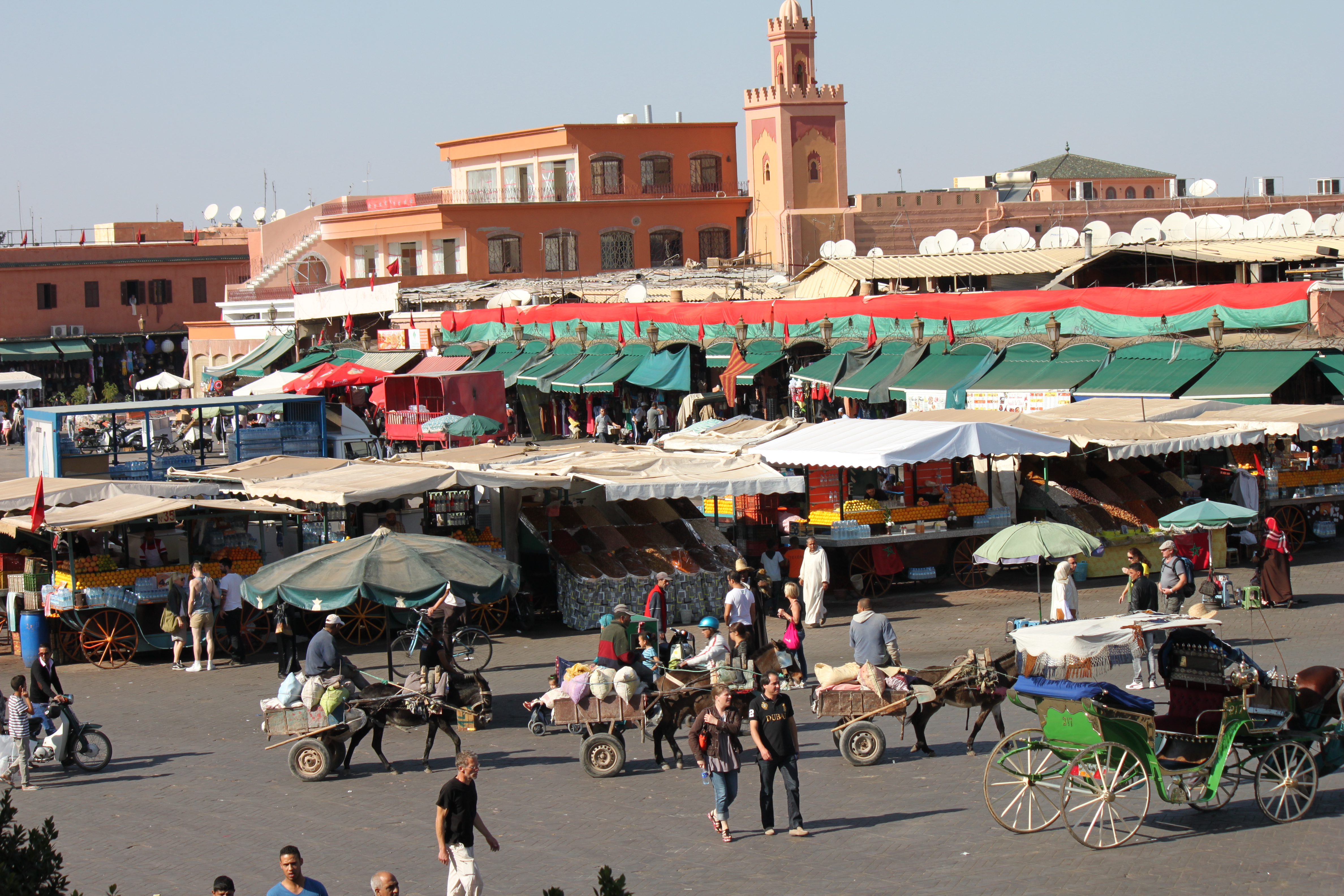
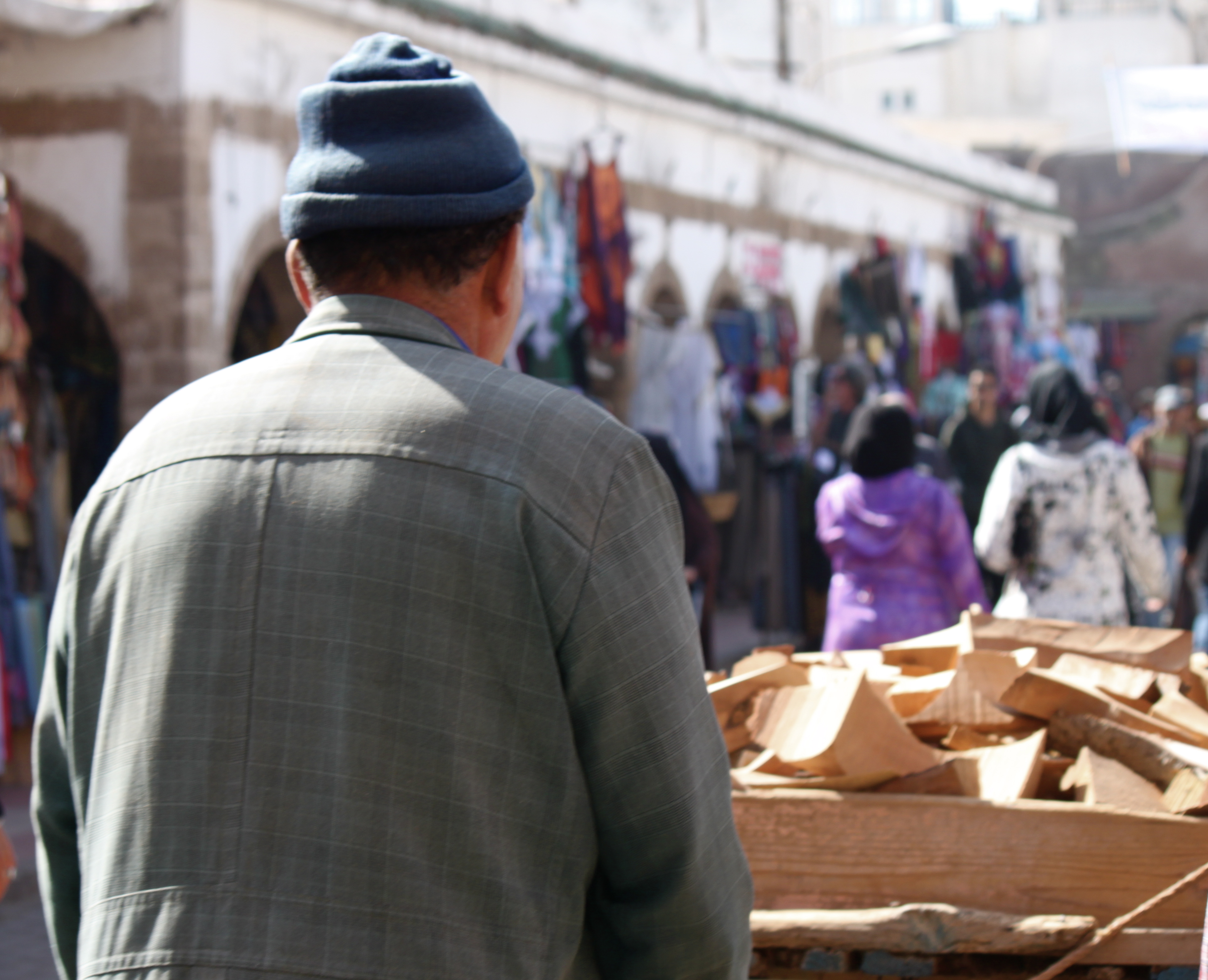
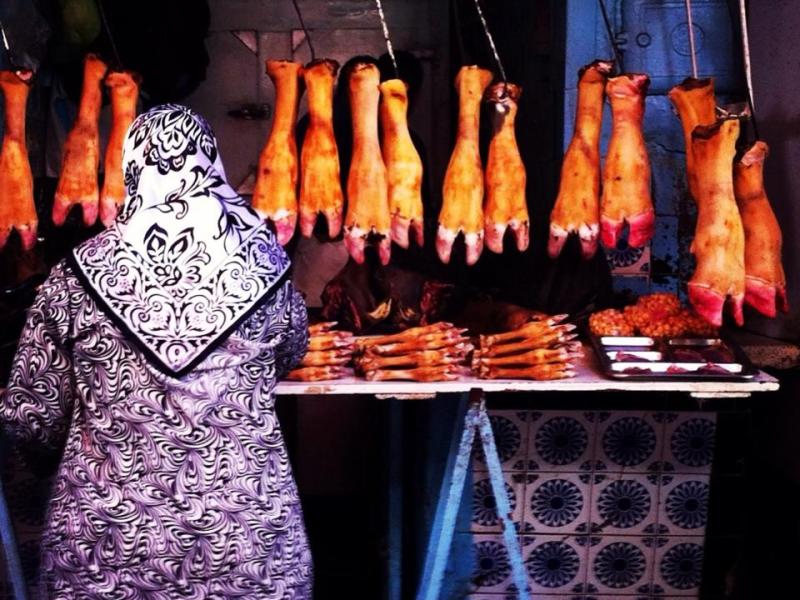
Wandering through Rabat’s markets feels like entering a lively world of colours, sounds, and smells. The medina is like a maze full of Moroccan treasures, with stalls selling everything from vibrant spices to beautiful ceramics and handmade textiles. Among the hustle and bustle, the food stalls are a highlight, offering a taste adventure. You can hear the sizzle of tagines and catch the whiff of freshly baked pastries. Each stall tells a tasty story, making the market more than just a shopping spot – it’s a snapshot of everyday life. Haggling with friendly vendors, trying local street food like harira soup, or treating yourself to sweet goodies makes the market visit come alive. Rabat’s markets aren’t just places to buy things; they’re lively hubs pulsing with the city’s traditions and daily vibes.
My immersion into Rabat’s culinary traditions unfolded during my stay with a local family in Morocco’s capital city. Around their dining table, I discovered the intimate practice of eating with hands, a time-honoured tradition that added a personal touch to every culinary experience. Communal moments were shared not just over a tagine, but also in the simple act of tearing into warm, freshly baked bread to savor the aromatic flavours. This seemingly unpretentious gesture heightened my connection with the food, accentuating its cultural significance. Passing around a couple glasses of water further emphasized the togetherness ingrained in every meal, transforming it into a palpable celebration of tradition that transcended language and culture. In Rabat, the culinary journey isn’t merely about flavours; it’s a shared and tactile adventure, where the act of eating with hands becomes a poignant thread weaving bonds that go beyond borders.
Some traditional foods and dishes commonly enjoyed in Rabat:
Mechoui: Slow-roasted lamb, seasoned with a mix of aromatic spices, providing tender and flavourful meat.
Pastilla: A sweet and savory pastry filled with pigeon or chicken, almonds, and a blend of spices, typically topped with powdered sugar.
Harira Soup: A hearty and nourishing soup, especially enjoyed during Ramadan, made with tomatoes, lentils, chickpeas, and a mix of spices.
Couscous: A staple in Moroccan cuisine, couscous is often served with a variety of accompaniments, such as vegetables, meats, or fish.
Zaalouk: An eggplant and tomato salad seasoned with garlic, cumin, and coriander, serving as a flavourful side dish.
Tagine: Slow-cooked stews of meat, vegetables, and aromatic spices, a quintessential Moroccan dish.
Rfissa: A dish made with lentils, fenugreek, and shredded msemen (Moroccan pancakes), sometimes topped with chicken.
Briouat: Triangular pastries filled with a mixture of meats, vegetables, or nuts, commonly served as appetizers.
Khobz: Traditional Moroccan bread, usually round and flat, served with various meals.
Makroud: A sweet pastry filled with dates and nuts, fried until golden, and sometimes coated in honey.
These traditional foods contribute to Rabat’s culinary landscape, reflecting the country’s rich gastronomic heritage and offering a delicious exploration of Moroccan flavours and traditions.
Moroccan cuisine brings together a rich variety of flavours, aromas, and traditions that have developed over centuries. It reflects Morocco’s diverse culture, geography, and history, with each region contributing its own distinct culinary influences.
During my two-month stay working and living in Morocco, I experienced the lively markets of Marrakech, the coastal charm of Essaouira, the historic medinas of Fes and Rabat, the mountainous landscapes of Chefchaouen, and the vast Sahara Desert. This journey offered a deeper connection to the food, traditions, land, and stories of the Moroccan people.
Marrakech, often called the “Red City,” is a vibrant hub of Moroccan culture and cuisine, where traditional flavours are celebrated with fresh, locally sourced ingredients. At its heart lies the iconic tagine, a…
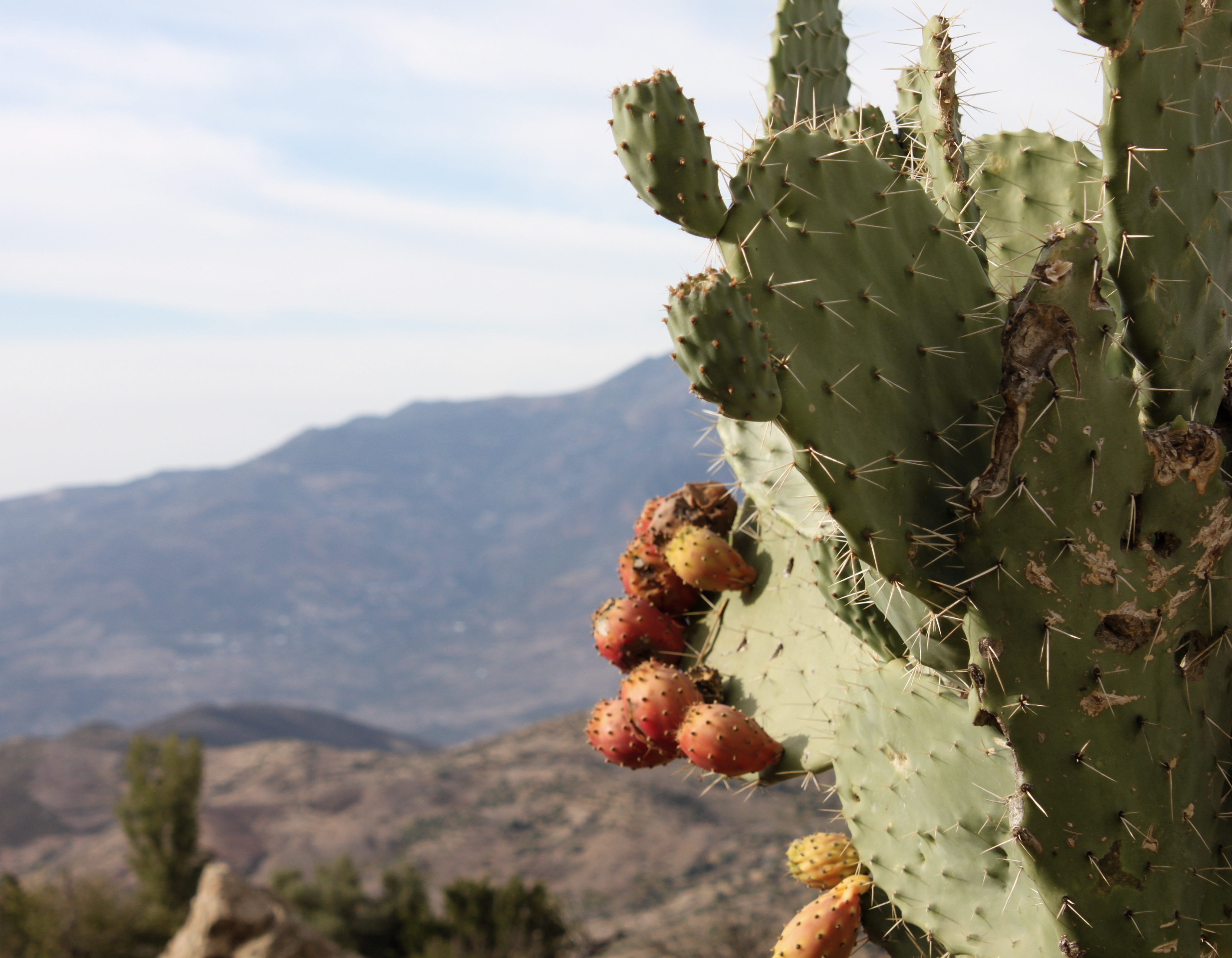
Nestled in the Rif Mountains, Chefchaouen’s cuisine is heavily influenced by the availability of sheep meat and dairy products. Sheep cheese and meat are prominent ingredients, reflecting the local agriculture. Known as the…
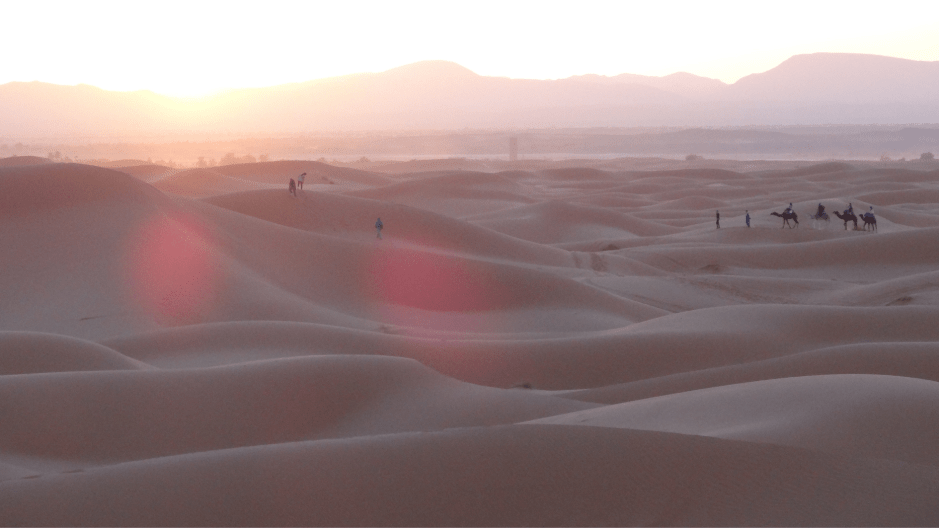
In the Sahara Desert, where the land is arid and the climate harsh, the culinary landscape is as resilient as the people who inhabit it. Amidst the vast, endless sands, dates and mint…
Nestled along the Atlantic, Essaouira stands as a coastal gem and a seafood haven. Grilled sardines, fried fish, and seafood tagines take center stage in markets and seaside eateries, embodying the town’s deep…
Awakening in Fes to the mesmerizing sounds of the call to prayer echoing through the ancient medina is a unique and spiritual experience. Fes, the spiritual and cultural heart of Morocco, offers an…
Wandering through Rabat’s markets feels like entering a lively world of colours, sounds, and smells. The medina is like a maze full of Moroccan treasures, with stalls selling everything from vibrant spices to…
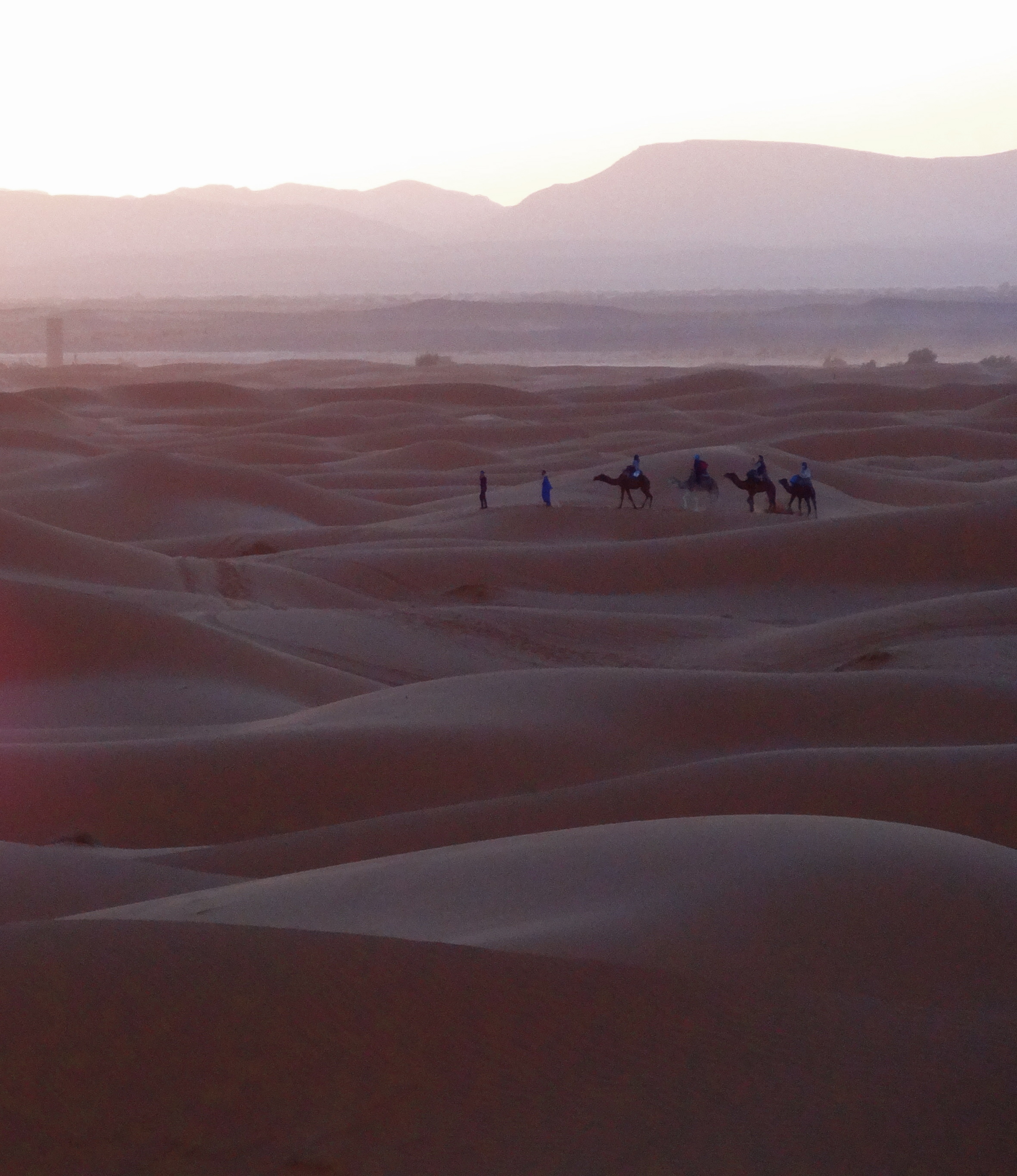
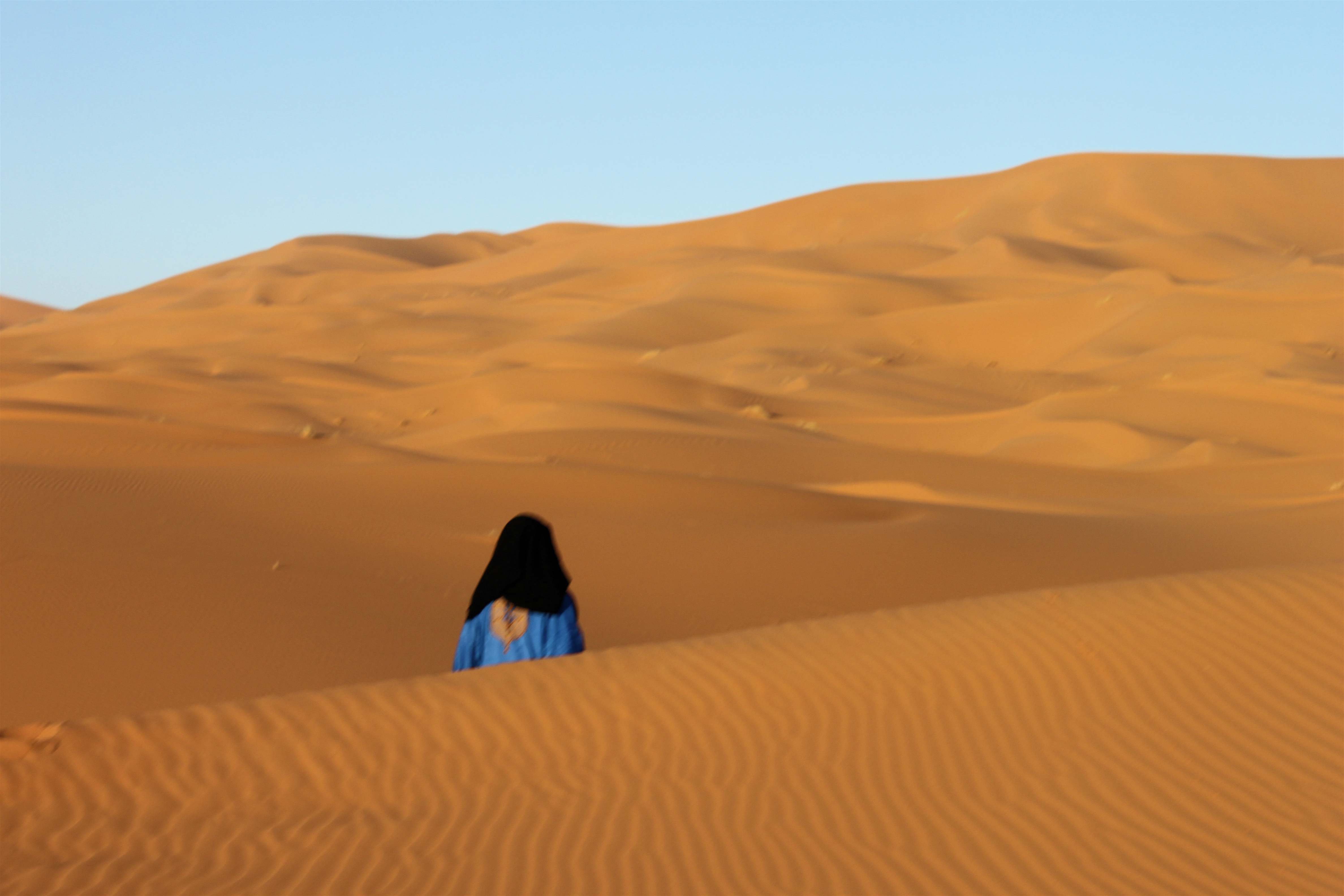
In the Sahara Desert, where the land is arid and the climate harsh, the culinary landscape is as resilient as the people who inhabit it. Amidst the vast, endless sands, dates and mint tea emerge as symbolic ambassadors of sustenance and hospitality. Dates, prized for their natural sweetness, become a source of energy and nourishment, sustaining those who navigate the challenging environment. Meanwhile, the artful preparation of mint tea, a beverage embedded in cultural rituals, fosters connections among desert nomads and offers a refreshing respite in the relentless heat.
As the sun descends and the desert exhales warmth into the night, dinner becomes an intimate affair, with the cool sand beneath and the glittering stars above. In this enchanting setting, almonds and pistachios, consumed for their nutritional richness, weave into the fabric of desert life, providing a source of sustainable energy amidst the humbling beauty of the Sahara.
Some traditional foods and dishes commonly enjoyed in the Sahara Desert:
Dates and Dried Fruits: The Sahara region is known for producing high-quality dates and other dried fruits, offering a sweet and nutritious treat.
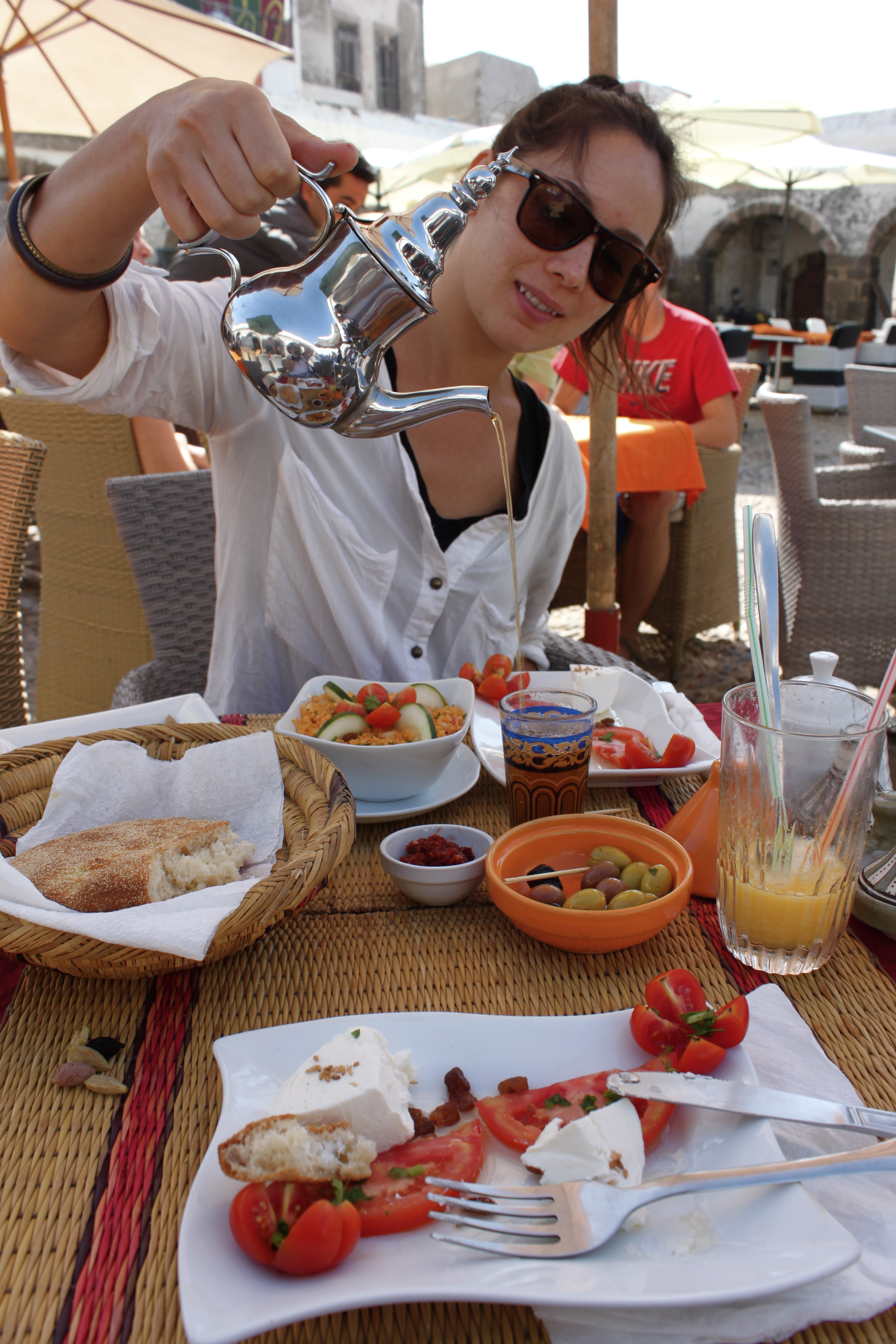
Tea with Mint: A traditional Moroccan mint tea, a symbol of hospitality, is often served in the Sahara, providing a refreshing beverage in the desert heat.
Tajine de Dromadaire (Camel Tagine): In some regions, camel meat may be used in traditional tagine dishes.
Tagine: Slow-cooked stews of meat, vegetables, and aromatic spices, prepared in the traditional tagine pot.
Couscous: A staple of Moroccan cuisine, couscous is often served with a variety of accompaniments, such as vegetables, chickpeas, and meat.
Méchoui: Roasted whole lamb or sheep, seasoned with traditional Moroccan spices, providing succulent and flavourful meat.
Rfissa: A savoury dish made with lentils, fenugreek, and shredded msemen (Moroccan pancakes), often topped with chicken.
Harira Soup: A hearty soup, particularly enjoyed during Ramadan, made with tomatoes, lentils, chickpeas, and a blend of spices.
While the availability of ingredients and specific dishes may vary across the vast Sahara region, these are some of the traditional Moroccan foods that can be commonly enjoyed in the desert areas.
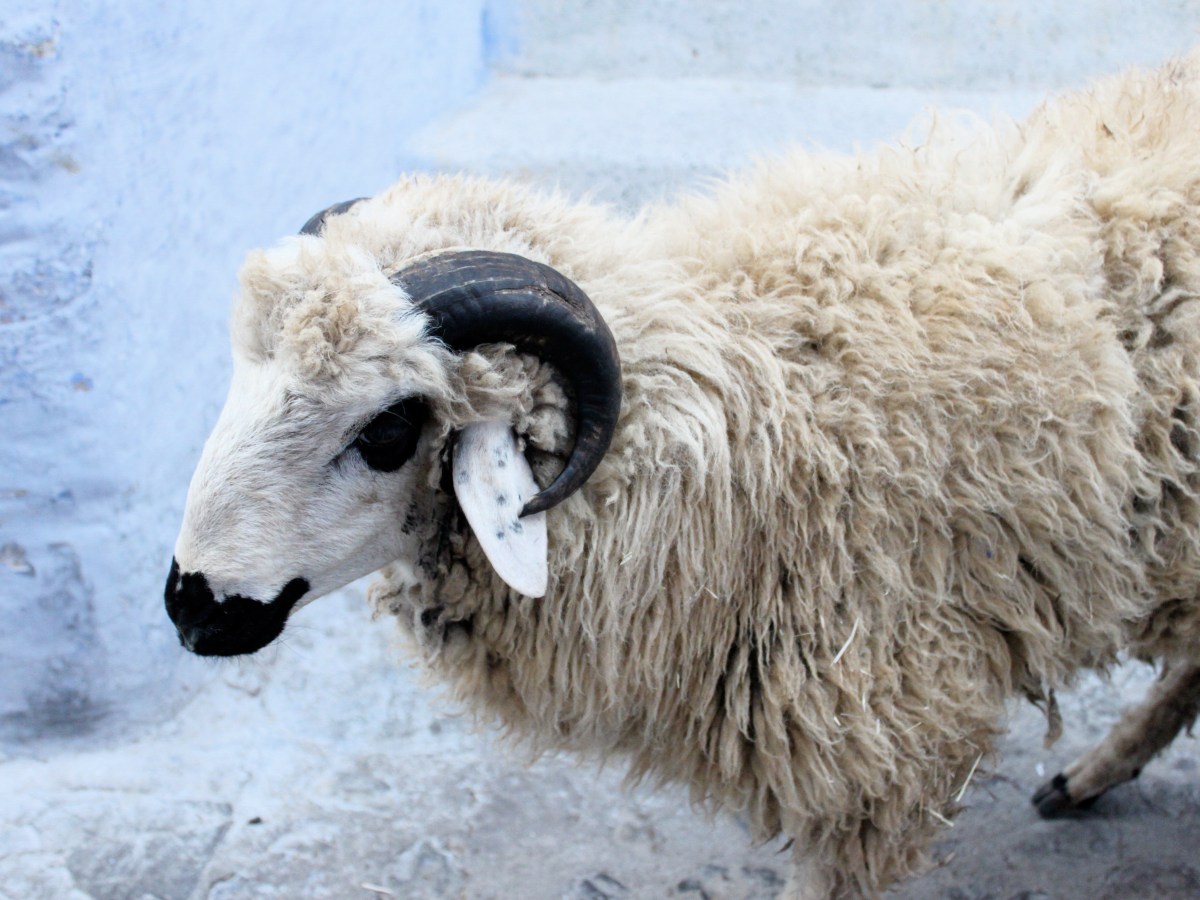
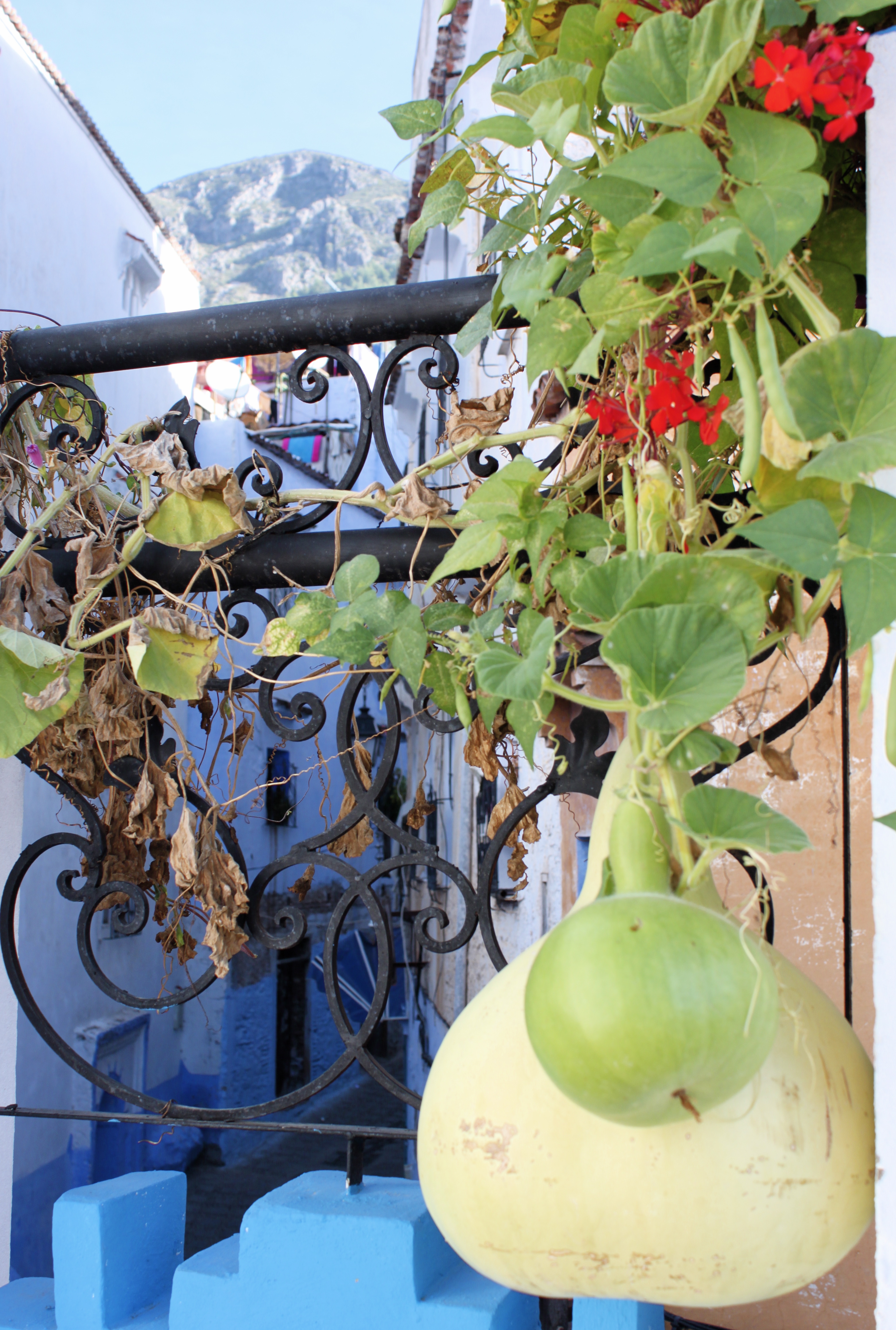
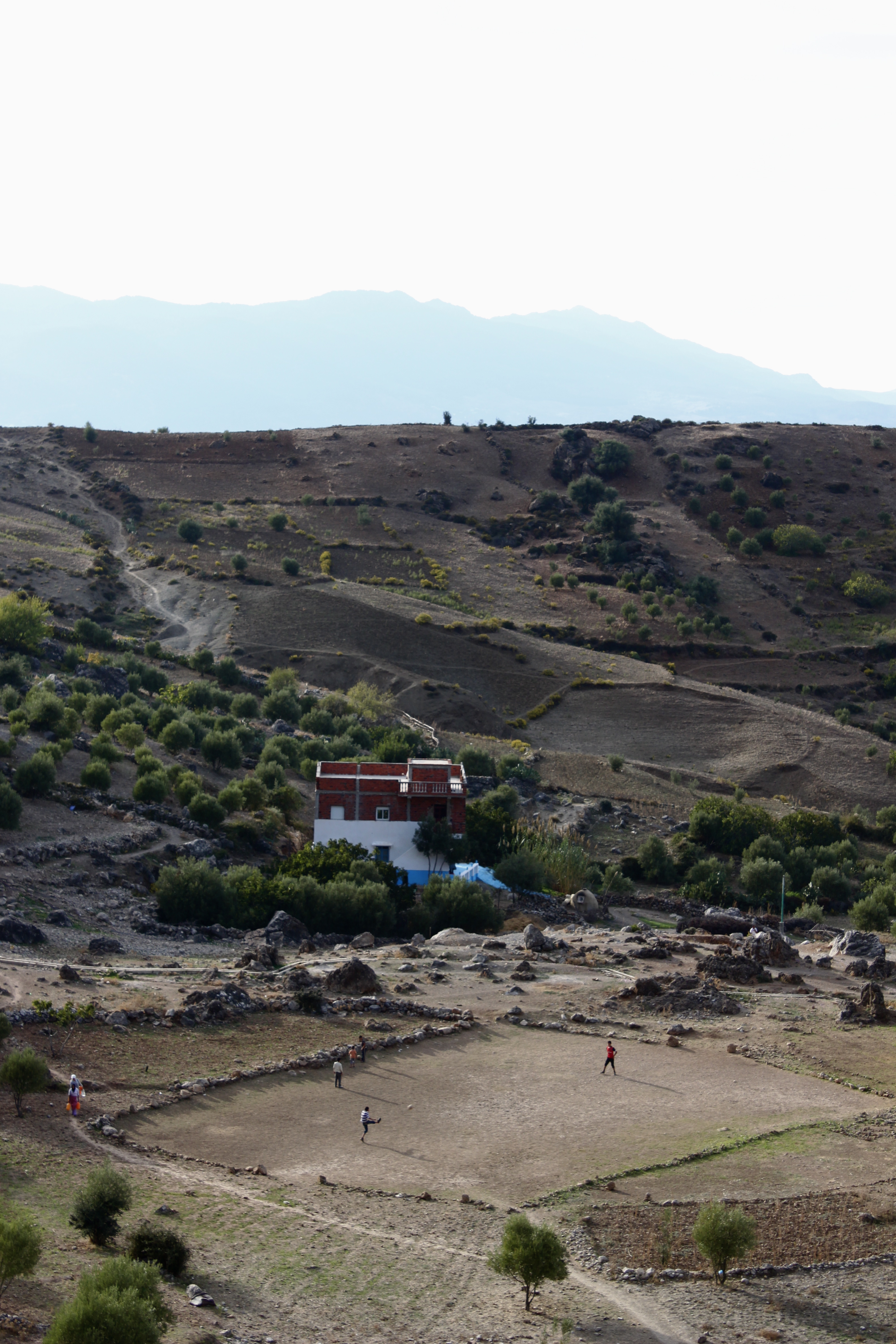
Nestled in the Rif Mountains, Chefchaouen’s cuisine is heavily influenced by the availability of sheep meat and dairy products. Sheep cheese and meat are prominent ingredients, reflecting the local agriculture. Known as the “Blue City” for its distinctive blue-washed streets, Chefchaouen not only captivates with its culinary offerings but also enchants visitors with the unique aesthetic charm that sets it apart from other Moroccan destinations.
The sheep graze on steep hillsides, providing a source of sustenance and a deep connection to the land. In addition to these hearty mountain flavours, visitors to Chefchaouen can enjoy the warmth of traditional Moroccan mint tea, lovingly served by villagers, which not only quenches your thirst but also invites you to share in the hospitality and mountain culture of this captivating town.
Some traditional foods and dishes commonly enjoyed in Chefchaouen:
Tagine: A quintessential Moroccan dish, tagine in Chefchaouen features slow-cooked stews of meat (often lamb or chicken), vegetables, and aromatic spices.
Khobz: Traditional Moroccan bread, usually round and flat, served with various meals to scoop up sauces.
Bissara: A hearty soup made from dried broad beans, seasoned with garlic, olive oil, and cumin.
Zaalouk: An eggplant and tomato salad often seasoned with garlic, cumin, and coriander, serving as a flavourful side dish.
Rfissa: A dish made with lentils, fenugreek, and shredded msemen (Moroccan pancakes), sometimes topped with chicken.
Couscous: A staple in Moroccan cuisine, couscous is often served with a variety of accompaniments, such as vegetables, meats, or fish.
Pastilla: A sweet and savory pastry filled with pigeon or chicken, almonds, and a blend of spices, typically dusted with powdered sugar.
Makroud: A sweet pastry filled with dates and nuts, fried until golden, and sometimes coated in honey.
Tea: Moroccan mint tea, served sweet and often in ornate glasses, is a customary part of the culinary experience in Chefchaouen.
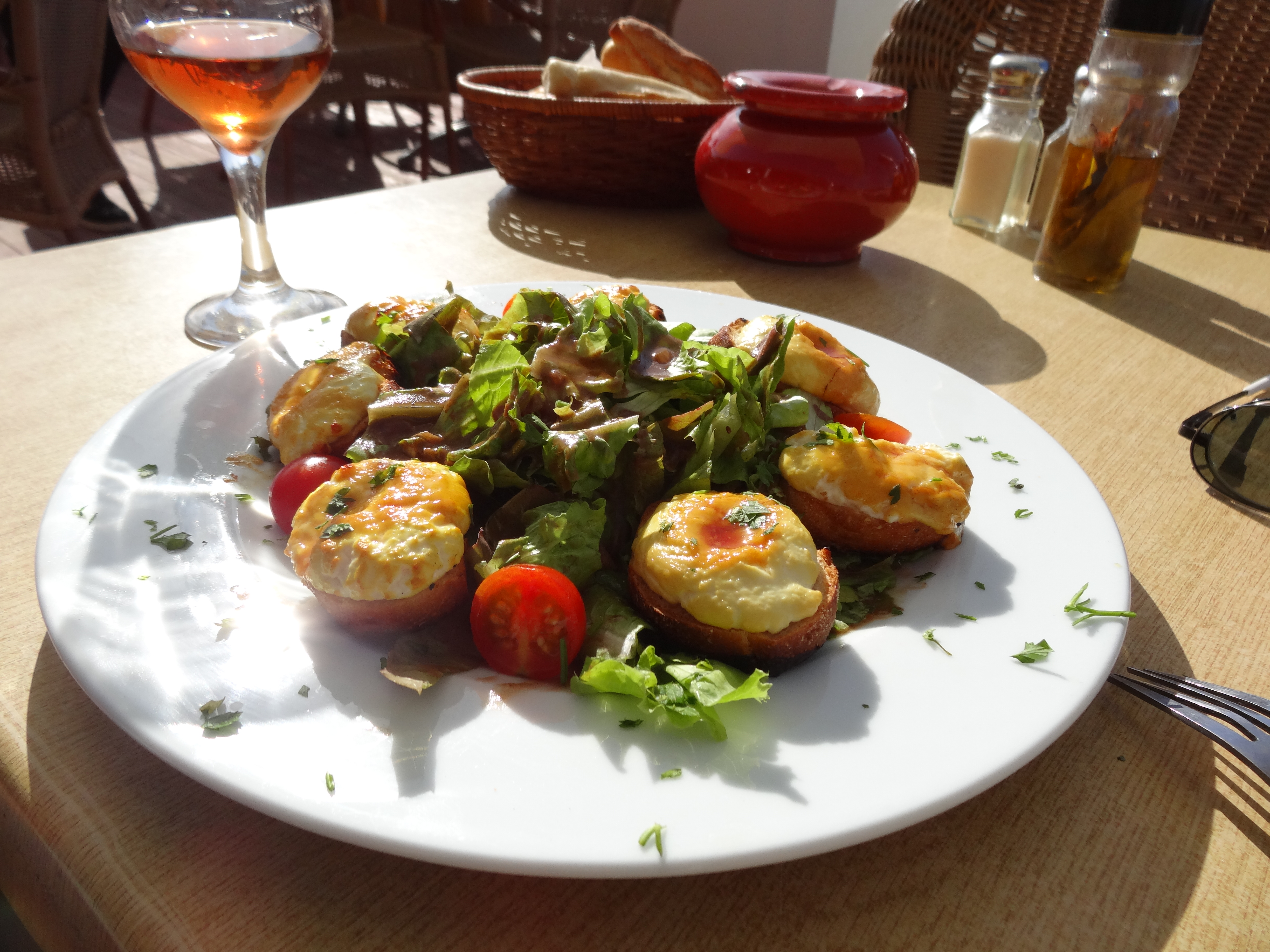
Local Cheese: Chefchaouen is known for its goat cheese, often enjoyed with bread or as part of various dishes.
These traditional foods showcase the richness of Moroccan cuisine, highlighting Chefchaouen’s unique character and cultural influences that add a special touch to the dining experience.
After getting ripped off by the taxi coming from the CTM bus station, we got dropped off at an entrance of the old Medina of Fes, in front of an obscure alley. “Straight ahead, then right” scrambled the driver, directing us to our riad. A fainting light hardly lit the entrance arch. We paid the atrocious amount of 70dh to our driver, to later finding out it was really supposed to be 20dh. We headed up the alley. The ”straight ahead” became a panoply of zigzags going uphill through dark pathways. Soon enough, our confident look turned into complete confusion. A little boy on his bicycle pointed a direction. It couldn’t seem more like the beginning of the end, lost in a maze of confusion in alleys of wandering kids and young men gatherings. However, the way indicated was more attractive than the basic directions our driver told us.
A lot of children wander the alleys, day and night, cruising on bicycles or playing futbol. There will be more happy to show you the way or pose for a picture… in exchange for a dirham or two.
At the end of the passage, a group of young men greeted us by a stand of candies. “Are you lost?”. We tried to hide the truth but our dazed look confirmed his thoughts. “I’ll guide you to your place” he continued, anticipating the answer. At this point, we didn’t have better choice. Either to follow him, or be followed.
After a left, and a sharp right through a gloomy tunnel, another left and a final right, we ended up at the end of the darkest alley where he opened a wooden door. I was reassured as soon as I recognized the living area with the vaulted ceiling pictured on the website. Therefore, the place was unlit and deserted.Suddenly, three giggling heads popped out from an indoor balcony. Pretending to be the only guests in the large riad, the three stooges invited us to join them upstairs. Lisa and I burst into an uncontrollable laugh. When assured we were safe, our guide wished us goodnight and goodstay without asking for any charge. He ended up being a real gentleman. We finally got shown a room: spacious with high ceilings, hand-carved walls, ceramic windows and three balconies facing the ceramic chandelier and overlooking the communal living area. The bed had golden sheets and the detailed lanterns added magic to the room. The bathroom was beautiful and cozy with stone work on the floor and walls. We had our palace. One guy finally admitted to work at the riad and gave us the key to the room. We were still laughing from the moment we got out of the cab and got lost in the dingy alleys. We even dropped of laughter on the floor when I found a pair of old man underwear on our royal couch. Good times. Medina of Fes Founded in 793 AD, Fes is found in the foothills of the North Middle Atlas mountains of Morocco. With nearly 10,000 streets, the medina inhabits about 150,000 Fassis. Probably the largest and oldest in Morocco, the medina is made of about 300 neighbourhoods, each housing five important features: a school, a mosque, a fountain, a bread oven and a hammam. Hundreds of merchants and craftsmen selling products such as dates, spices, carpets, copper urns and musical instruments are found in the narrow alleys, as well as the local people and tourist brave enough to venture the busy maze.
Breakfast on the roof terrace overlooking the Medina of Fes
After an attempt to explore on our own, we soon got lost, as it is a certainty in Fes. We ended up following an other young man to the main square. Five hours later, he was still guiding us. We visited a traditional leather tannery where we got given a bunch of mint at the entrance to diminish the pungent smell. We observed the process overlooking the tanning pits awash with coloured dye. Lisa got a bag made out of camel leather and rug, and a beautiful pair of boots the same style. I got an Indigo wallet made out of camel stomach.
Leather Souq, the oldest leather tannery in the world. Tanning pits are like honeycombs where workers treat and work the leather. First, the leather is soaked in diluted acid pigeon excrement to soften hide, then it is soaked in vegetable dye such as henna, saffron and mint, and finally hung to dry.
We continued with a visit to an argan oil and natural remedy pharmacy. Then the carpet and blanket factory where we had mint tea. Lisa ended up purchasing a beautiful carpet and a cozy blanket.
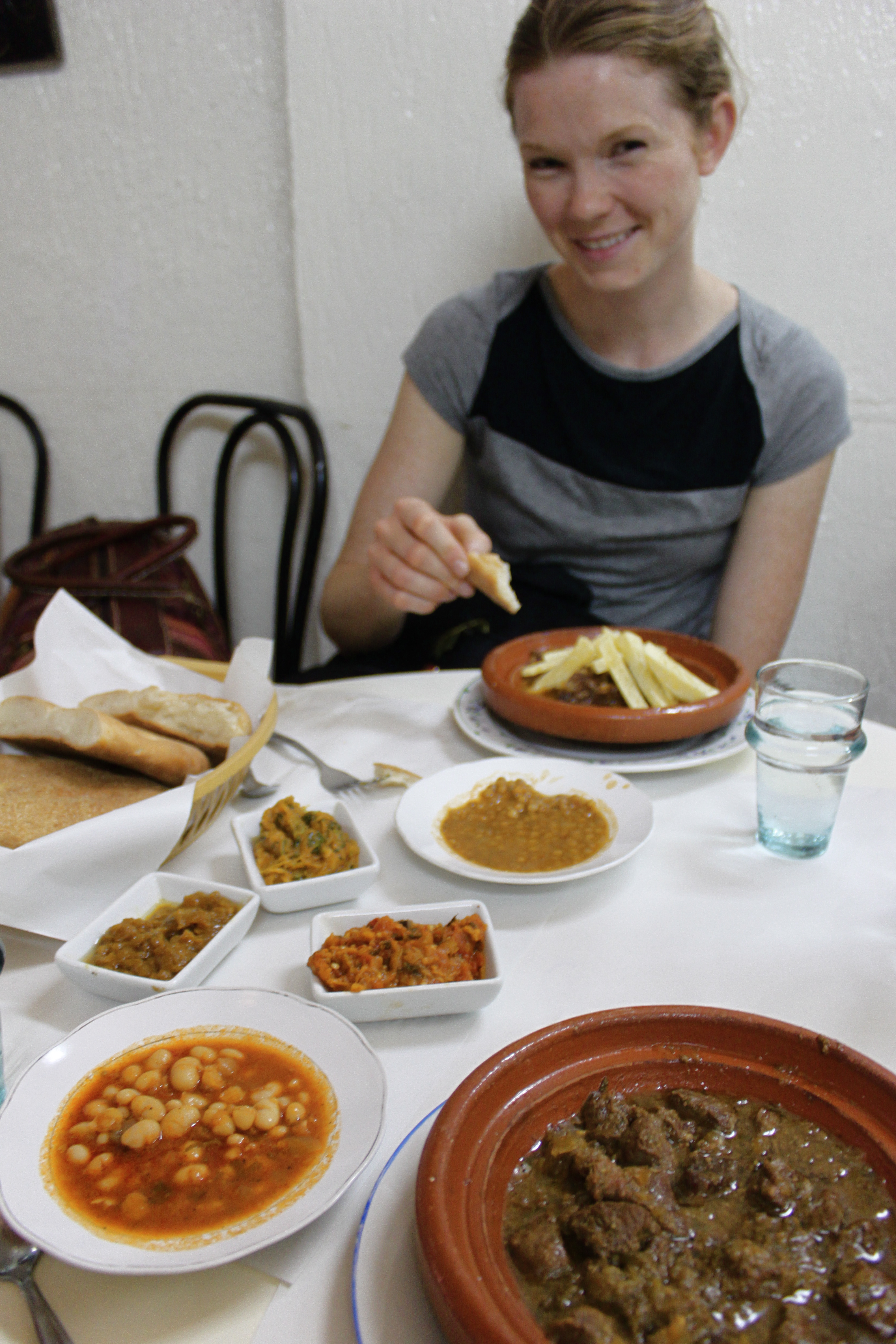
For lunch, we skipped the traditional tourist restaurant and opted for an authentic family eatery instead. A woman brought us in the kitchen making us sample three different dishes with a communal spoon. I chose the lamb, Lisa chose the beef. It was served as tagines, with side plates of lentils, caramelized onions, white beans, and cooked salad. Our presence was very noticeable as we were the only women patrons in the room. Food was authentic, delicious and a cheaper option.
Tagine: Tagine dishes are prevalent throughout Morocco, and Fes is known for its delicious tagines. These slow-cooked stews are made in a distinctive conical clay pot, often with ingredients like lamb, chicken, beef, or fish, combined with various spices, dried fruits, and vegetables.
Harira: Harira is a hearty soup traditionally enjoyed during the fasting month of Ramadan, but it’s available year-round in Fes. This soup is made with tomatoes, lentils, chickpeas, and a variety of spices, creating a warm and comforting dish.
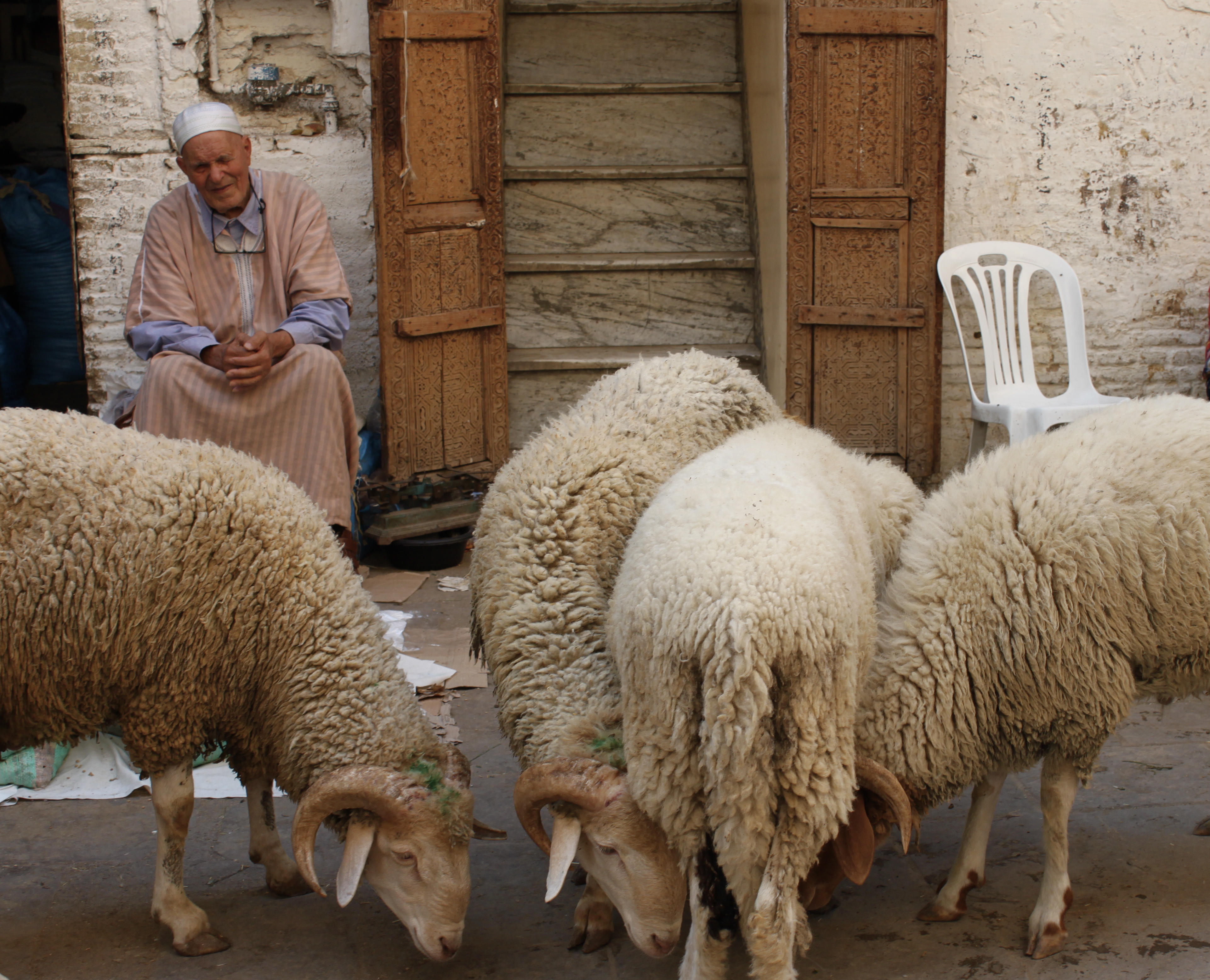
Walking in the streets of the old medina was definitely a tumultuous experience. Venturing through slippery and tight alleys amongst donkeys, Fassis, tourists and sheeps being purchased for the Eid Al-Adha was inevitable and a constant effort. But these are nothing less than the joy of travelling!
Sheeps marked for the Eid Al-Adha
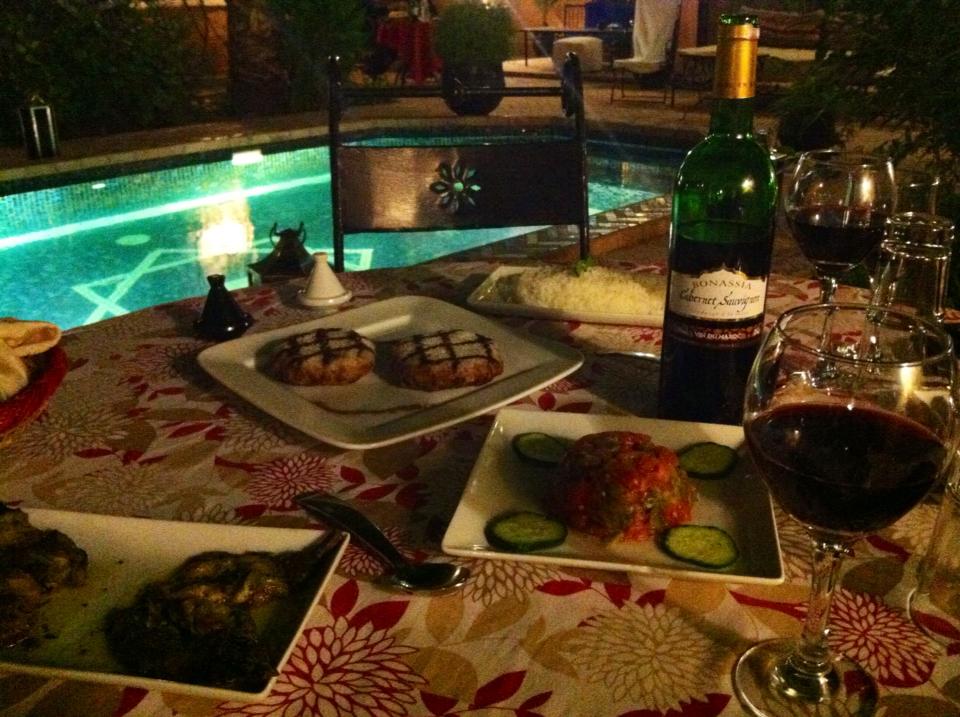
Since we were off volunteer duty for the weekend, we decided it would be a good time to treat ourselves. Morocco doesn’t tolerate alcohol openly however, liquor stores can be found in some of the largest cities. We ventured outside the busy medina and took a cab to Burj Fes (shopping mall) where we stacked up on some goodies. Our plan was to be back on time for sunset, however all cabs were fully occupied due to rush hour. After waiting a good 20 minutes beside a stall selling sheep, we finally got a cab to pull over. Unfortunately, language barrier got in the way and we got dropped off at the wrong entrance of the medina. With the night approaching and a group of locals circling us offering to walk us through the dark maze, I found myself at the edge of losing it. I took a deep breath and stepped back. They were only trying to help us, yet their approach was overwhelming. They put us back in the cab and told the driver the correct way. We made it safe back to our riad. And so on, finishing the day on the roof top terrace munching on goat cheese, sweet dates and chocolate, sipping on Moroccan wine. I admired the old Medina of Fes illuminated by thousands of lights while the prayer chanting of a thousand Fassis soothed the chaos of the day. We shared travel stories with our local host and a German guest while the scent of Moroccan hash floated in the cool air of the African night.









































 Footloose Diary