
Photographs taken while trekking through the Rif mountains of Morocco.


Photographs taken while trekking through the Rif mountains of Morocco.
The 5 hour bus ride from Fes to Chefchaouen allowed me to peacefully rest while finding comfort in the sound of music from my iPod. Songs that reminds me of home, of my friends, of a fantastic summer we just spent. Don’t worry, I am not homesick yet, but it is nice to sometimes feel close to home.
10 years ago, I moved solo to the mountains of Whistler. My comfort, my family, the place I always look forward to return after trotting the globe. Home. I couldn’t be there to celebrate this decade however, I managed to travel to the mountains, here in Africa.
Chefchaouen

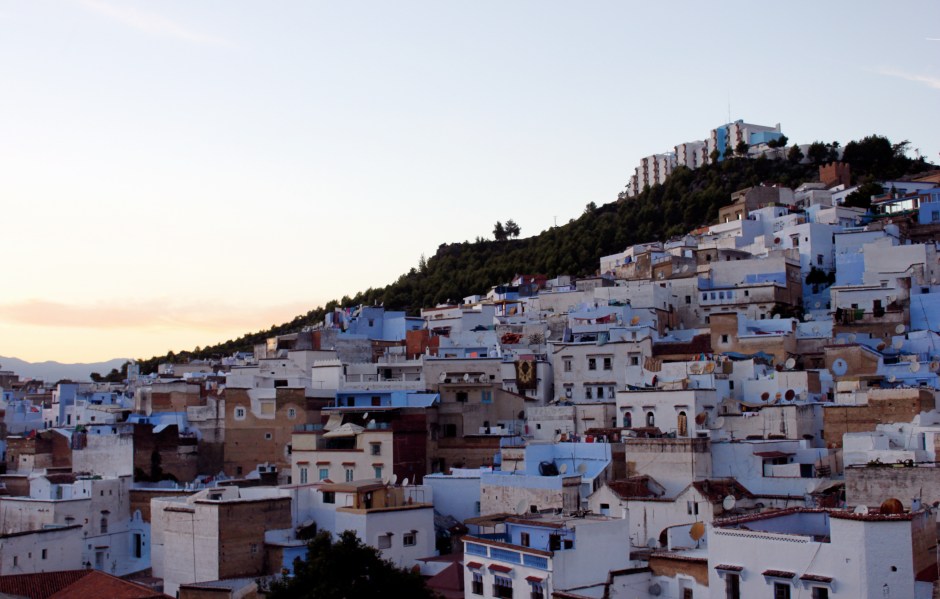
Chefchaouen is a peaceful town centrally located in the Rif mountains in northern Morocco. The blue painted walls of the medina offers calmness to all who stroll its alleys. We enjoyed getting lost in the non-hassle pathways, slowly walking through serene alleys. Stalls of colourful clothing, wool products and powdered paintings are found every corners with passive merchants.


Here, goats are a popular purchase for the Eid, considering they live right here in the mountains and are a leaner meat than the sheep.

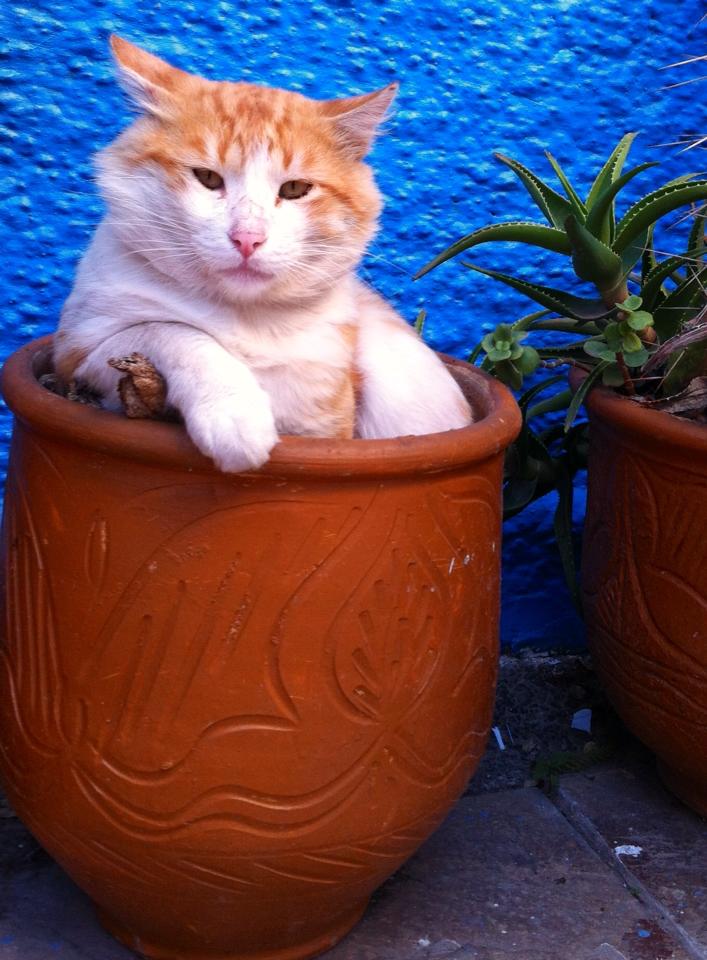
I couldn’t stop but admiring the soft contrast of women wearing colourful djellaba against the blue of the walls. Cats make up for great pictures too.


The main square houses a few restaurants, offering dirt cheap dinner option. Bright and colourful rugs for purchase hung on the central bench under the afternoon sun.
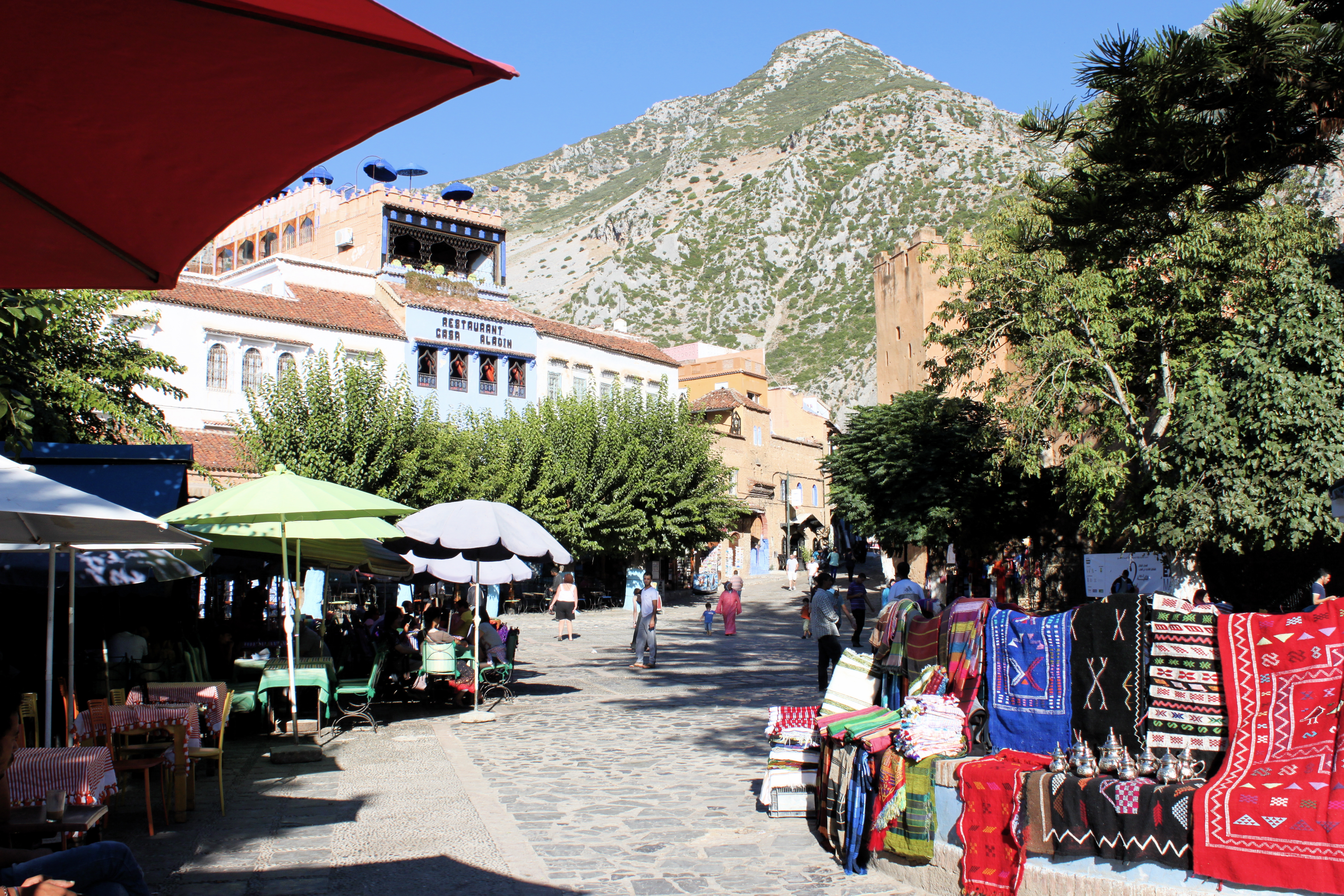
Chefchaouen is known for its wool, its pure mountain water and the popular kif (cannabis), the town’s own perfume that is enjoyed by everyone. Men in back alleys are also spotted drinking mint tea, smoking kif and watching futbol. A persistent smell of goat is also added to the air.


The Rif Mountains
About 350,000 people reside in the province of Chefchaouen. Only 36,000 currently live in the town, while the rest is spread in the mountains. The mountains are divided by 33 rural communities, each housing up to 60 villages inhabiting up to 1,000 people.
Our host at the riad recommended us his childhood friend, Lofti, to guide us through the back mountains. We left in the afternoon for what was expected to be a 2 hour hike.
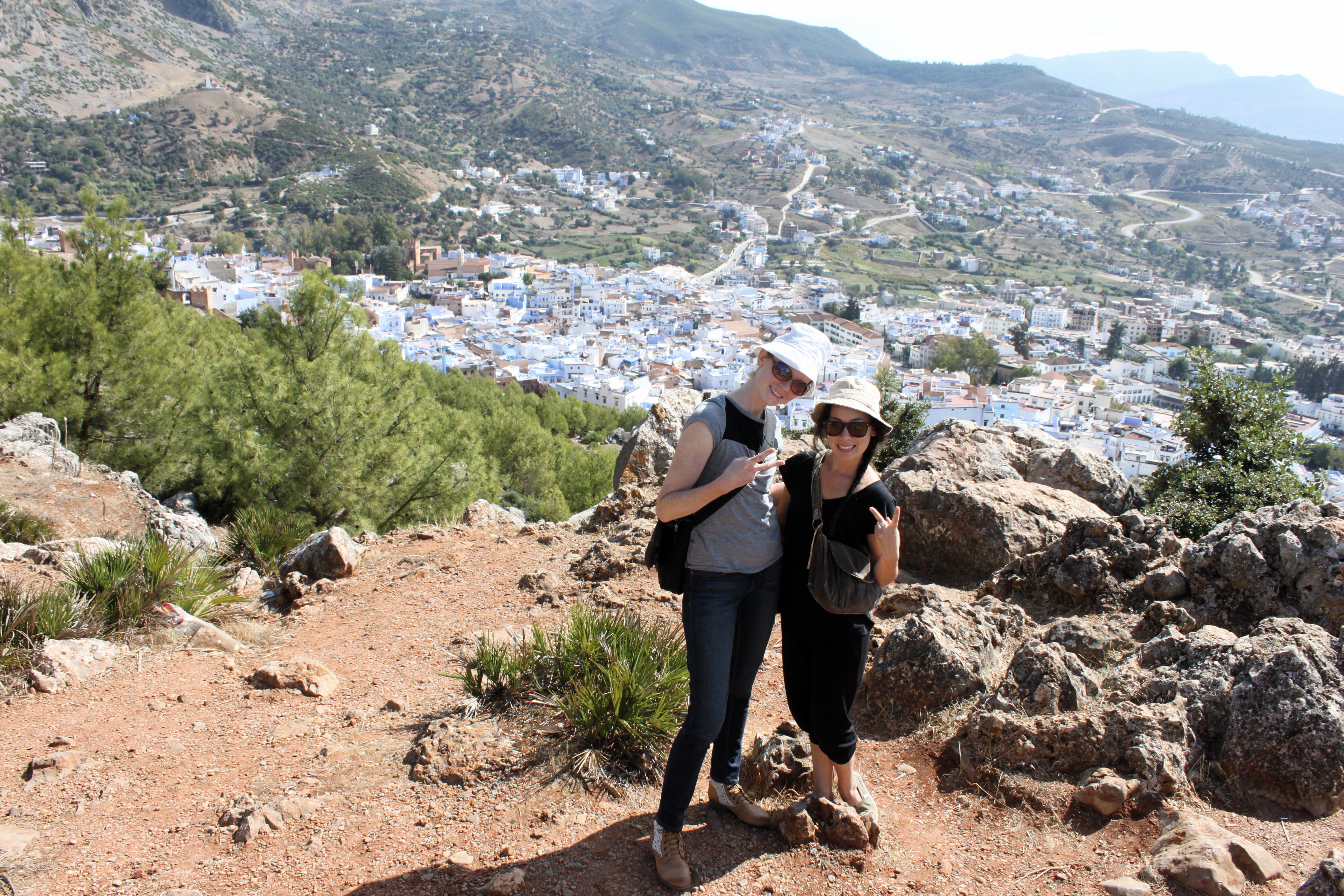
As we hiked up, we sought three women cutting the oak for the goats. On the road, a minivan filled, in and out, of farmers and their kids came back from the Monday market in town. We passed beds of purple-pink flowers on rocky surfaces, donkeys feeding on bark, rosters hanging out. An old man on a slim donkey returned from the market. A young man attempted to show off on his motorcycle. The funny part was to watch him run after his hat, once it blew in the air.


We arrived at an open space, at the foothills of a high mountain. Boulders that once rolled down are scattered on the ground.


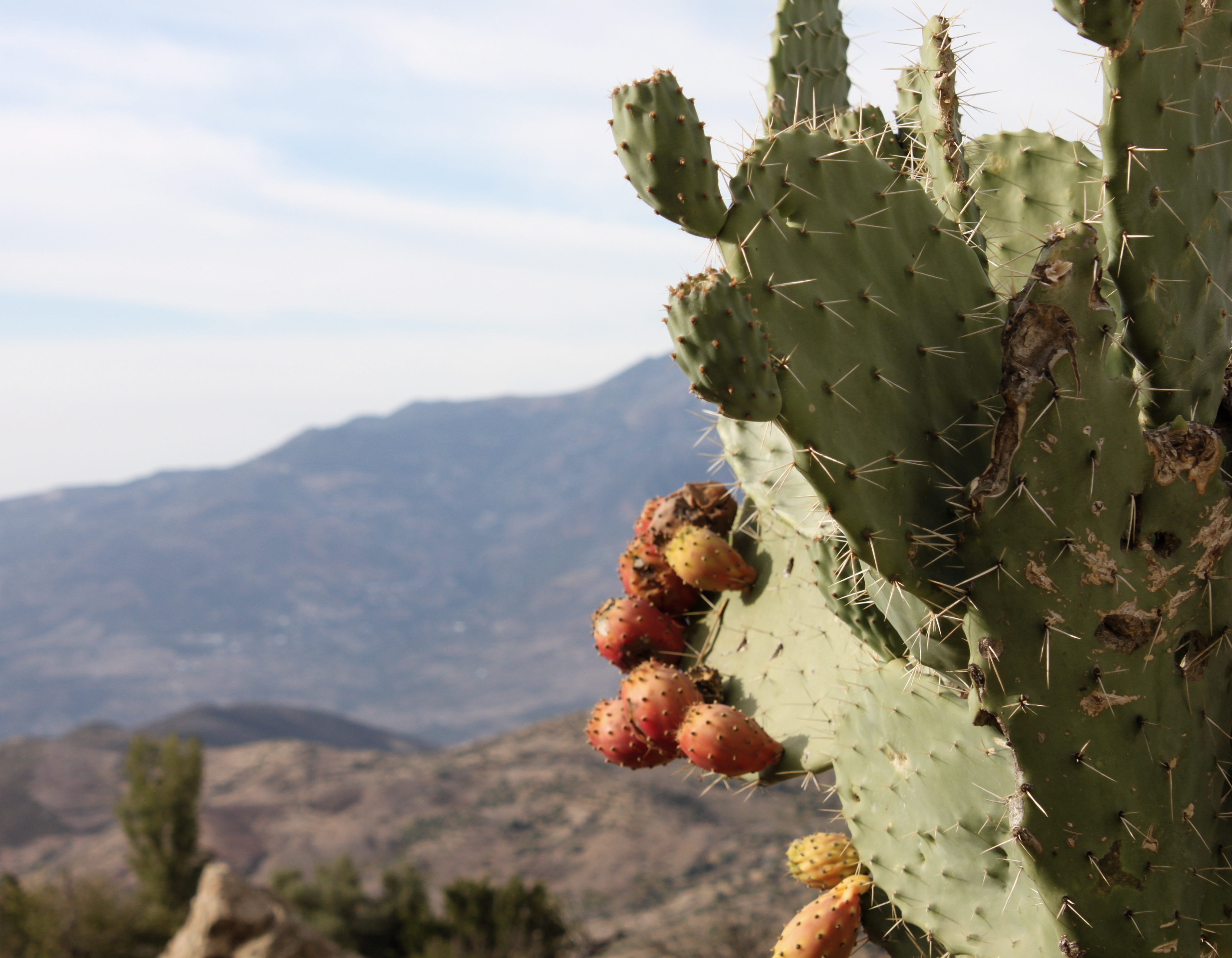
Our guide was very knowledgeable and the trek was very informative. When we stopped for a break, he introduced us to cactus fruit. I didn’t have the choice then to try and chew the excessive number of seeds that contained this little fruit.
We arrived at the village of Kalaa.


We sat under a fig tree to enjoy a rewarding cup of mint tea. The scent of kif perfumed the fresh mountain air. Local men played board games on balconies smoking and drinking afternoon tea. Kids returning from school enjoyed their liberty in the surroundings.


On our way back, we walked through small villages. Cats, sheep, donkeys, horses, all were there to greet us with a stare. Kif dried on a roof.


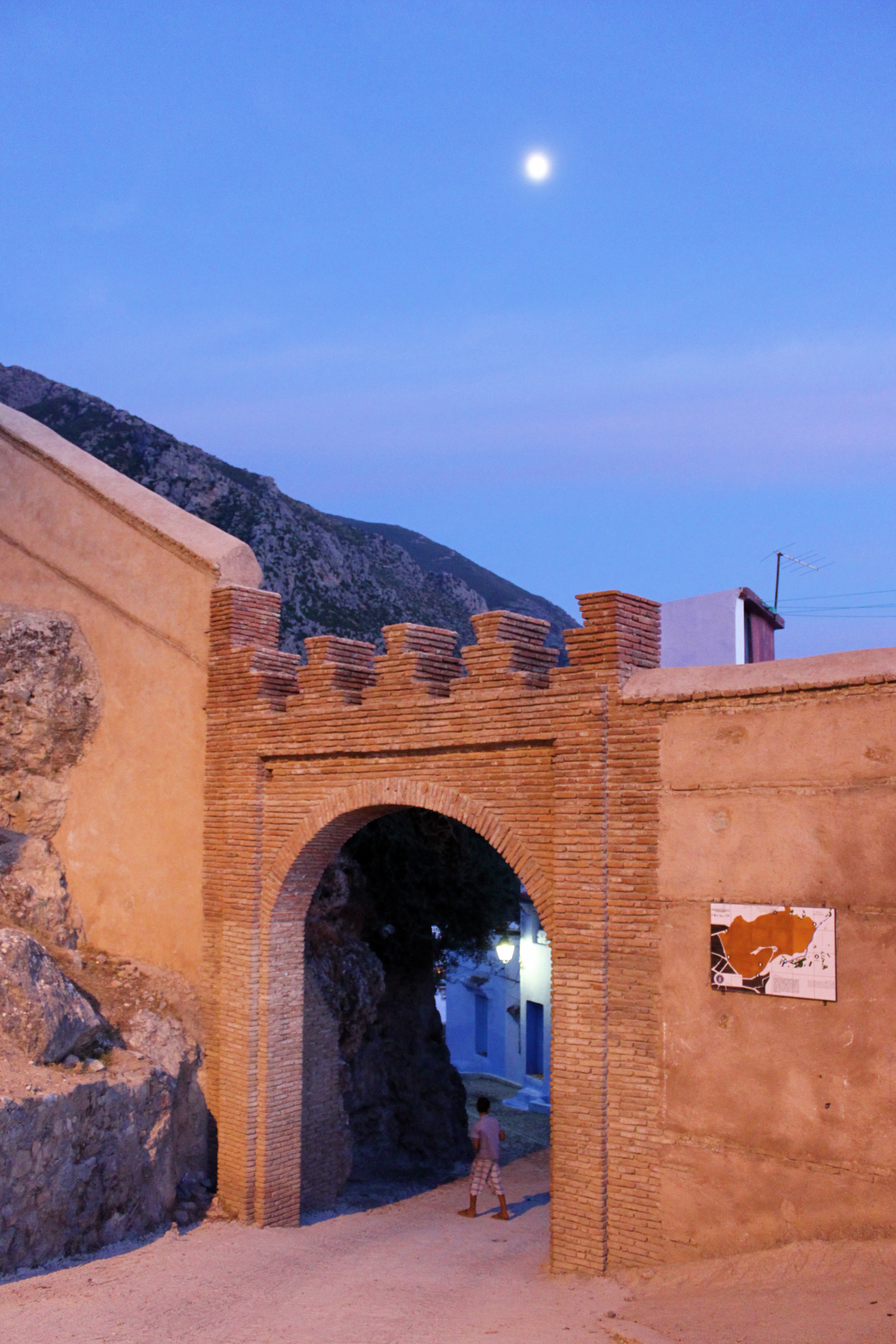
The sun setting behind the mountains on the way back left a soft pink light over the blue city. The view was stunning, the breeze refreshing and the smell of pine trees comforting.


The moon replaced the sun in the sky, lighting us the way the back to the medina. This 2 hour hike ended being a wonderful 6 hour trek. We are exhausted.
Good night Chefchaouen.
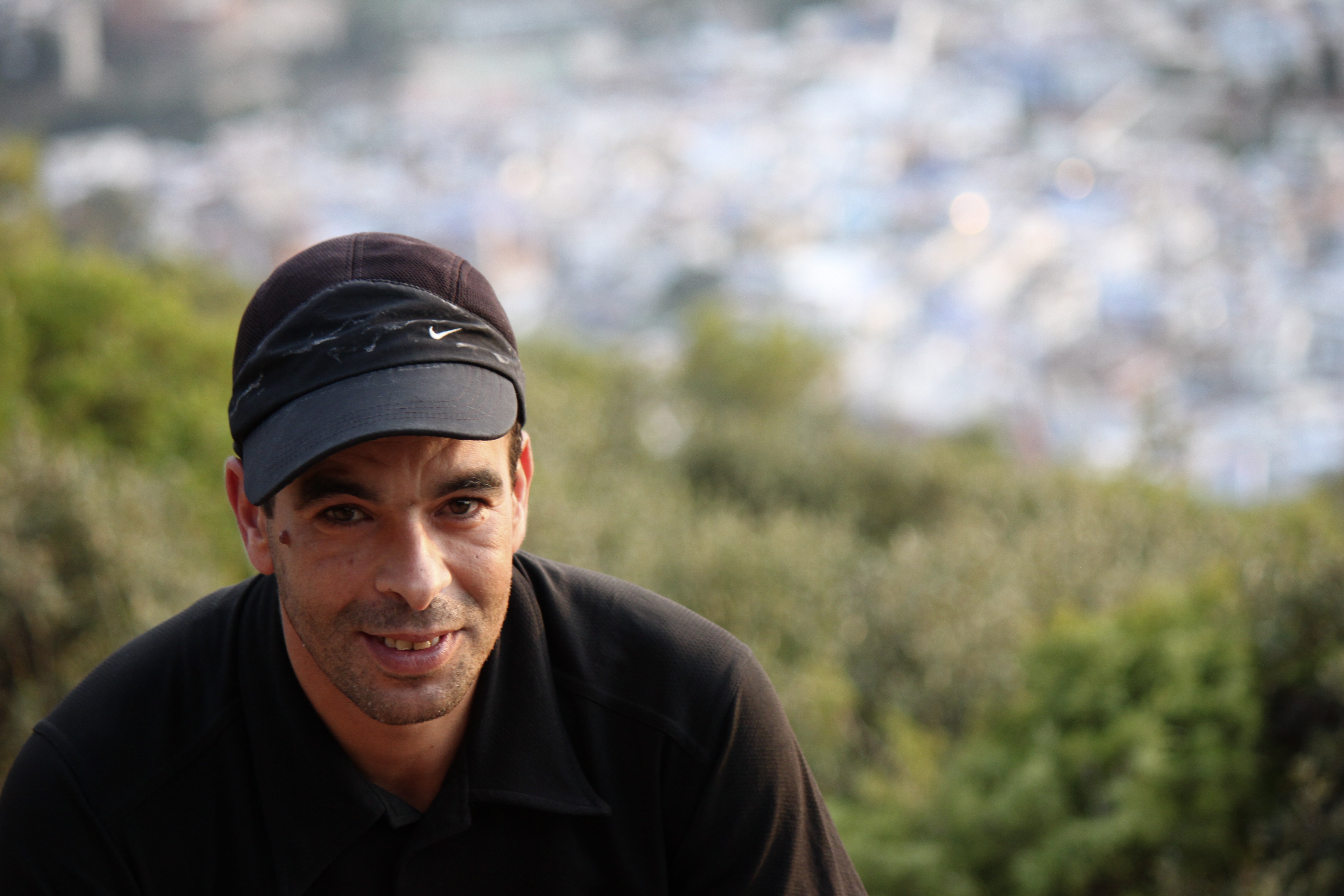 *I highly recommend to hire Lofti. If it is for a tour of the medina, a couple hour hike, or a few day trek in the Rif mountains, I assure you Lofti will make it worth it. He works for himself and charges extremely cheap rate (I ended up giving him twice his offer), so make sure you treat him right. He speaks both French and English. To contact him: guidrural_lofti@yahoo.fr


Photographs taken in the blue city of Chefchaouen

Photographs taken in the ancient Medina of Fes. Read the full story: Getting Lost in the Old Medina of Fes.


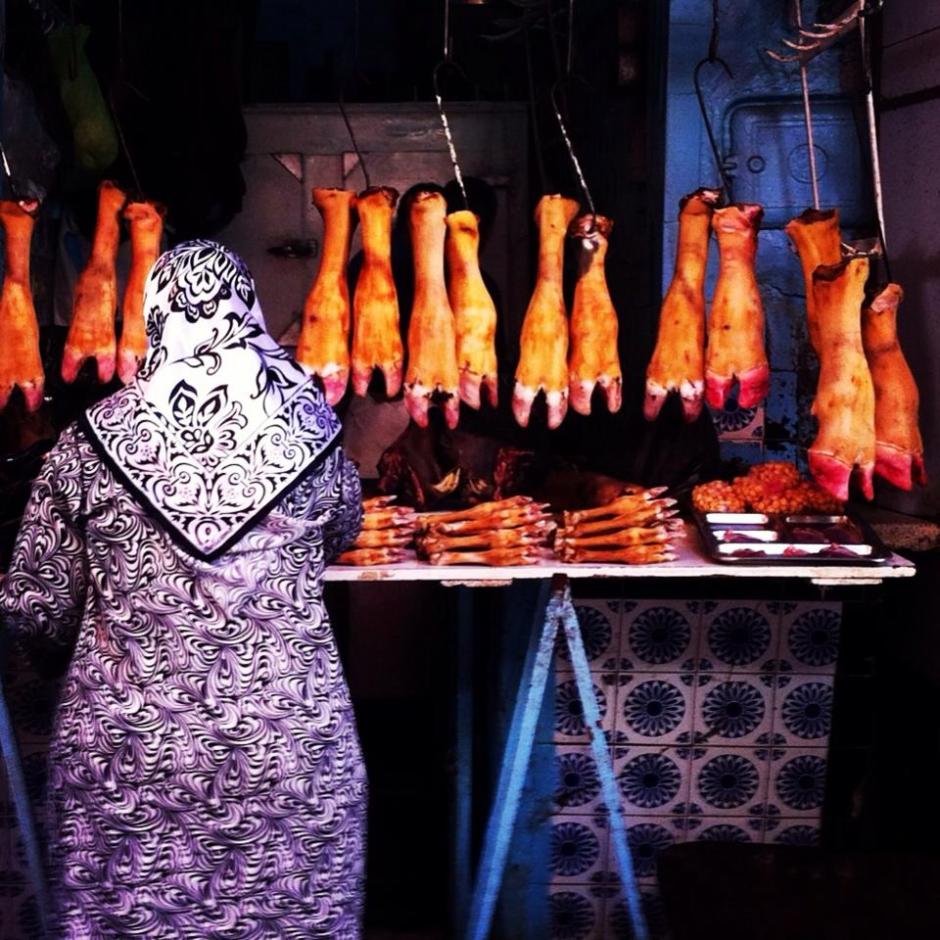
News from Morocco: The warm sunrays light up the alleys of the Medina. The scents of olives, spices and cow’s feet travel the streets. I walk from my lovely homestay through the alleys towards my work place. Teaching the kids in the morning, empowering the women in the afternoon. However, I’m not sure who’s gaining more from this: them or me. I’m already learning the basics of Arabic, how to cook Moroccan dishes, how to make a djellaba… The prayer chanting at 5:30 in the morning at the mosque nearby inspire my dreams. I am so fortunate to be here. Insha’Allah! (Facebook post from 9/01/2013)
The day has come. Too fast, too soon. I was getting comfortable with my volunteering work, my host family, the smell in the alleys, the call to prayer at 5 in the morning, then I had to leave.
Farewells to the Women
The language barrier, altered culture, different traditions and religion made the journey challenging, but interesting and enlightening. To see the progress that in only a few weeks we made was significantly noteworthy. It surely wasn’t much, oh no, but you can’t change the world in a few days. We didn’t manage to teach languages, however, the progress came from the exchanges and interactions amongst all of us, women. We connected with them by showing truthful enthusiasm in their lives and environment, and the interest was mutual. At the end of the day, it didn’t matter what colour of skin we had, what language we spoke, what country we came from, what religion we believed in. It was the sympathetic feelings of solidarity, recognition, and togetherness that brought us all together. I realized that unitedly we made it all possible. We empowered each other. There is still a long way to go, but with the help and support of following volunteers, these beautiful women will grow into flourishing human beings.


After exchanging email addresses, clicking some photographs, and drying some tears, we said goodbyes. I left the blank booklets and pens on the table, with hopes to inspire them to learn furthermore. I accepted the kiss on the cheek but also reached for a hug, and I held them all with all my love.


Farewells to the Children
The class prematurely finished that day and the kids were brought to the courtyard. The teachers put on music and, while holding hands in a circle, we sang, swung, jumped, skipped and spun on the dance floor. It was a full hour of festivities, filled with laughs, giggles and beaming smiles. The children were too young to understand the reality of the event: they had no idea we were leaving. All they wanted was to be part of an image clicked by my camera, their toothless smiles and bright shiny eyes ready to be photographed.


The teachers brought us to the back room. There was a table with empty glasses and a box. “Tea?” I asked. They shook their heads. They opened the box which was filled with baked goods. They poured thick milk in the glasses. “This is for you. To thank you.”

I was overwhelmed by all this devotion and appreciation. I felt like the worst teacher and didn’t believe I deserved such a celebration.
“Of course you do. You were one of our best volunteers. It’s not about the techniques or the rules that are followed from a book. It’s about you, your heart to heart presence with the children and your genuine connection with each one of them. You influenced and inspired them. They looked up to you. Believe us, we know our children.”
Indeed. I’ve never realized any of that. I felt like those teachers, and those women and even those kids taught me way more than I taught any of them.

The teachers also made me promise to come back and stay with them, and teach their kids. It was hard to hold the tears and I could see theirs reaching the edges of their almond shaped eyes.


I hugged the children goodbye, without being able to explain that this would be the last. Those kids that once were so challenging to teach. Although at the end, I saw them as my students. The ones that looked up to me eager to learn. The ones that get so excited when I reached papers out of my bag for them to colour. The ones whose eyes sparkle as they see PlayDoh for the first time. The ones that held my hand while a story was read. The ones that ran into my arms and gave me the most sincere kiss on the forehead.


Conclusion
This first volunteering work in Morocco was indeed one of the richest and most rewarding experiences of my life. Not only did I gain a better cultural understanding of a country, being exposed to a new language, religion and environment, but I also built strong ties with inspiring and remarkable individuals. Volunteering abroad has met my expectations in many ways: I did get confused, disoriented and uncomfortable. I did think: “what have I gotten myself into.” And I’m glad I did. You can only grow and learn when you take risks and accept challenges. And once you start thinking outside the box and work past your comfort zone, you get a true sense of accomplishment and identity. This mind-opening experience not only gave me the chance to change others, but it mostly changed me. As well as having a positive and meaningful impact on the community, this volunteering work experience gave me a new perspective on life and gave me a sense of purpose. It also motivated me to engage myself furthermore into developing communities and continue to help others in need: To volunteer, to give back and to receive, and to be involved as a global citizen.
Rabat, Morocco, 2013: Where I have left a piece of my heart, along with a footprint behind.
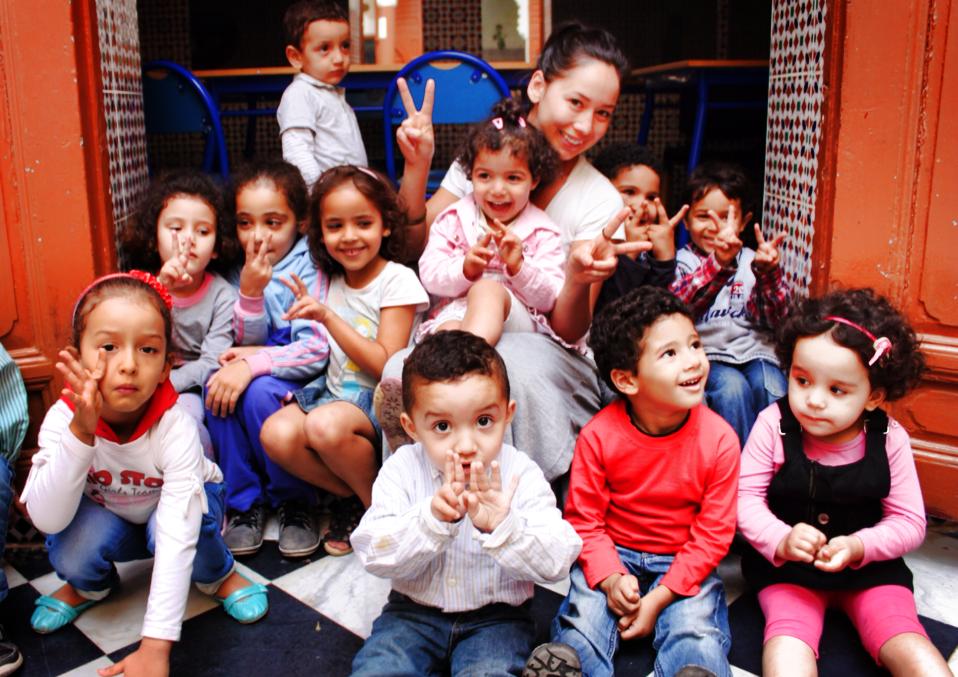

When reading the description of tasks, it wasn’t clear to me what ‘helping with children’ exactly implied. Besides my experience teaching swimming lessons (which I actually really enjoyed), I didn’t have much of a teaching background. And working with kids? I mean, kids are fine, although I find at times awkward to deal with their impulsivity, loudness, hyperactivity, whining or disobedience. Plus, besides my two adorable nephews that I see once a year, children are not part of my environment. This experience was going to be an amazing opportunity not only to learn more about these little people, but also to develop my communication and personal skills, as well as testing my initiative and discipline.

When I stood up in front of the class on my first day, I had no idea at the near second what I was going to say. All eyes were on me, impatient to learn and eager to hear me speak. French? English? I noticed the alphabet letters displayed on the wall. I took a chalk and wrote on the black board and, with probably the biggest interrogation point in my face, spelt in French:“A?” Immediately, the 14 students repeated after me, loud and clear: “A!” “Ok,” I thought to myself, “that’s a good start.” I then invited Lisa to take over for the English part. We did the same with numbers, and days of the week, and colours. We were teaching.


We taught children every morning, and soon enough got a grip of it. As young as they were, and as limited with the languages they would know, we managed to introduce activities to make the learning interactive, fun and creative.


A week earlier back home, people were curious to know why I was bringing Play Doh on my trip. Actually, I always bring this modeling compound while travelling abroad to give to children I meet and interact with. When I was challenged to teach kids and bring something new to both the class and their teachers, I managed to incorporate the colourful dough in the activities. With that new and fun tool, we taught kids numbers, small mathematics and how to sculpt letters of the alphabet. Plus, we all had a blast!


The weeks went by and I started to get a feeling of attachment. When teachers switched the class to Arabic and read stories, the girls would hold my hands, play with my jewelry and give me occasional kisses on the cheeks. When playtime arrived at the end of each class, kids that once were independently roaming around the yard, soon took our hands and dragged us with them. In the open-air courtyard we sang, danced and played in harmony.


I soon realized it didn’t matter if we had teaching experience or not. The concept was to give through the donation of time with the willingness to contribute and help, with positive energy, and compassion. Once you overcome the challenging feelings of discomfort and disorientation, you realize that you are capable of achieving. And to see those little faces staring at you with a big smile, holding your hands tight without wanting to let it go, that is a pure joy and the greatest reward.
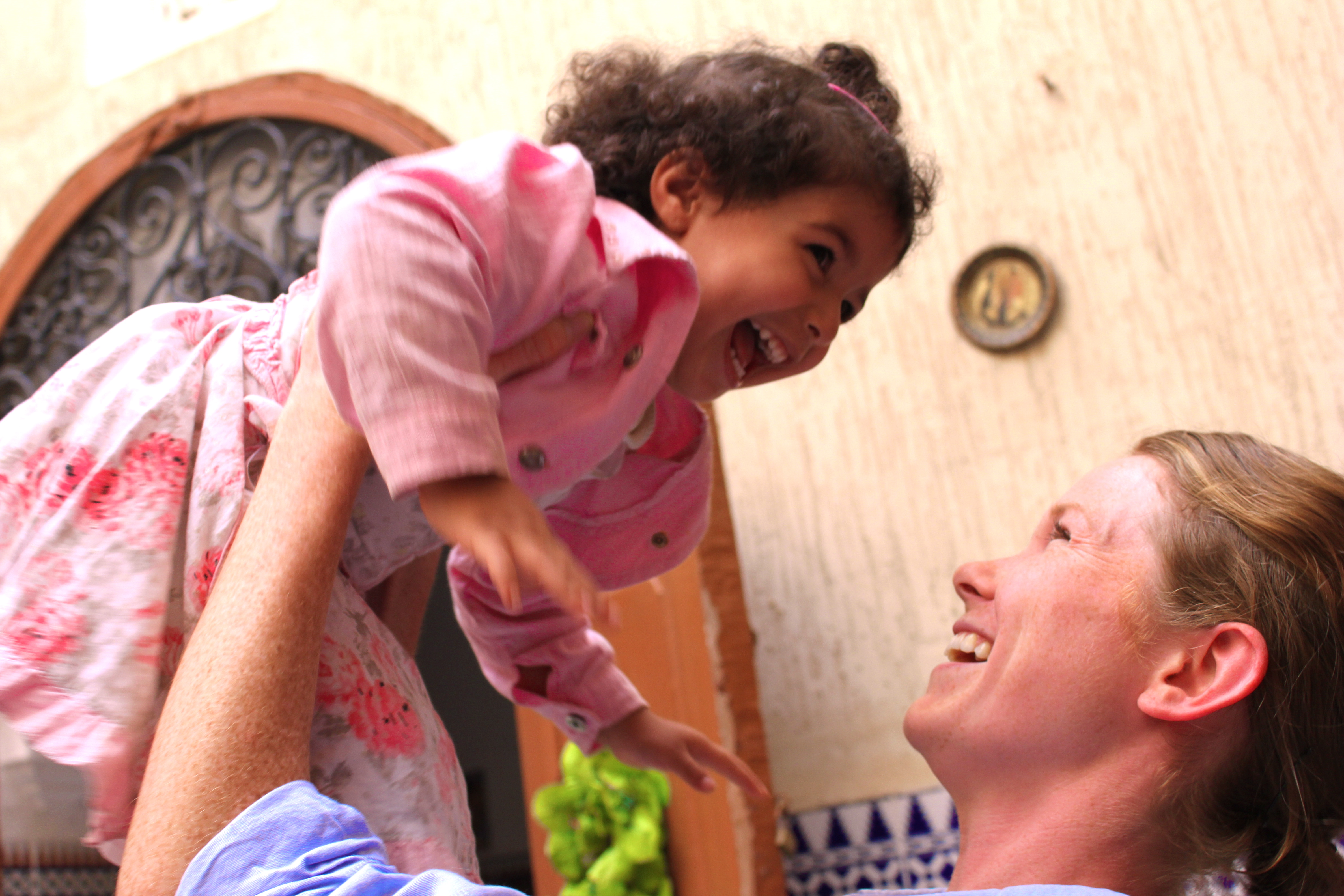
Soon, those children filled with happiness and love became the reasons to wake up eagerly each morning.


Departure
I woke up to an appetizing warm meal with cheese and bread waiting on my table tray in front of me. “Rouge ou blanc?” asked the flight attendant from Air France. “Juste de l’eau, merci,” I answered. “Madame, il vous faut du vin avec votre repas,” he insisted. “Rouge alors, merci.” I was on my third and last connecting flight towards Morocco, spoiled with a nice meal and wine and a beautiful pink sunset over a sea of fluffy clouds.
Arrival
“Bienvenue au Maroc!” saluted the immigration officer. When I got off the plane in Rabat, Salah, an employee of ICLS, partner of IVHQ waited for me at the arrival gate with a welcome sign. Along with an other volunteer, he explained us that he was going to be our in-land coordinator and then chauffeured us to our designated host families.
Orientation
The first day was reserved for the orientation. Hyat, our host ‘mother’, cabbed us to the ILCS placement in the district of Sale. ILCS works in partnership with IVHQ to offer the volunteer services in Rabat.We met our coordinators and fellow volunteers of different placements. The day was spent to discuss about the importance of volunteering, to share our expectations and to talk about the benefits of the volunteer work. They also educated us on the norms and customs of the country, as well as a crash course on religion and traditions.

After a very informative and educative orientation, Salah took the group for a tour of the city. He pointed at the location and use of banks, transportation systems, cellphone services. We also had lunch at a traditional Moroccan restaurant where we all experienced for the first time their famous tagine.
En Route to Our Work Placement
Our work placement happened to be centrally located in the same medina as our homestay. We followed our host ‘mother’ for a short walk through the tight alleys, passing merchants setting up their stalls for business and cats enjoying the morning quietness.



Dar Attaliba
When Lisa and I arrived at Dar Attaliba, we entered the walls of the medina through a small wooden door and walked into a bright courtyard. Dar Attaliba is a female student house that offers academic support for local women and young girls affected by poverty, illiteracy, unemployment and/or violence. We noticed 2 levels around the courtyard. There was three rooms at the lowest floor: one with toddlers, one with preschoolers, and one with women. A curved staircase stairs led upstairs to a room reserved for teaching and another one for sewing and brodering activities.

Meeting the Women
There was a small group of women sitting around a table. We could easily differentiate the participants from the educators, the latter wearing long white coats. I shook hands with each one of them, and received a timid kiss on both cheeks, as tradition it seemed. The women were very timid and reserved and their eyes were locked on their project with only a shy smile once in a while to acknowledge our presence. I soon realized that none of the women could speak French or English. And unfortunately my Arabic was embarrassingly nonexistent. The language barrier put us into an immediate discomfort and awkwardness state. I knew right then that this experience was going to be one of the most challenging, hence the most worth it.

Meeting the Children
We were sitting at a low table and on tiny chairs between children aged from 2 to 8. Eyes were all on us and once again, we were confused at exactly what role to play. The ‘occasional childcare’ listed in the description of tasks didn’t seem to be sufficient for our understanding. Were we supposed to assist the teachers? Were we supposed to bring teaching material? Were we supposed to stand up and actually teach? I never taught before, only swimming lessons while in my teens, but in a class? And what language do they speak? What do they know? How to teach a class that has such a large age difference? And why is the whole class staring at us impatiently waiting for instructions? My discomfort got interrupted while I glimpsed at Lisa whose ‘get me outta here’ look in her eyes couldn’t hide any longer behind her uncertain smile. Her tall body was cramped on her miniature chair and she had a ‘please save me’ sign on her forehead. I started giggling and soon enough decompressed. That scene gave me the chance to breathe. Let’s do this!

I saw a black board on the wall. I stood up and took a piece of chalk. I had absolutely no idea on what to say or do next, but I accepted the challenge!

Think about how you can help and what you want to get out of the experience
Volunteering might have been part of your ”list” for a while now. The urge to save the world, play a hero, get recognized, tell a great story. But seriously. Why do you do it? How can you help? What do you want to get from the experience? Volunteering isn’t just a thing to try and say “checked, I’ve done my part”. It goes well beyond that. There are a lot of people in need all over our world and they require people committed in helping them find a brighter light. Most of us, literate and educated people, we are fortunate enough to come from a decent family, a decent country, decent government. If I find the time and money to travel and enjoy myself in developing countries, I will take the time to learn and help with the tools I have behind the scenes of less fortunate countries.
I am travelling to Morocco to volunteer with women. Being an Islamic country, women of Morocco are facing everyday challenges such as poverty, violence, illiteracy and unemployment. My goal is to help improving literacy levels by teaching French and English, assisting with professional development and providing support to female victims of domestic violence.
Even if I won’t change the world during my short stay, I will provide the best I can, if only to see progress and change in one person.
Sign up
There are several volunteer programs running worldwide. Volunteering tend to be expensive, so a wise search is necessary. I opted for IVHQ, a program providing aid and assistance to developing countries while increasing education and awareness.

Here is an interesting link of an article published on the Verge Magazine written by Jim Carson regarding choosing a volunteer program:
Get documents
After signing up, you will get a booklet of information regarding the program, the preparation, the stay, the activities, etc. It is important to read it thoroughly as important information is provided.
An important document to get is your criminal clearance record check. Since you will be working with people, probably children as well, making sure that you are cleared of any criminal activities is necessary for the process of your application.
It is usually your responsibility to get a Visa. Do your research and get one if required.
Make photocopies of all your travel documents (passport, ID, flights, insurances, Visa). Leave one copy to a friend or family member at home. Take the spare one with you.
Learn about the country
Where is it located? What is the religion? What is the clothing and culture like? What are the customs? What kind of food? What is the weather like? What is the currency? How do you greet someone? How do you thank someone? You don’t need to know everything in detail as you will explore and also learn on your own once there. But there is some essential information to know before landing. Arriving with a basic knowledge of the country would be beneficial for you and be grandly appreciated by the locals.
See a doctor
Make sure you are in a healthy condition to travel abroad. Have him/her update your vaccines and inform you on the ones you need for the country where you will be volunteering.
Pack
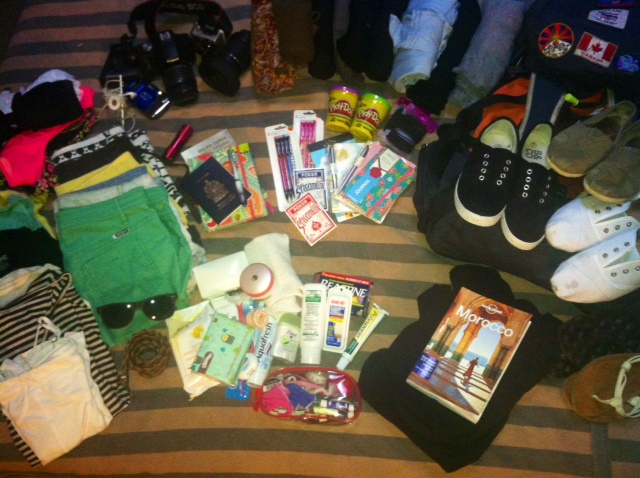
You are almost ready to go! Get a travel backpack and fill it with only the essentials. Don’t pack too much. You can always purchase the missing items in your host country. That way you also invest in a developing country.
Get excited!
Try to get everything organized at least one day before your departure. At least, I try. There are so many things to think about that it is easy to let the stress take over the emotions. I like to keep the last day stress free and start to get excited.
I’m leaving tomorrow for Morocco. And yes, I am excited 🙂

 Footloose Diary